Spill the Milk Tea
How crises and leftovers brewed HK's drinking culture
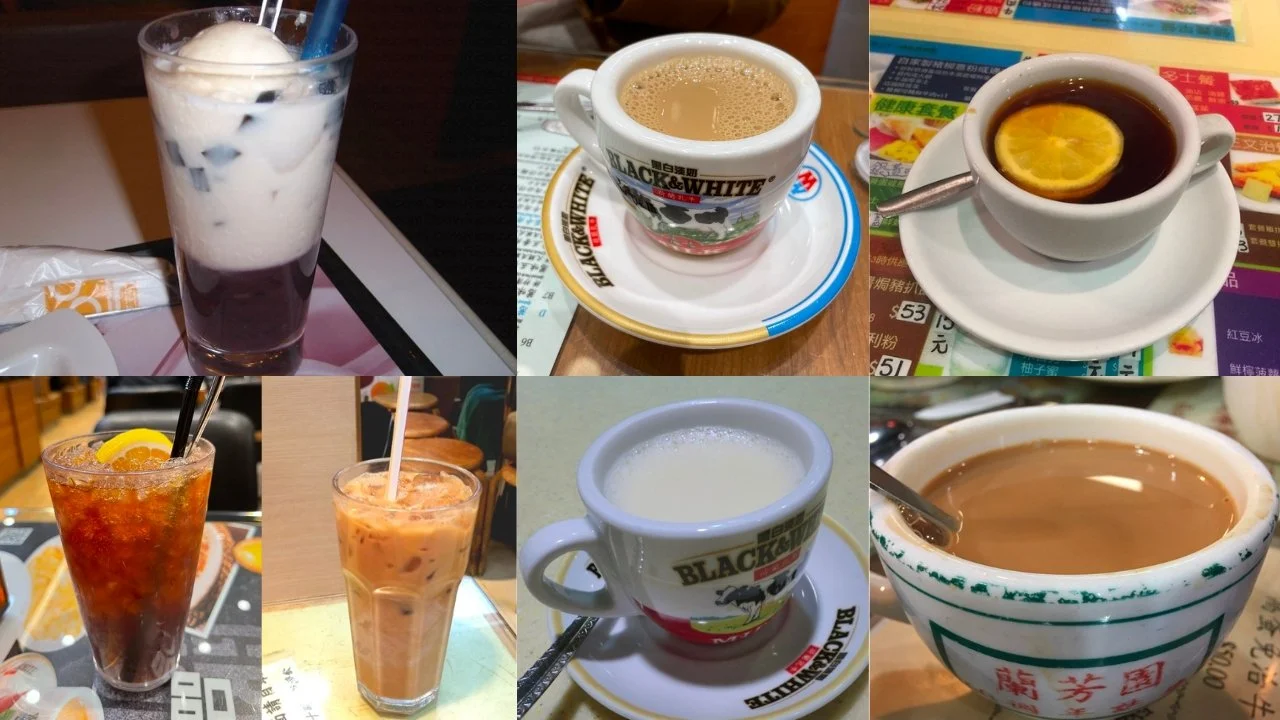
A collection of classic cha chaan teng brew, from milk tea to ice-packed red bean float, built on a historical foundation of colonial water shortages, dairy scarcity, and heavy-handed doses of caffeine (source: Central Lion Rock)
Slide into any cha chaan teng booth and an iced lemon tea (凍檸茶, dong ling cha), a slushy red bean ice (紅豆冰, hung dau bing), or a high-octane Yin Yeung (鴛鴦) arrives almost instantly.
These staples feel timeless. In truth, they were engineered by necessity. Beneath these daily rituals lies a history of scarcity and improvisation: colonial water shortages, segregated services, and street‑level ingenuity that turned survival into taste.
This piece is part of a broader culinary series tracing how Hong Kong’s infrastructure shaped everyday food and drink. In this instalment, the spotlight falls on beverage culture, showing how crisis shaped identity and necessity shaped flavour.
The Survival Baseline: Water
The dim sum ritual of scalding utensils in hot tea is a post‑war hangover, born from the dubious hygiene of crowded teahouses. Long before tea leaves dominated local trade, the city fought for basic hydration.
Pavement Trenches
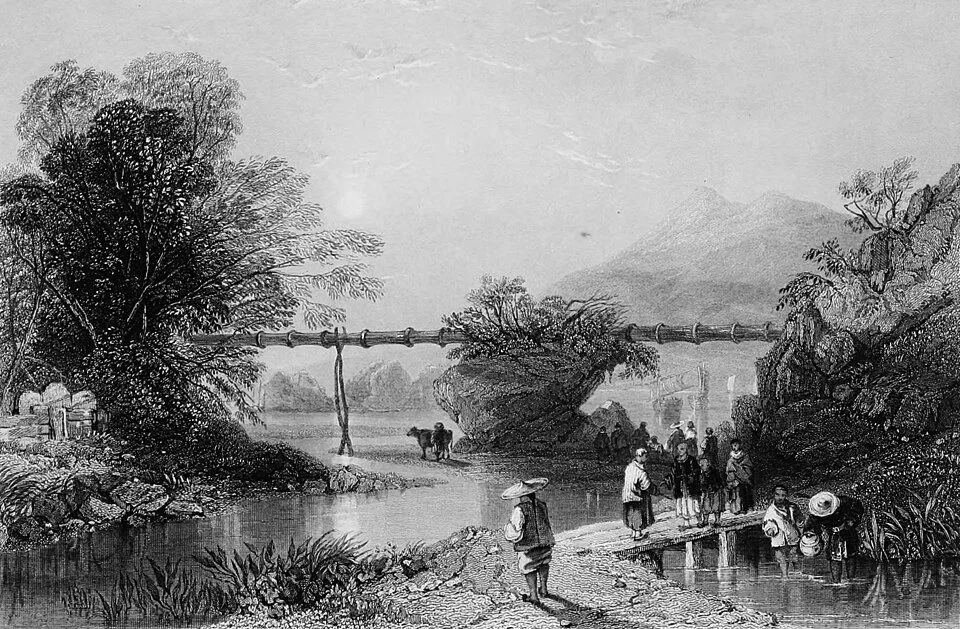
Bamboo aqueduct at Hong Kong, c. 1843 (source: wiki)
Hong Kong’s asphalt conceals over 200 hidden streams, remembered only in street names. Take Possession Street 水坑口街; the English name flags the British arrival in January 1841, while the Chinese name, "Mouth of the Water Trench," recalls the ravine that once split the settlement. Early Chinese residents tapped this downhill flow with bamboo aqueducts, whereas European settlers hired coolies to dig private wells.
Those wells soon proved inadequate. Survival meant following the water east, tracing the mountain torrent from its source high up Wong Nai Chung Gap Road 黃泥涌峽道 down into the valley along Wong Nai Chung Road 黃泥涌道. The root name translates directly as “Yellow Mud Stream”, describing the silt-heavy rush that “never failed to flow.”
In March 1841 Jardine, Matheson & Co. built the colony’s first godowns at East Point, drawn by this reliable stream. The mercantile centre clustered there, while Chinese settlement spread west. The torrent fed the so‑called Blue Pool, remembered as Blue Pool Road 藍塘道, a weir reconstructed in 1874 that saved the island in its earliest droughts. From that source, engineers channelled water into Bowrington Canal, now Canal Road East/West 堅拿道東/西.
Today the currents that once sustained a colony run silently beneath flyovers and asphalt, surviving only in names like Water Street 水街, Tai Hang Road 大坑道 (“Big Ravine Road”), and Stone Nullah Street 石水渠街.
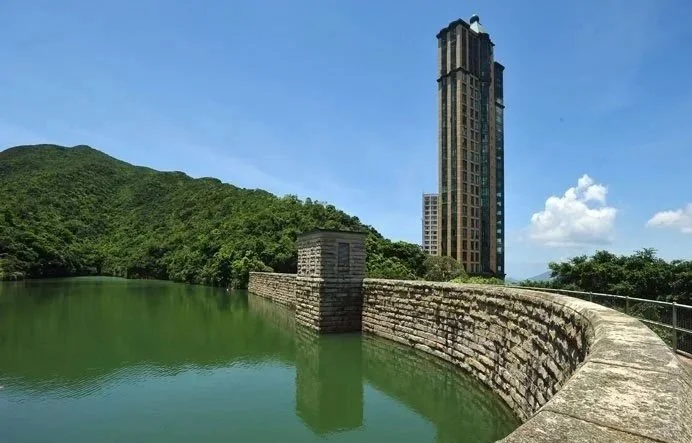
Dam wall and valve house of the Wong Nai Chung Reservoir, built in 1899 and converted into a public park in 1986 (source: Film Promotion and Facilitation Section)
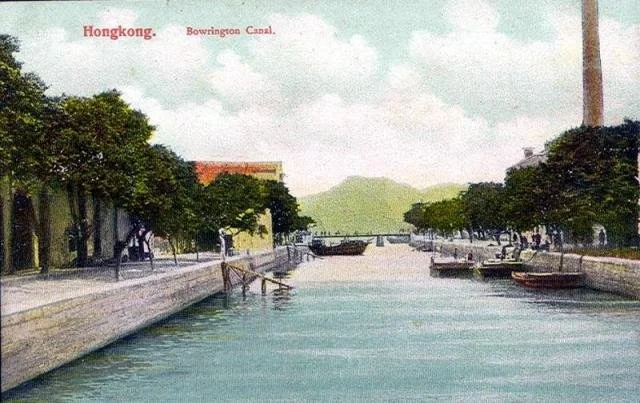
Bowrington Canal (1910s) — dug in 1864 to link Happy Valley to the sea, this historic waterway created Canal Road East and West (source: Gwulo)
Monopolising the Stream
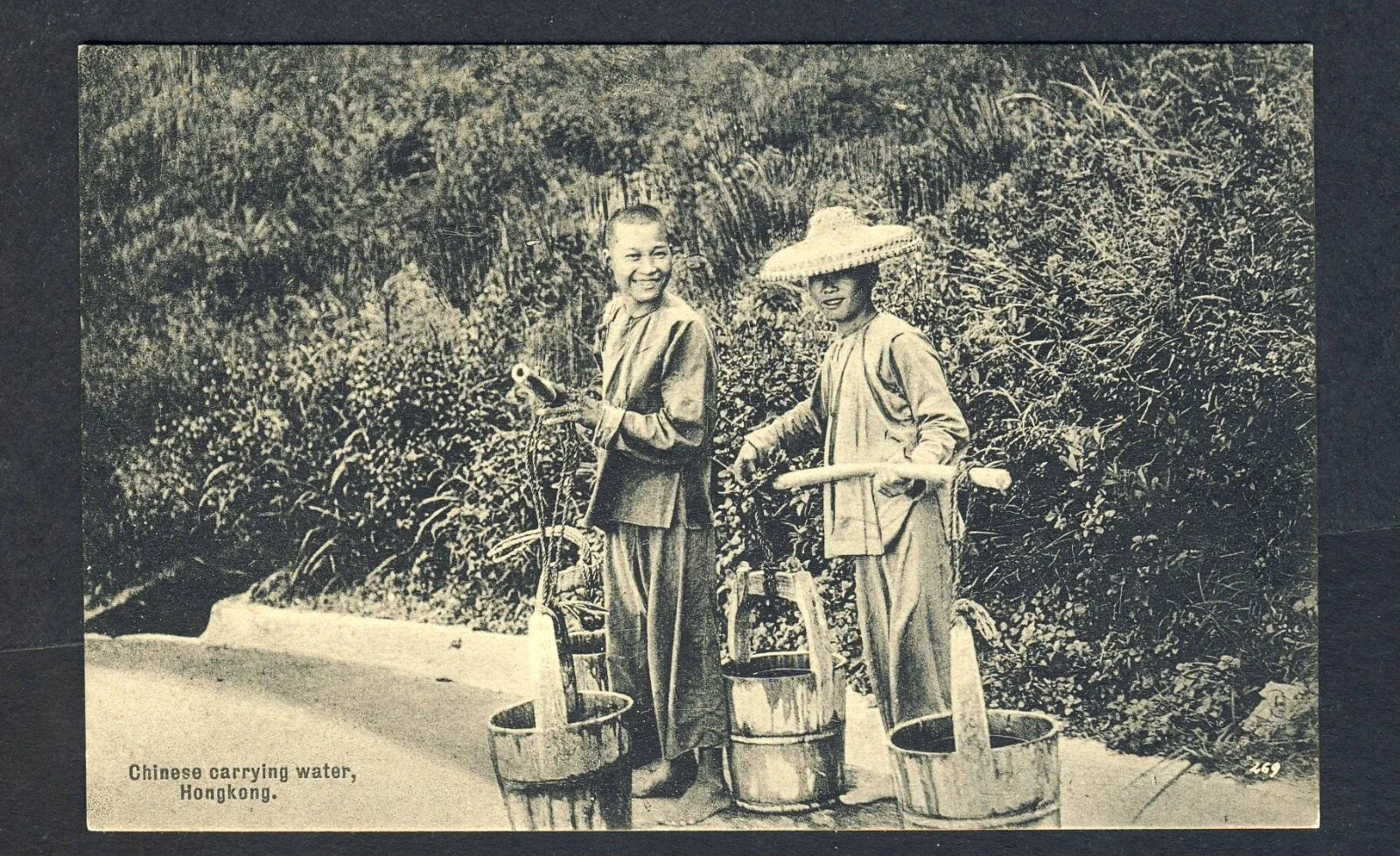
Water carriers ("Coolies"), Hong Kong, c. 1908(source: ebay)
Natural supply collapsed under population growth. Early officials largely ignored the crisis, pushing the burden onto private enterprise with a £52 (£9,242 in today’s terms) investment in just five public wells. Clean water remained a desperate luxury. After devastating fires and cholera outbreaks ravaged the city in the 1850s, the government hastily erected above-ground masonry tanks. That municipal panic survives in Sheung Wan’s Tank Lane 水池巷 and Water Lane 水巷.
Meanwhile, private operators ruthlessly cornered the remaining natural streams by damming ravines and guarding the runoff. In 1882, water coolies charged up to ten cents to haul ten gallons. For a labourer earning a mere 35 cents a day, this was crushing extortion. Thirst itself became a commodity.
Pipe Dreams
Colonial engineers broke early private water monopolies to secure the settlement's survival. The street names we know today began simply as access tracks built to service this critical infrastructure.
In the 1860s, construction started on the island's first major public waterworks, carving out the path that eventually became Pok Fu Lam Reservoir Road 薄扶林水塘道. A brick aqueduct carried water across the Mid‑Levels, later buried beneath a street paved around 1910 and aptly named Conduit Road 干德道. Urban demand outpaced supply, pushing expansion southeast in 1883 with the Tai Tam valley scheme, inscribed today as Tai Tam Reservoir Road 大潭水塘道. By the late 1920s, the government absorbed and enlarged a private dam on the southwest slopes, formalising the access now called Aberdeen Reservoir Road 香港仔水塘道.
Finally, filter beds in the Albany Valley, traced today by Albany Road 雅賓利道, cleansed the supply through layers of sand and gravel. This slow sand filtration system pushed treated water down into urban standpipes and early indoor plumbing. Water transitioned from a scarce survival asset into a reliable utility.
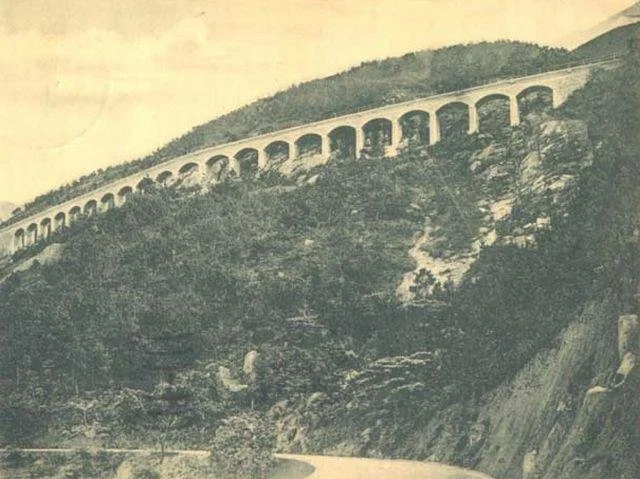
Bowen Road Aqueduct (late 1880s) — A stone conduit carrying fresh water from Tai Tam along the hillside to the urban districts below (source: Gwulo)
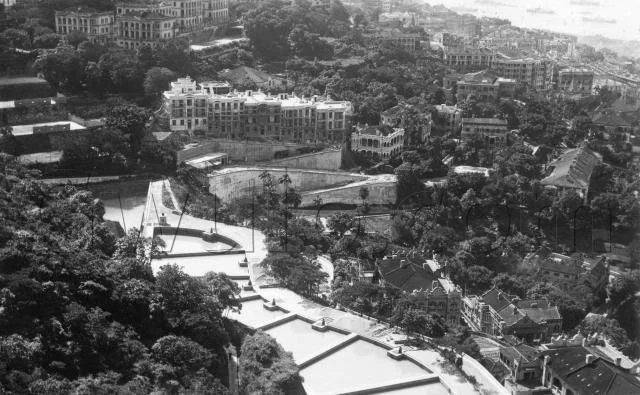
Albany Filter Beds (1930) — when Hong Kong’s water supply doubled as a postcard attraction (source: Gwulo)
The Medicine: Internal Calibration
Clean water secured the kitchen but offered no shield against the city’s suffocating humidity. Dockworkers and coolies turned to herbal teas (涼茶, leung cha, meaning “cooling teas”), bitter brews designed to purge “internal heat” (熱氣), a Lingnan imbalance marked by sore throats and ulcers. Roots and stems boiled into inky draughts flushed fatigue and oily diets. For the working class, such remedies were accessible, preventative healthcare.
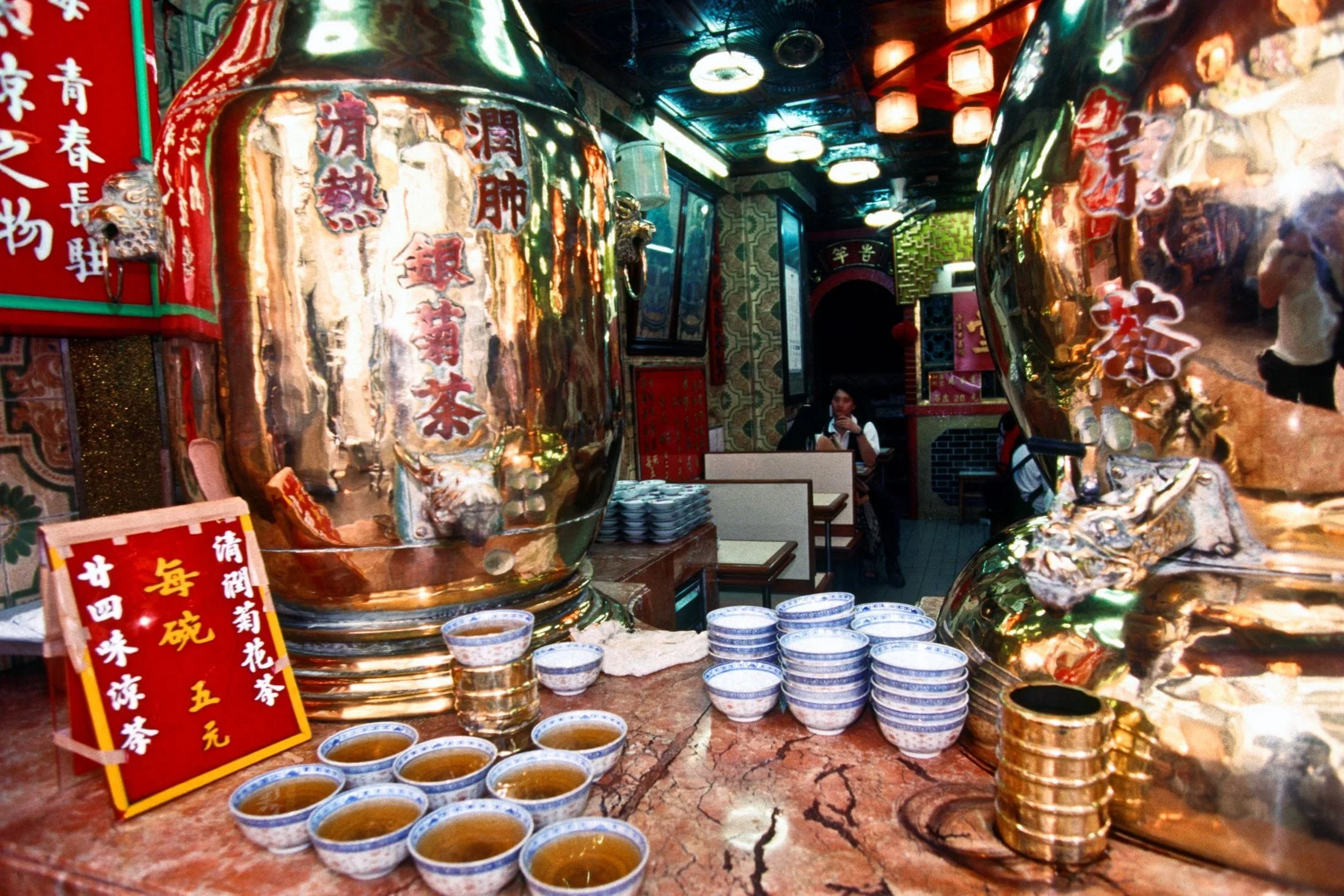
The true Hong Kong coming-of-age ritual is the moment your mother decides your baseline state is "yeet hei" (internal heat) and hands you a bitter bowl of black liquid (source: Getty)
Maritime Lifelines
Late nineteenth‑century healthcare fractured along cultural and economic fault lines. Local residents were not barred outright from Western government hospitals, but prohibitive fees and unfamiliar practices kept them at a distance. Instead, they turned to parallel systems. Herbal tea shops proliferated across Sheung Wan, serving as informal frontline clinics where a single bowl could ease everyday ailments. The reach of these remedies extended far beyond the colony. By 1869, ships carrying indentured labourers abroad were required to stock Chinese physicians and herbal tonics like 24 Flavours (廿四味), extending these lifelines across the diaspora.
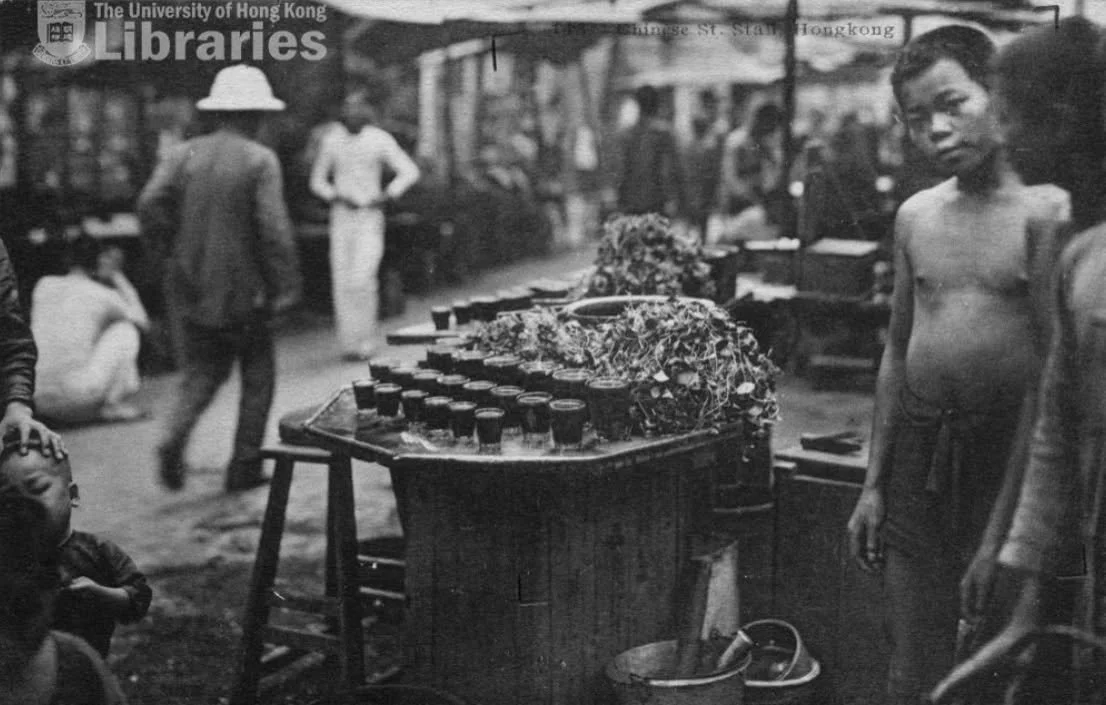
Chinese herbal tea stall in Hong Kong, c. 1930s (source: HKU Digital Repository)
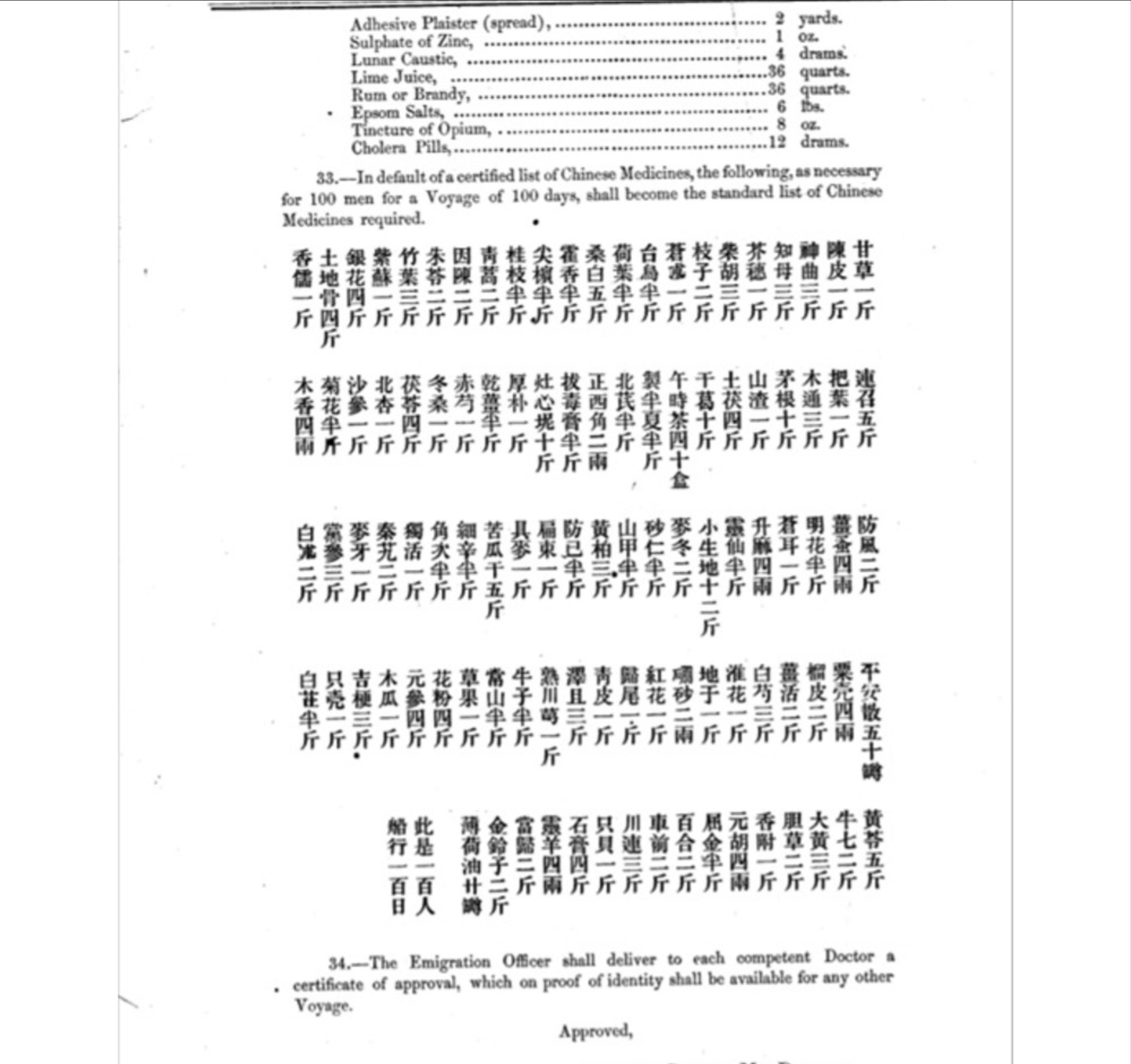
Hong Kong government mandating ships of Chinese labourers carry herbal tea ingredients (listed here in Chinese) as maritime medicine, c. 1869 (source: HK Memory)
The Teenage Dispensary
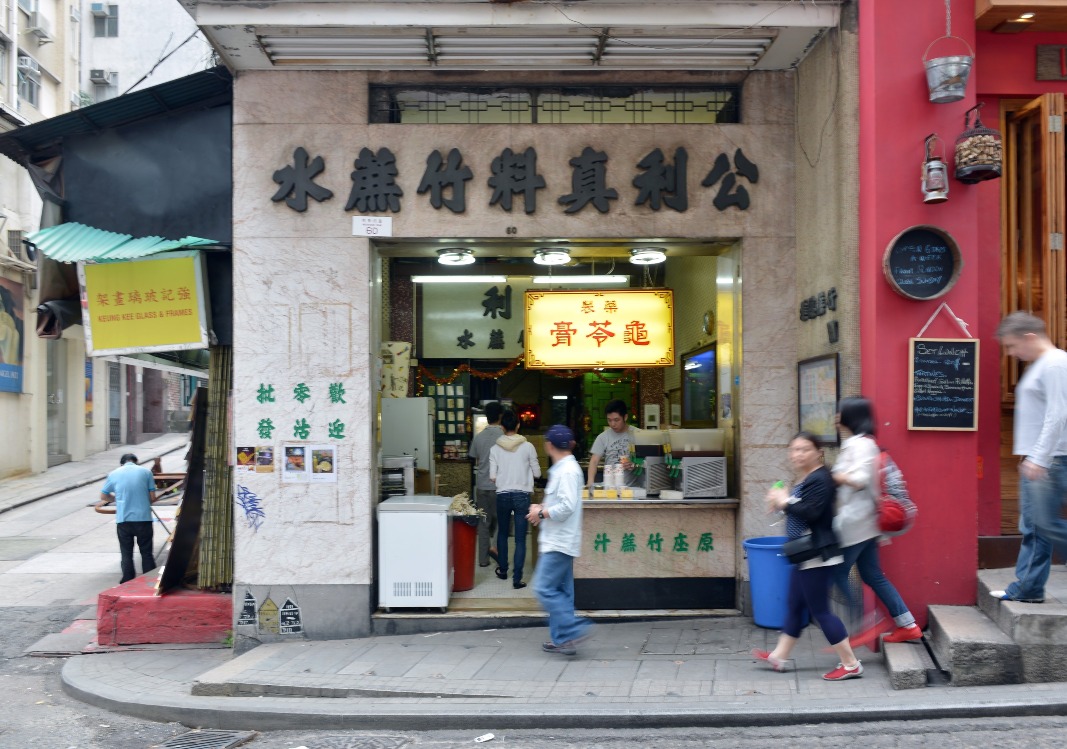
By the 1950s, herbal shops transformed into youth hangouts. Owners installed televisions and jukeboxes to court a booming youth demographic. Teenagers gathered amidst the heavy scent of boiling herbs to socialise and listen to Western pop records. Counters expanded to include sweet and accessible brews like sugarcane juice (竹蔗水) and hemp seed tea (火麻仁). Kung Lee Herbal Tea Shop (公利真料竹蔗水), operating since 1948, still presses cane through its antique juicer, preserving that era’s ritual.
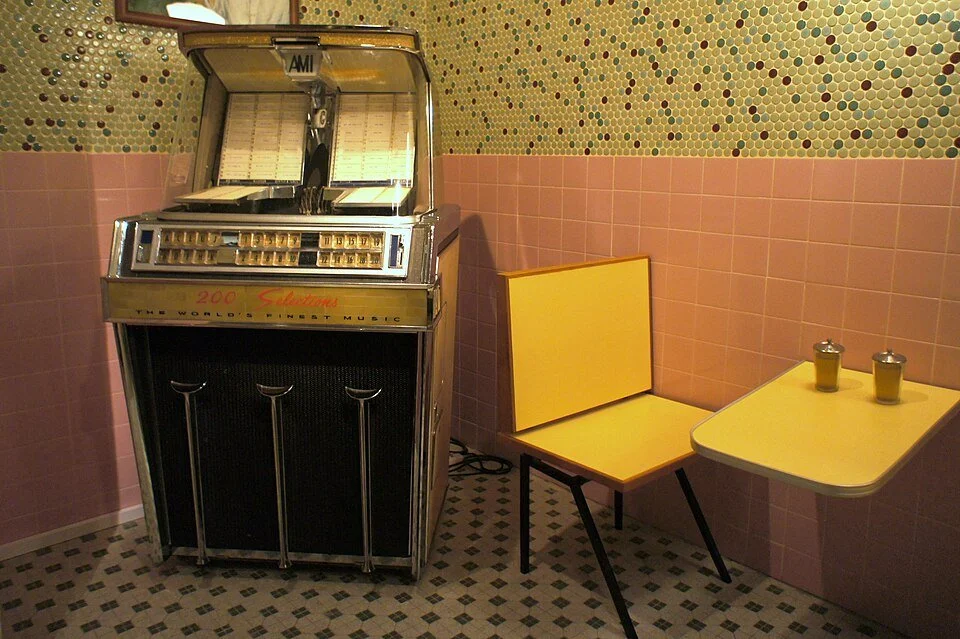
Getting the cool kids to sip on cooling teas; bitter medicinal brews became the entry ticket for hours of western pop and cheap date nights. (source: wiki)
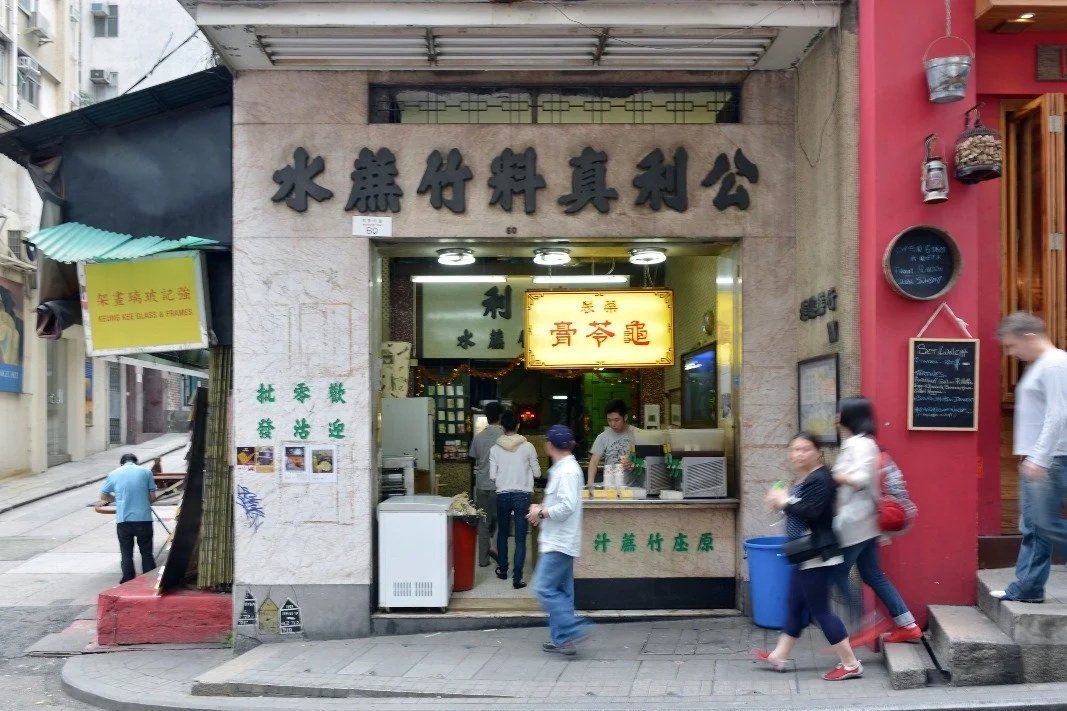
Founded in 1948, Kung Lee utilises a copper cauldron and an antique juicer to process sugarcane (source: Our China Story)
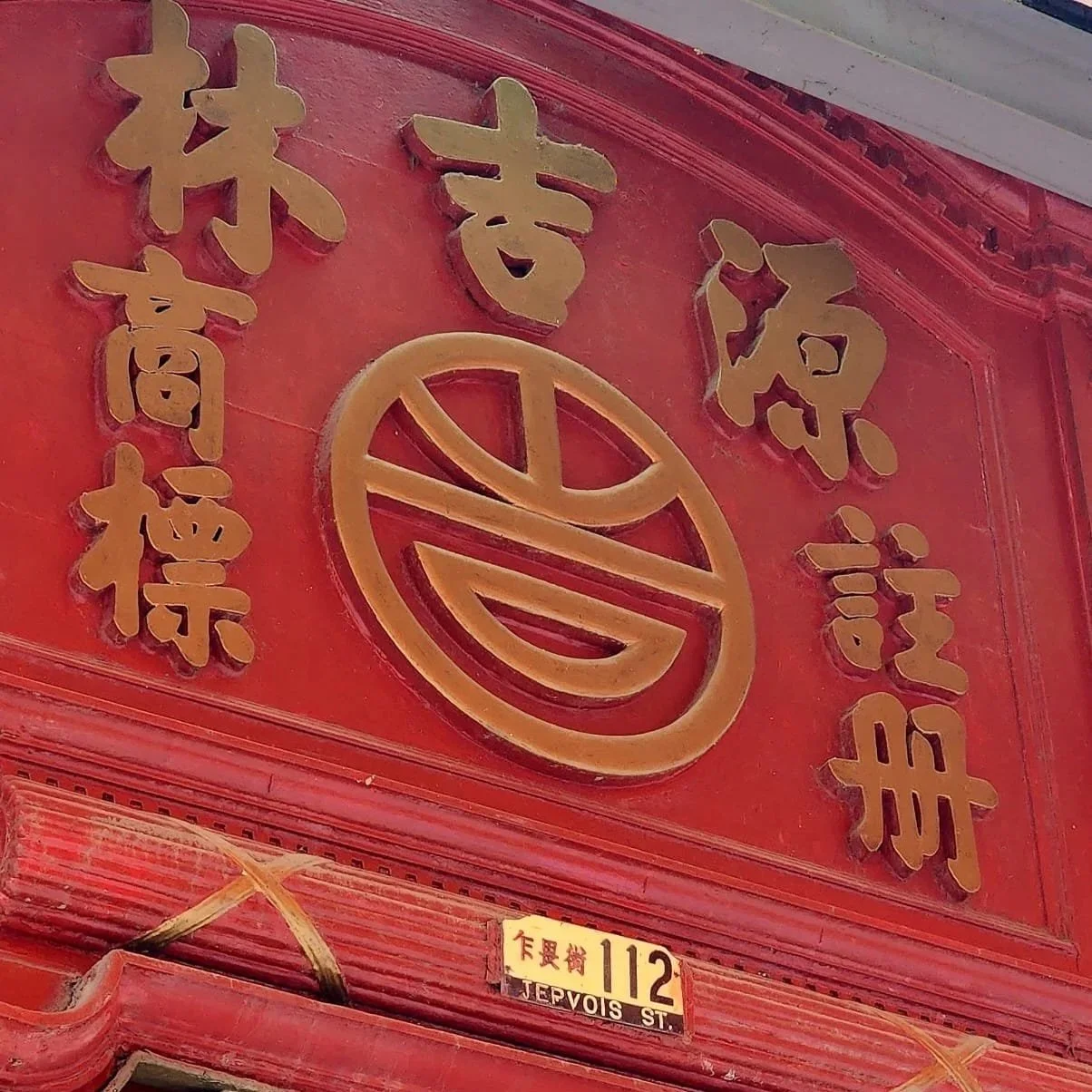
‘Dread’ Street 112
Cartographic Fossils
On Jervois Street 蘇杭街,Yuen Kat Lam (源吉林) carries a layered memory of medicine and maps. Founded in nineteenth‑century Guangzhou, the dispensary created Kam Wo Tea (甘和茶), a 28‑herb blend first brewed during a plague outbreak that became a household cure.
The Hong Kong branch settled on a road named after British General William Jervois, who oversaw Sheung Wan’s rebuilding after the 1851 fire. Its Chinese transliteration, 乍畏街 zaa3 wai3 gaai1, sounded ominously like “dread,” prompting locals to call it Su Hang Street after the textile trade with Suzhou and Hangzhou that revived the district. The government only formalised that name in 1978. Yuen Kat Lam never replaced the street sign on its frontage: the older, inauspicious characters remain in gold above the doorway, pinning daily brewing rituals to a discarded map.
The Cold: On Thin Ice
Herbal decoctions tempered the body’s internal heat, but preserving the raw ingredients of a booming port meant confronting the climate itself. In suffocating humidity, food spoiled within hours and colonial fevers proved deadly.
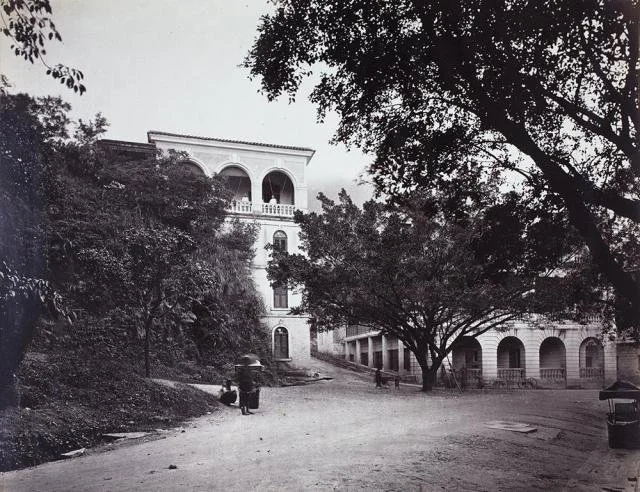
Ice House Company, Queen’s Road Central (1856) — At the junction with Battery Path and Ice House Street, the firm sold imported ice harvested from American icebergs and shipped across the Pacific, rather than manufacturing locally (source: University of Bristol)
New England on the Rocks
The colonial ice trade began as a 16,000-mile supply line from Massachusetts via Boston’s 'Ice King,' Frederic Tudor. Merchant dynasties like Augustine Heard & Co. brokered these shipments of frozen lake ice into Victoria Harbour. The firm housed its massive godowns in Wan Chai, leaving its name on Heard Street 克街.
To store this volatile cargo, the government granted an 1845 plot for a warehouse, birthing Ice House Street 雪廠街. Its Cantonese translation, "Snow Factory Street," permanently fixed ‘snow’ as the local vernacular for artificial cold, a linguistic root surviving in refrigerators (雪櫃, “snow cabinet”) and ice cream (雪糕, “snow cake”). Decades later, mechanical plants on sites like Cheung Chau’s Ping Chong Road 冰廠路 ("Ice Factory Road") replaced American imports, turning cold into an everyday commodity.
Indoor Waterfalls
Cheap ice transformed cold from maritime cargo into commercial luxury. In 1909, Cheung Kat-shing seized the moment. A devout Christian, he opened On Lok Yuen (安樂園, “Garden of Peace and Happiness”), one of Hong Kong’s first Western-style cafés. He embedded faith into commerce, enforcing Sunday closures and printing Bible verses on packaging. His Des Voeux Road flagship stunned patrons with an indoor waterfall and early air conditioning that chilled the dining room a full 15 degrees below the sweltering street.
By 1921, Cheung built Hong Kong’s first modern ice cream factory in Causeway Bay. Producing ten tons daily, seven years ahead of Dairy Farm. The plant also baked crackers and chocolates, employing hundreds to supply South China and Southeast Asia. Post‑war profits soared, and in 1961 the Central flagship was redeveloped into the 14‑storey On Lok Yuen Building that housed the YMCA and Caritas Youth Centre.
When the chain and factory closed in 1974, former staff opened Wing Lok Yuen (永樂園, “Forever Garden of Happiness”) on Chiu Lung Street 昭隆街 two years later. This subterranean diner remains famed for its secret-sauce hot dogs today, a humble echo of the empire that once cooled Hong Kong with waterfalls and ice cream.
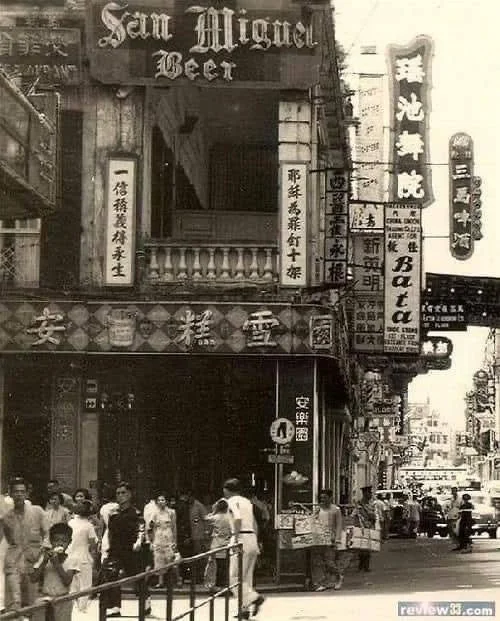
On Lok Yuen flagship restaurant at the corner of Queen’s Road Central and D’Aguilar Street in the 1950s. The two lines of Chinese under the San Miguel sign read “Jesus was crucified for our sins” and “Believe in Him if you seek Eternal Life” (source: facebook)
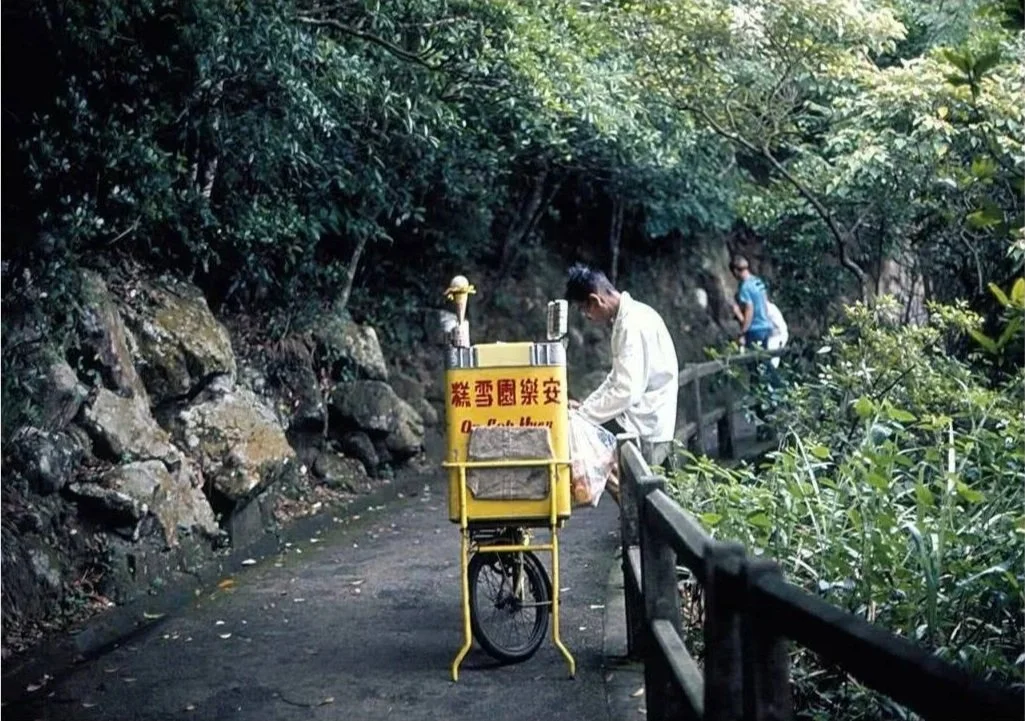
On Lok Yuen ice cream vendor on the Peak in the 1960s/70s. (source: Industrial History HK)
The Rise and Fall of the Ice Rooms
Cheung’s luxury establishment proved the viability of artificial cold, but it took the post-war manufacturing boom to truly democratise it. Modest bing sutts (冰室, ice rooms) sprang up and offered a working-class escape from cramped housing.
To mitigate fire risks in dense neighbourhoods, colonial bureaucracy restricted these venues to "light refreshment" licences. This banned the heavy exhaust systems and high-pressure gas burners required for wok cooking. Operators pivoted. Relying on simple hotplates, they combined sugar, fat, and ice into high-calorie staples: Red Bean Ice (紅豆冰) and deep-fried Hong Kong French Toast (西多士).
By the 1960s, a booming manufacturing workforce demanded substantial meals. Operators upgraded to general restaurant licences, installing the heavy-duty burners once forbidden to them. This regulatory shift birthed the cha chaan teng (茶餐廳), a hybrid diner that absorbed the traditional ice room, pairing its icy legacy with high-heat wok dishes.
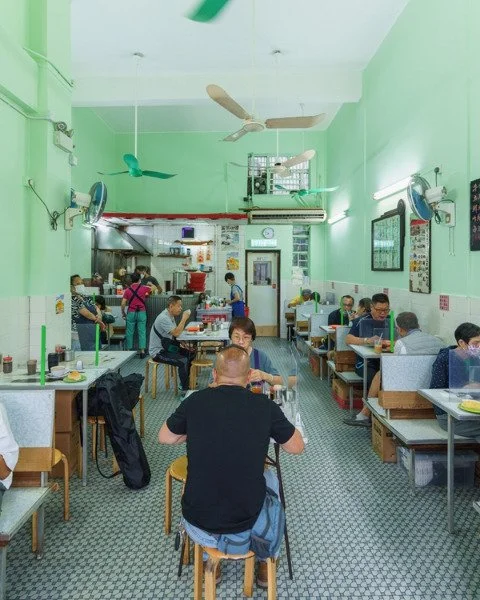
Founded in 1962 after a brief stint serving Western fare to colonial clerks, Kwong Shing Cafe in Sheung Shui has barely altered a tile in six decades (source: HK Historical Shops)
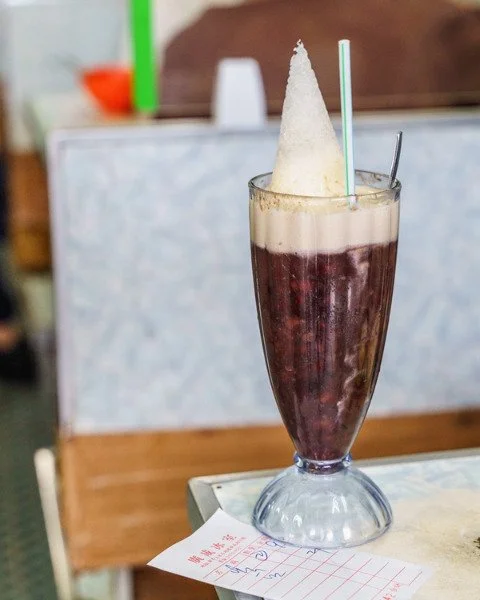
A glass packed with beans and topped by a tall hand‑shaved ice cone — simple, sweet, and still the café’s best‑loved classic (source: HK Historical Shops)
The Dairy: Milking the system
Cold infrastructure made dairy possible, a commodity once incompatible with Hong Kong’s climate and palates. Widespread lactose intolerance rendered milk alien to most Chinese residents, who viewed it with suspicion. Early demand came almost entirely from foreign households.
Sour Notes
Supplying expatriates in the 1850s remained a perilous gamble. Tropical humidity bred cattle plagues, and fresh milk soured within hours. Western residents improvised, purchasing imported ice from merchants like George Duddell, whose estate later became Duddell Street 都爹利街. Along the slopes of Garden Road 花園道, early dairies milked native buffaloes and even imported English milkmaids.
Consolidating the Cold
In 1886, Scottish physician Patrick Manson and financier Sir Paul Chater, of Chater Road 遮打道, founded the Dairy Farm Company. They acquired 300 acres of pasture in Pok Fu Lam, relying on high-altitude ocean breezes to cool imported Friesian cows. To process the yield, the company built the Old Dairy Farm Depot on Lower Albert Road 下亞厘畢道 in 1892. By 1918, Dairy Farm acquired the Hong Kong Ice Company, consolidating the city’s cold supply, cold storage, and food retail under one corporate roof in Central.
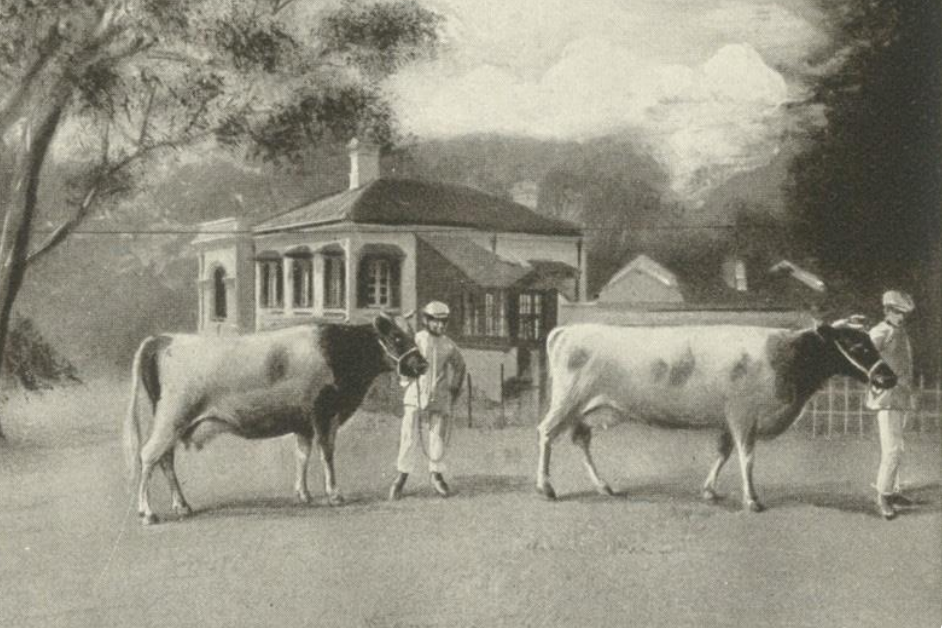
Handlers pose with cattle outside the 1887 Senior Staff Quarters of the Old Dairy Farm in Pokfulam (source: AMO)
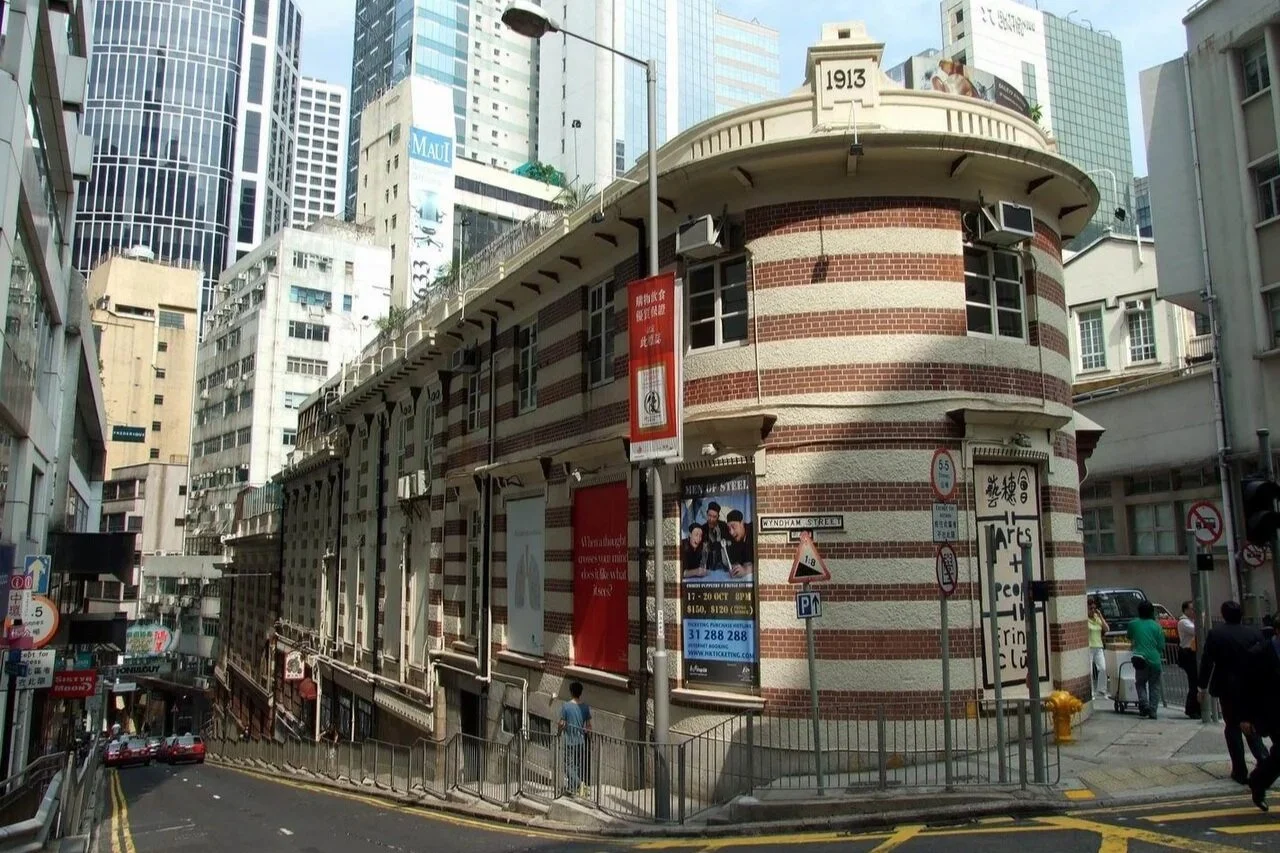
Constructed in 1892 as a meat and dairy depot to hold imported butter and ice, this wedge-shaped brick warehouse now houses the Fringe Club, serving up contemporary art instead of cold cuts (source: wiki)
Pastoral Pipeline
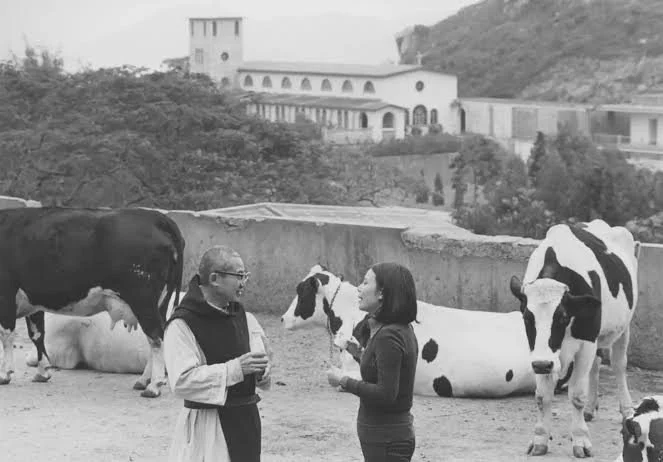
Trappist Haven Monastery in 1975. (source: Zolima)
Post‑war Hong Kong’s dairy market was split: imported tins sustained the masses while sterile cold chains served the elite. In the hills of Lantau, a third force quietly emerged. In 1950, Trappist monks fleeing the Chinese Civil War settled at Tai Shui Hang, brought a small herd of cows to feed themselves. Bound by vows of silence and labour, they founded the Trappist Haven Monastery dairy in 1953, producing one of the city’s most trusted sources of fresh milk.
With no roads on Lantau, distribution relied on improvisation. Red-capped bottles of Trappist Dairy (十字牌牛奶) crossed the harbour by ferry to Jordan Road Pier. Bypassing the street-level cha chaan tengs entirely, the monks secured strictly institutional contracts, supplying the sterilised wards of St. Teresa’s Hospital and the dining rooms of the Hilton.
For decades, their milk held a rare position: locally produced, widely trusted, and independent of British monopolies or canned imports. When operations shifted to Yuen Long in the 1980s, the herd was released, merging with discarded draft animals. Their descendants still roam Lantau’s ridges today—living relics of a silent order.
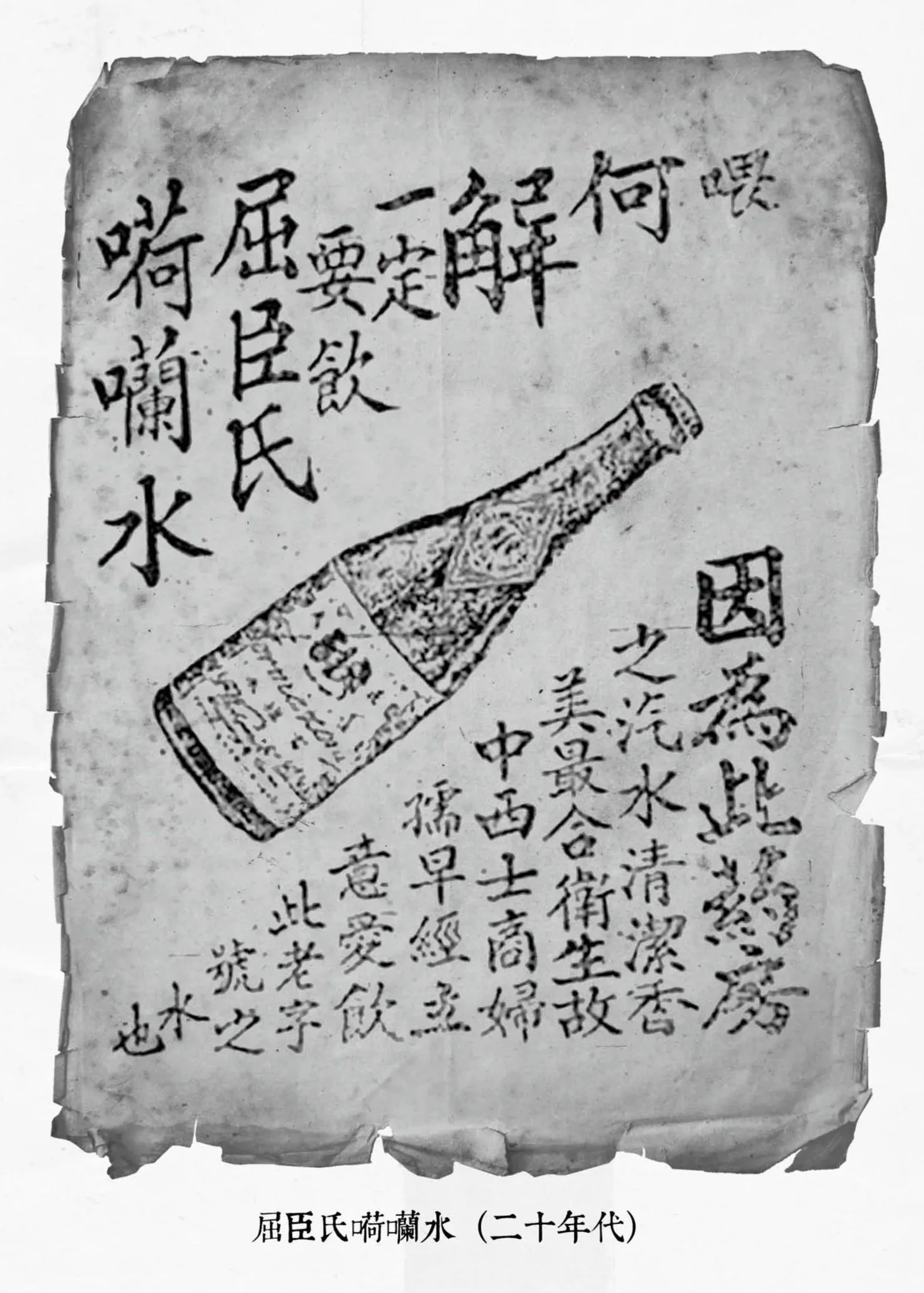
1920s: A.S. Watson’s hand‑lettered pitch for ‘Holland water’ (荷蘭水) - ‘Hey! Why must one drink A.S. Watson's Holland Water? Because the aerated water from this dispensary is clean, fragrant, delicious, and meets the highest hygienic standards, Chinese and Western merchants, gentlemen, women, and children alike have long preferred to drink the water from this time-honoured brand.’ (source: HK01)
The Fizz: Pop Culture
Carbonation in Hong Kong began not as leisure but as medicine. Aerated water’s acidity was believed to neutralise pathogens in contaminated wells, turning bubbles into a shield against disease.
Holland Water Rooms
Apothecaries along Hollywood Road seized on this logic in the 1870s. Watson’s Dispensary established “Holland Water Rooms” (荷蘭水房), borrowing the name from Dutch merchant vessels that had first carried carbonated cargo into the Pearl River Delta. These effervescent tonics were marketed as health remedies. Shops in Lan Kwai Fong sold syrups and “Holland Water Powder,” while Cantonese palates experimented with carbonated mulberry and sarsaparilla at the counter.
Industrial Expansion
Watson’s scaled fizz into industry. In 1912, its colossal North Point factory on Watson Road 屈臣道 churned out bottles sealed with cork-lined crown caps. Children scavenged discarded crown caps, flattening them into improvised medals. What began as a street game soon sharpened into satire: adults mocked the Empire’s highest honours as ‘Holland Water Caps’ (荷蘭水蓋), equating prestigious awards with the cheap lids of soda bottles.
Post-war, carbonated drinks sparked a fierce commercial territory war. The Swire Group acquired Hong Kong Bottlers Federal Inc. in 1965. Taking over the Coca-Cola franchise, they built a colossal Quarry Bay bottling plant along Greig Road 基利路, honouring Kenneth Edward Greig, the historic Taikoo Dockyard's long-serving chief engineer.
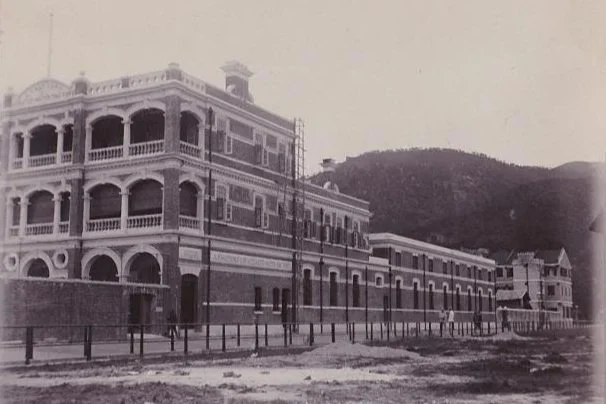
A.S. Watson’s red‑brick Aerated Water Factory in North Point in 1905 (source: Gwulo)
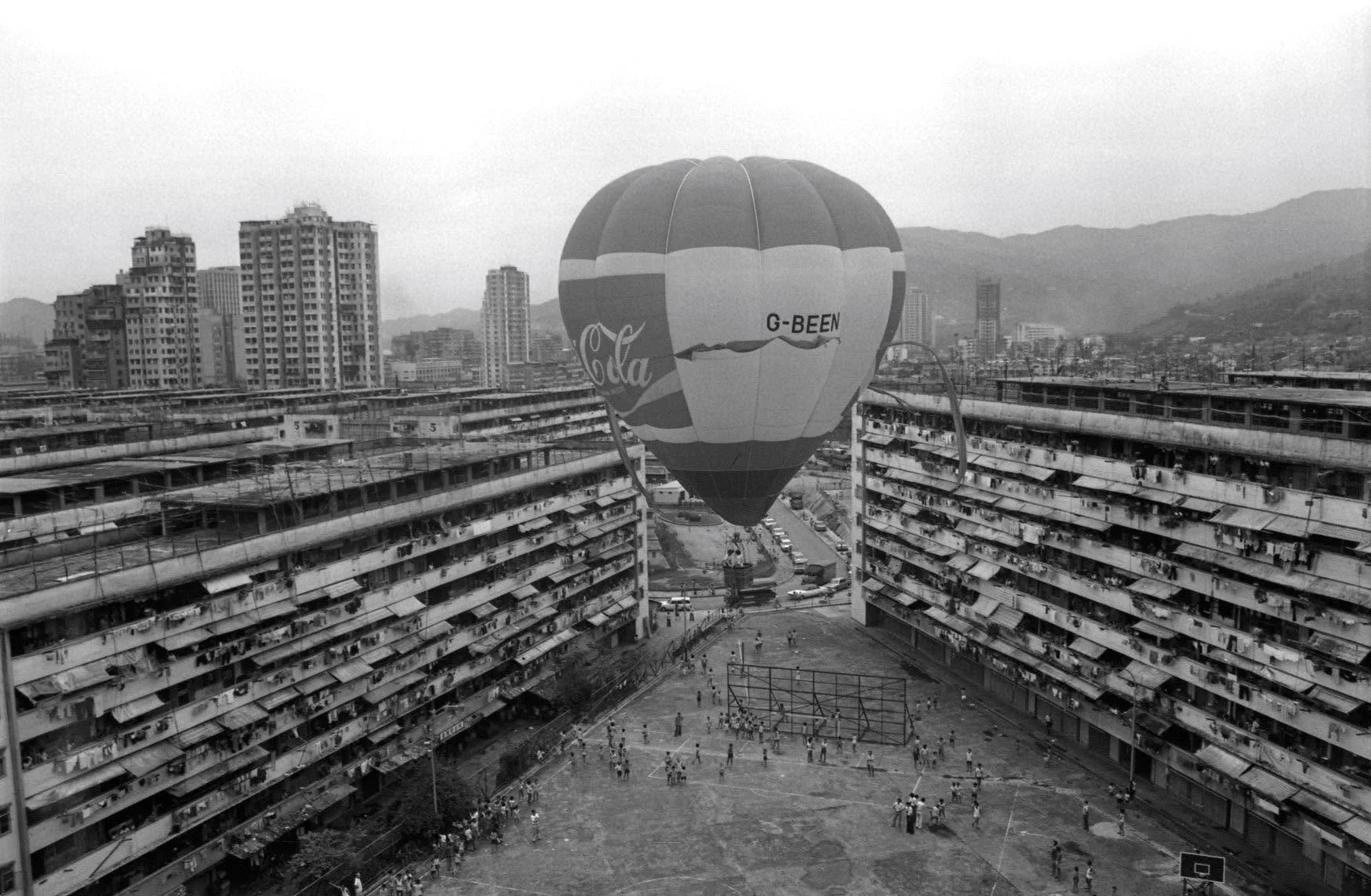
A Coca-Cola hot-air balloon flying up, up and away from the noise and crowds of Kwai Chung Estate. in 1977 (source: SCMP via Getty Images)
Street‑Level Alchemy
Working-class cafés quickly adapted these industrial sodas using traditional principles of bodily calibration. Salt-preserved limes dropped into lemon-lime soda created “Salty Lemon 7-Up” 鹹檸七 (haam4 ling4 cat1), soothing throats in humid summers. A scoop of chocolate ice cream submerged in cola yielded “Black Cow” 黑牛 (hak1 ngau4), decadent and playful. Fresh milk poured into vanilla Schweppes cream soda produced “Cream Soda and Milk” 忌廉溝鮮奶 (gei6 lim4 kau1 sin1 naai5), whipped into a velvety emulsion so beloved it lent its name to a 1981 Hong Kong New Wave film.
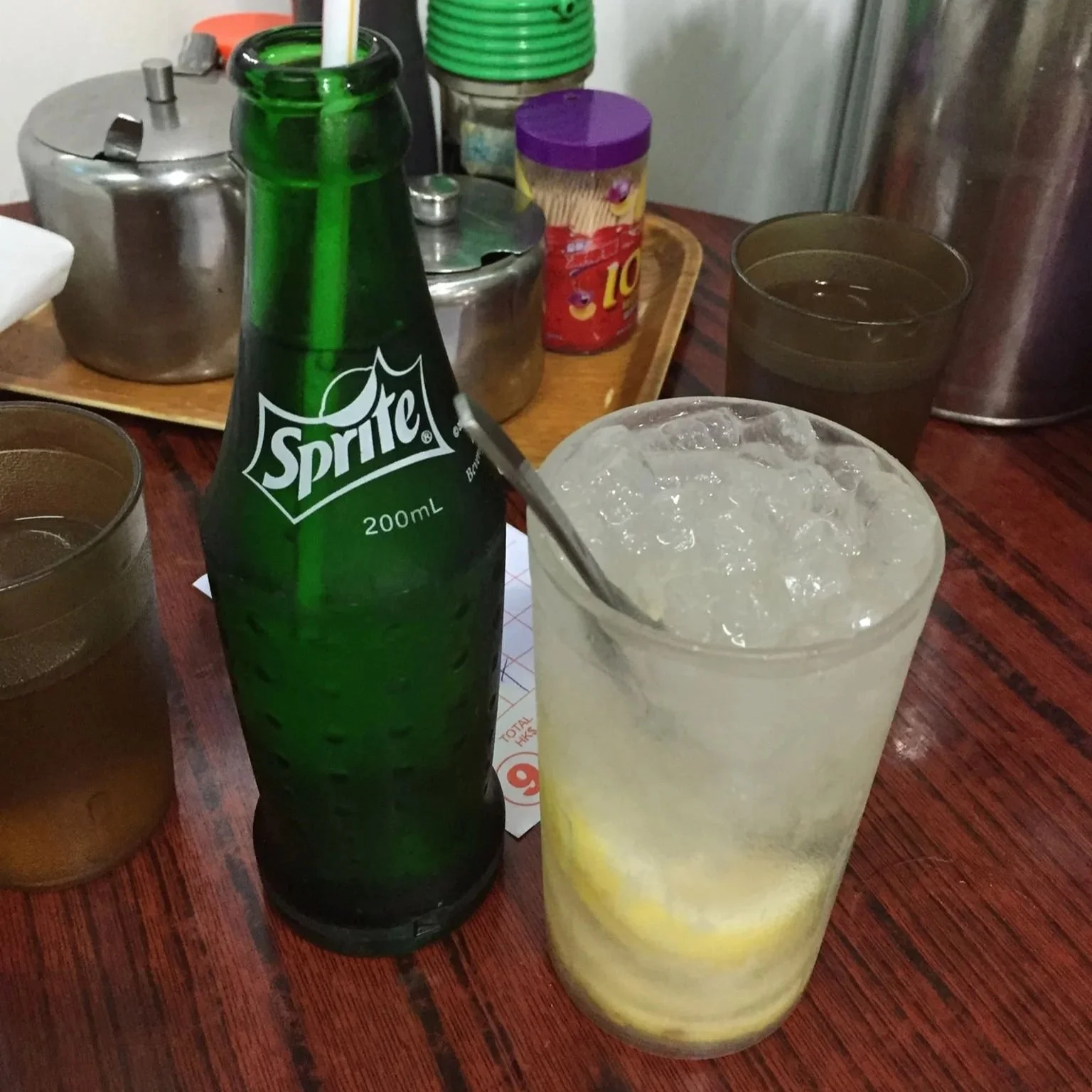
“Salty Lemon 7-Up” 鹹檸七… well Sprite in this case (source: wiki)
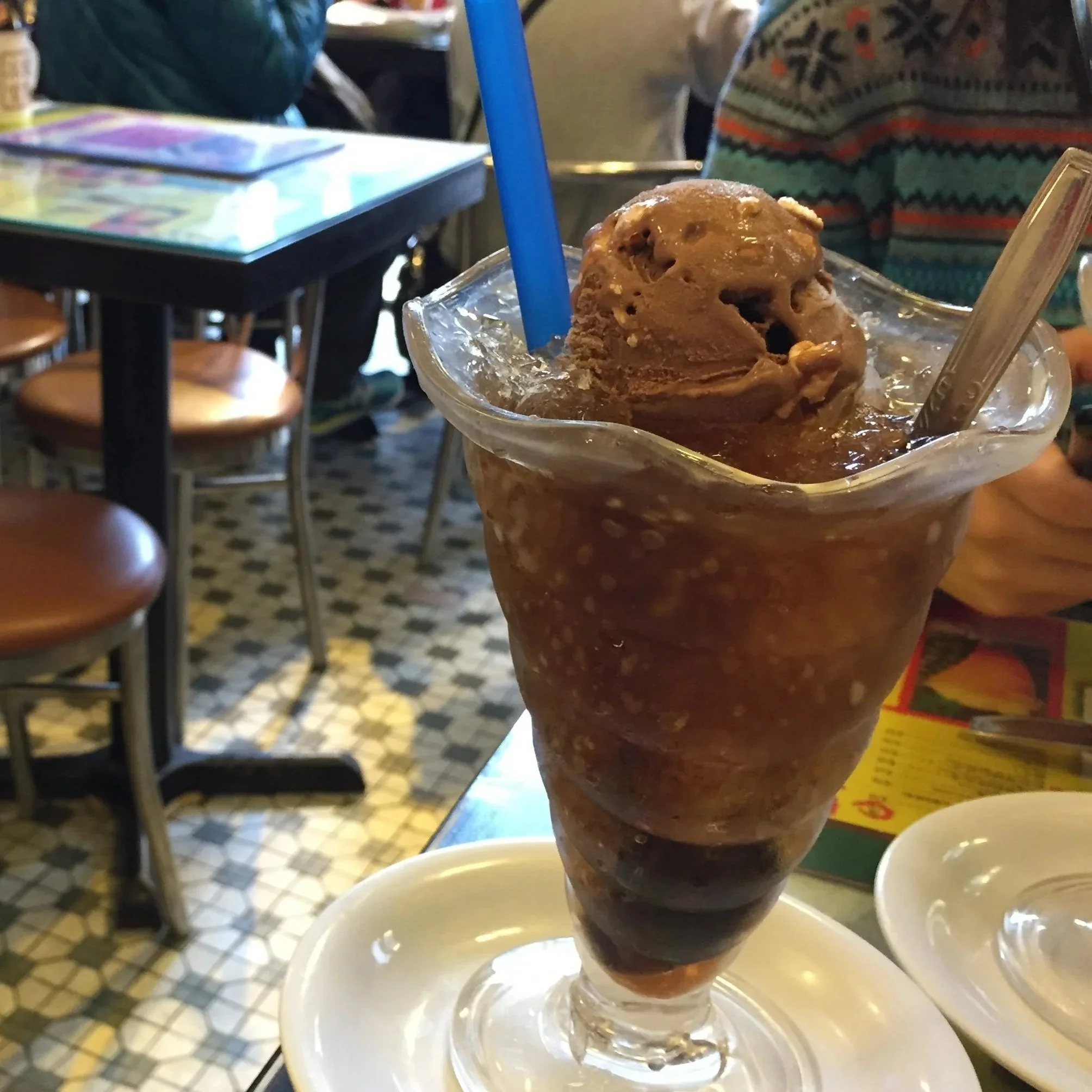
“Black Cow” 黑牛 (source: HK Youth Hostels Association)
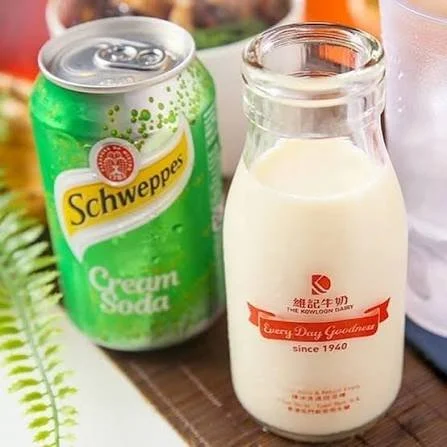
“Cream Soda and Milk” 忌廉溝鮮奶 (source: Facebook)
The Alcohol: Spirited diplomacy
As dusk fell, Hong Kong turned to stronger fuel. At open-air dai pai dongs, chefs relied on sam ching (三蒸, “thrice‑distilled” rice wine) to deglaze claypots and flame char siu. This fiery spirit shaped history long before it became a kitchen staple.
In 1839, a violent incident in Kowloon underscored how alcohol could inflame imperial tensions. Drunken British and American sailors from merchant ships brawled in Tsim Sha Tsui village and murdered a local villager named Lin Weixi (林維喜). When Qing officials demanded the culprits for trial, British Superintendent Charles Elliot refused to surrender them, citing jurisdictional limits. The incident, together with opium seizures and mounting diplomatic standoffs, became one of several flashpoints that pushed tensions toward the First Opium War.
Native Spirits
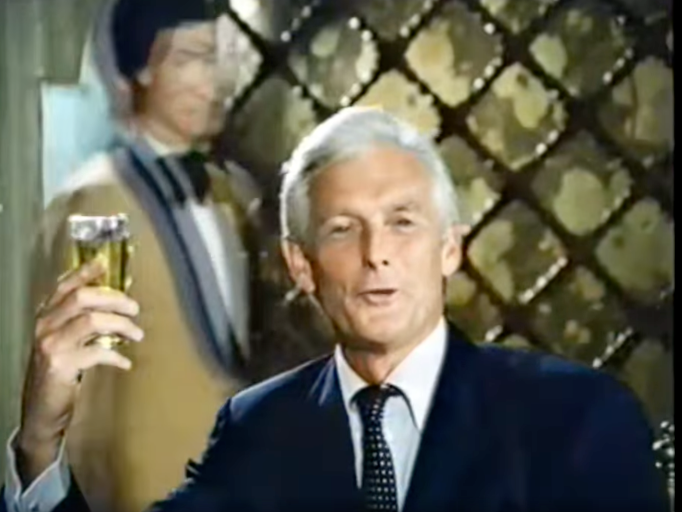
When your boss speaks Cantonese… sort of (screen cap of the iconic advertisement)
The footprint of this native spirit remains etched into the geography. Tai Ching Cheung Road 大蒸場路, “Big Distillery Road” and Wine Street 酒街 in Yuen Long Old Market recall early brewing grounds.
As the colony developed, policy segregated the taps. The 1898 Liquor Licences Ordinance legally enforced a parallel drinking culture. Chinese wine shop licences carried a blunt statutory condition: "no Chinese wines or spirits shall be sold... to persons other than Chinese."
By the mid‑20th century these barriers fell, and liquor makers seized the chance to market across cultural lines. One of the most memorable advertisements was for Chuk Yip Ching (竹葉青). Television spots staged playful encounters between construction workers and their foreign supervisors, with the boss delivering the slogan — “你精我都精,飲杯竹葉青” (“You’re sharp, I’m sharp too — let’s drink Chuk Yip Ching”) in stiff Cantonese. The humour, paired with scenes shifting from dusty worksites to upscale restaurants, made the herbal liquor a symbol of Hong Kong’s hybrid modernity.
Highball Hierarchy
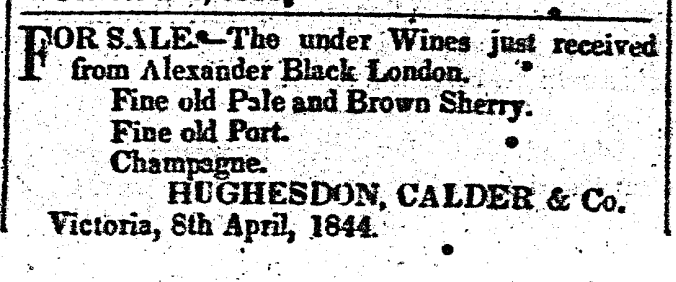
Hughesdon Calder & Co. advertised sherry, port, and champagne fresh from London in 1844, Government Gazette (source: HKU Digital Library)
European merchants uncrated imported sherries, ports, and champagne along the waterfront. Firms like Hughesdon, Calder & Co. managed these luxury consignments to supply military officers, traders, and administrators. Though their harbourfront godowns vanished, the firm's footprint lingers uphill on Calder Path 歌老打路.
These imports soon breached the barrier between European clubs and Chinese social spaces. French Cognac brands like Hennessy became fixtures at local banquets. Placed on revolving lazy susans, premium spirits became the currency of celebratory feasts and business negotiations. While elites traded in high-proof imports, the streets demanded a different kind of drink.
Wok Hei and Blue-Collar Lagers
Industrial brewing scaled permanently in 1933 when Jehangir Ruttonjee founded the Hong Kong Brewery in Sham Tseng, drawing fresh water from Tai Mo Shan streams. San Miguel acquired the plant in 1948. Ruttonjee’s wealth, shadowed by the loss of his daughter to tuberculosis, later funded the Ruttonjee Sanatorium (now Ruttonjee Hospital) in Wan Chai, a landmark in the city’s public health history.
Scaling this coastal plant democratised beer across the territory. Accessible lagers moved from colonial clubs to plastic tables at dai pai dongs. Locals dubbed beer ’gwilo leung cha’ 鬼佬涼茶 (“foreigners’ herbal tea”). It was a wry nod to its cooling role beside wok hei (鑊氣), the literal "breath of the wok" that defined local street food.
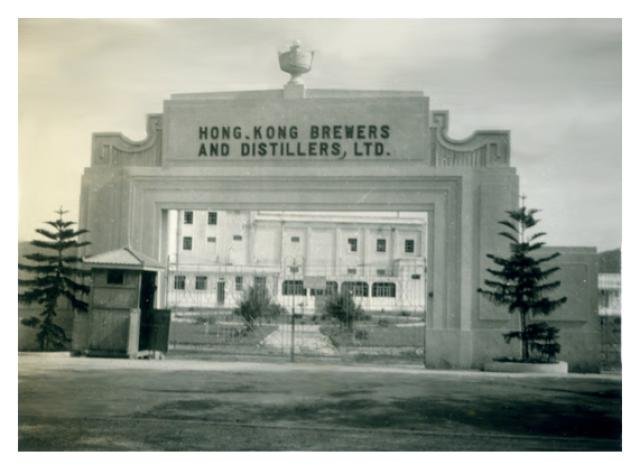
Hong Kong Brewers and Distillers in 1935, the distillery never happened (source: gwulo)
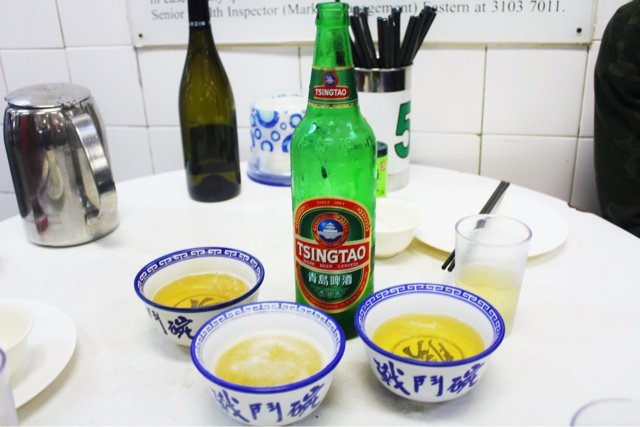
The only herbal tea that pairs perfectly with a plastic stool and a folding table (source: Hungry HK)
The Tea: Steeped in Finance
Tea in Hong Kong was capital and class made liquid. Elites brewed imported whole leaves in porcelain, while labourers turned dockside tea dust into a concentrated, workday stimulant. At the same time the ritual of yum cha (飲茶) bridged those worlds, binding family gatherings to business deals and giving the city a shared rhythm of taste.
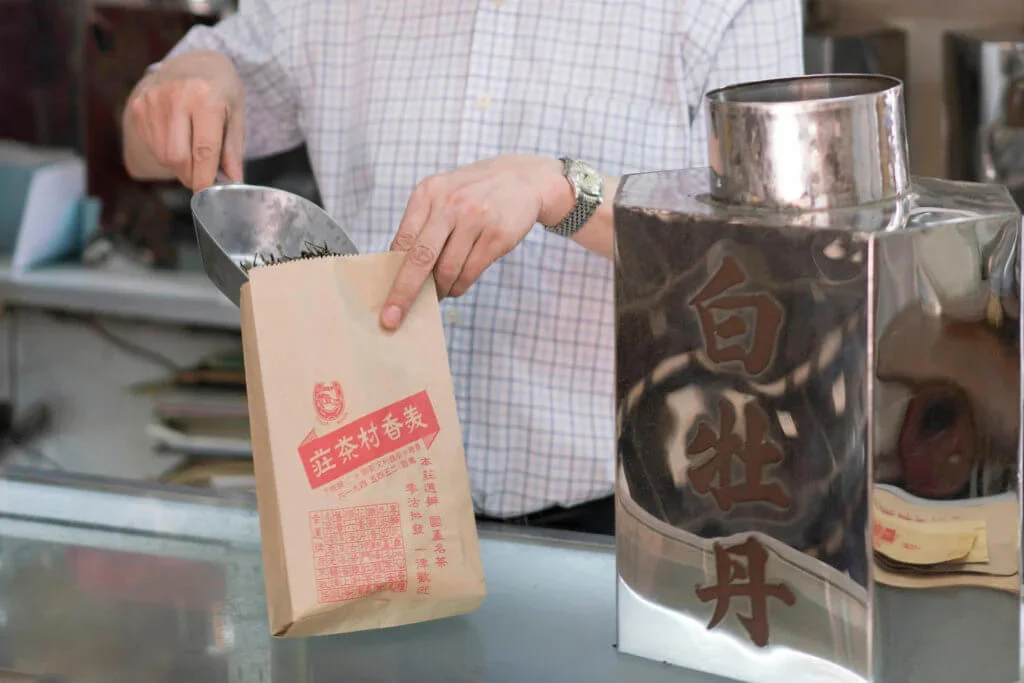
Traditional Hong Kong tea shop packaging at Mei Heung Chuen: fragrant leaves carefully wrapped in paper bags to guard against humidity. (source Mingpao Weekly)
Shoreline Exchanges
From the mid-19th century, the tea trade anchored Hong Kong’s commercial geography. Merchant houses crowded the old Sheung Wan shoreline to buy, grade, and export leaves. Tea taster Richard James Gilman arrived from London in 1847 and founded Gilman, Bowman & Co., one of the firms that helped establish HSBC. His name survives in Gilman Street 機利文街 and Gilman’s Bazaar 機利文新街, where yards once sorted leaves for imperial export. Rival Dent & Co. ran a Tea Exchange nearby, and Queen’s Road West bustled with dealers supplying the finest grades.
You can still buy into a piece of that heritage today. At 12 Gilman’s Bazaar, Mei Heung Chuen Tea Co. (美香村茶莊) has operated since 1964. Selling traditional Chinese teas and utensils, the shop preserves the physical aesthetics of the old trade, stacking red-and-white boxes printed in vintage, distinctly local fonts.
Rooms by Class
Commerce reshaped local architecture, mapping social class directly onto floor plans and daily schedules. The modest cha lau 茶樓 (“tea houses”), originally roadside pavilions, operated strictly from dawn to dusk. Doors unlocked at 5:00 AM for market porters refuelling on “one pot, two pieces” (一盅兩件): a pot of tea and two dim sum bites.
Heng Fa Lau (杏花樓), opened in 1846, brought this daylight rhythm into Hong Kong’s first purpose-built tea house. Labourers packed the open-air ground floor for cheap buns and weak tea. Clerks took the middle levels. Wealthy merchants climbed to top-floor salons, sipping imported brews beside caged songbirds. Every floor marked a distinct social rung.
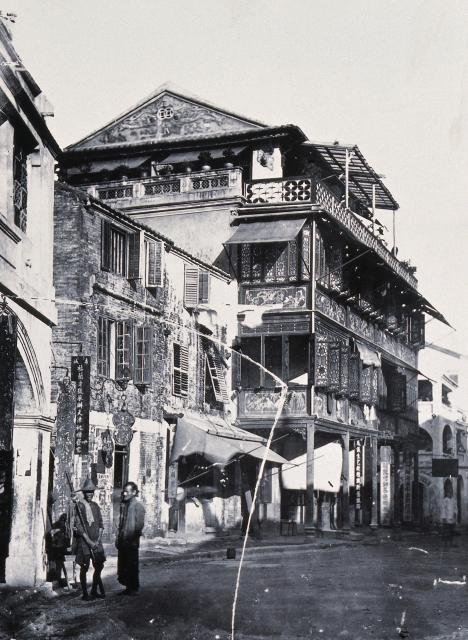
Heng Fa Lau , at the intersection of Wellington Street and Aberdeen Street in 1869 (source: Gwulo)
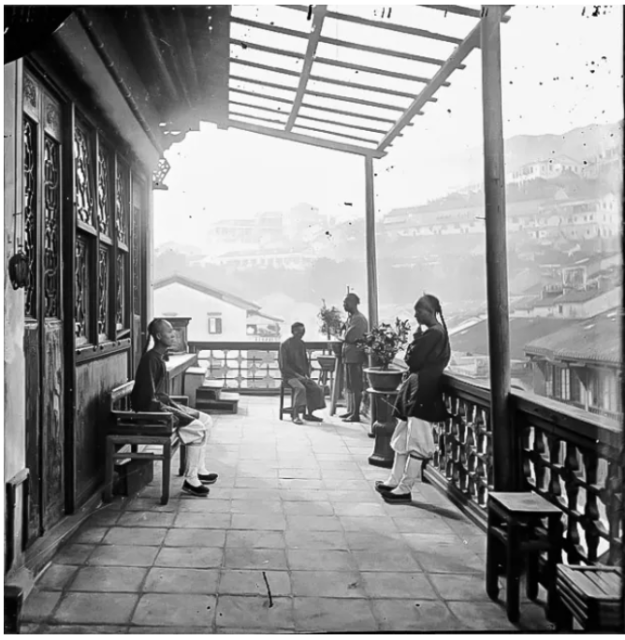
Top floor patrons at Heng Fa Lau in 1870 (source: Gwulo)
Morning Tea, Midnight Banquets
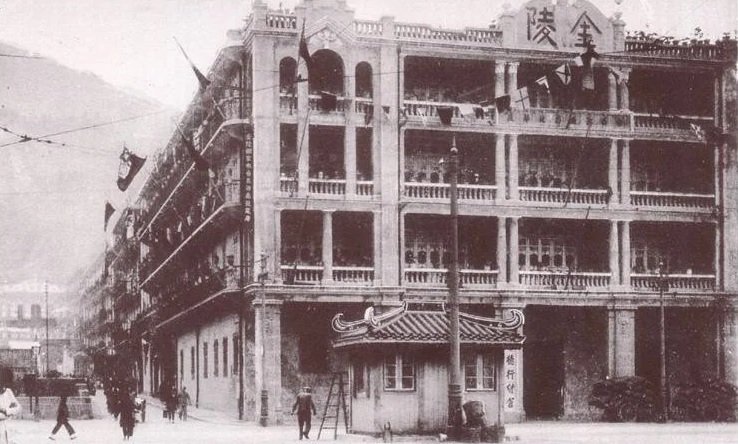
Kam Ling Restaurant stood at the corner of Hill Road and Des Voeux Road West in Shek Tong Tsui in 1915 (source: flickr)
While today cha lau and jau lau 酒樓 (‘wine houses’) are treated as interchangeable terms, they once occupied completely different schedules and social spheres. Cha lau opened before dawn, serving tea and dim sum to early‑shift workers, while jau lau rarely opened before midday, running deep into the night.
Clustered in pleasure districts like Shek Tong Tsui, they stood beside brothels, cementing their reputation for uninhibited indulgence. In the 1910s, multi-storey Kam Ling Restaurant (金陵酒家) coined jau gaa 酒家 (‘wine home’) , inspired by a Tang poem. The term spread quickly, defining Hong Kong’s elite dining scene. Though a single banquet could equal an ordinary man’s annual wage, elites from the city flocked nightly, spending fortunes without pause.
Post‑War Collapse and Theatrical Dining
The post-war recovery shattered the old divides entirely. A surging appetite for dining out diversified the city’s palate, as regional cuisines from across the mainland flooded the market to help forge Hong Kong’s reputation as a food capital.
By the late 1950s, rising operational costs forced proprietors to adapt. Venues extended their hours from pre-dawn into the late night to maximise table turnover, erasing the distinction between cha lau and jau lau. Industrial speed altered customer expectations. Quick, filling meals displaced the slow, deliberate appreciation of tea. To compete, these massive new hybrid venues leaned into sheer spectacle. Grand dining halls mounted gilded dragon and phoenix sculptures, selling resplendence and scale to match a rapidly accelerating city.
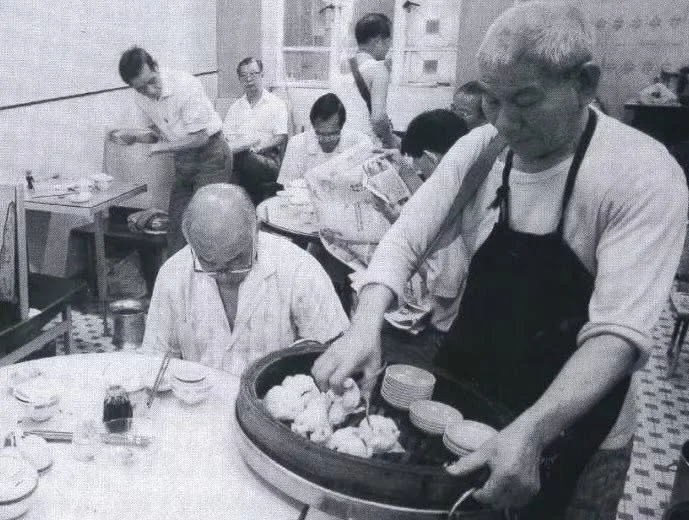
In the 1970s, early teahouse vendors strapped iron trays of dim sum to their chests, calling out as they walked (source: Our China Story)
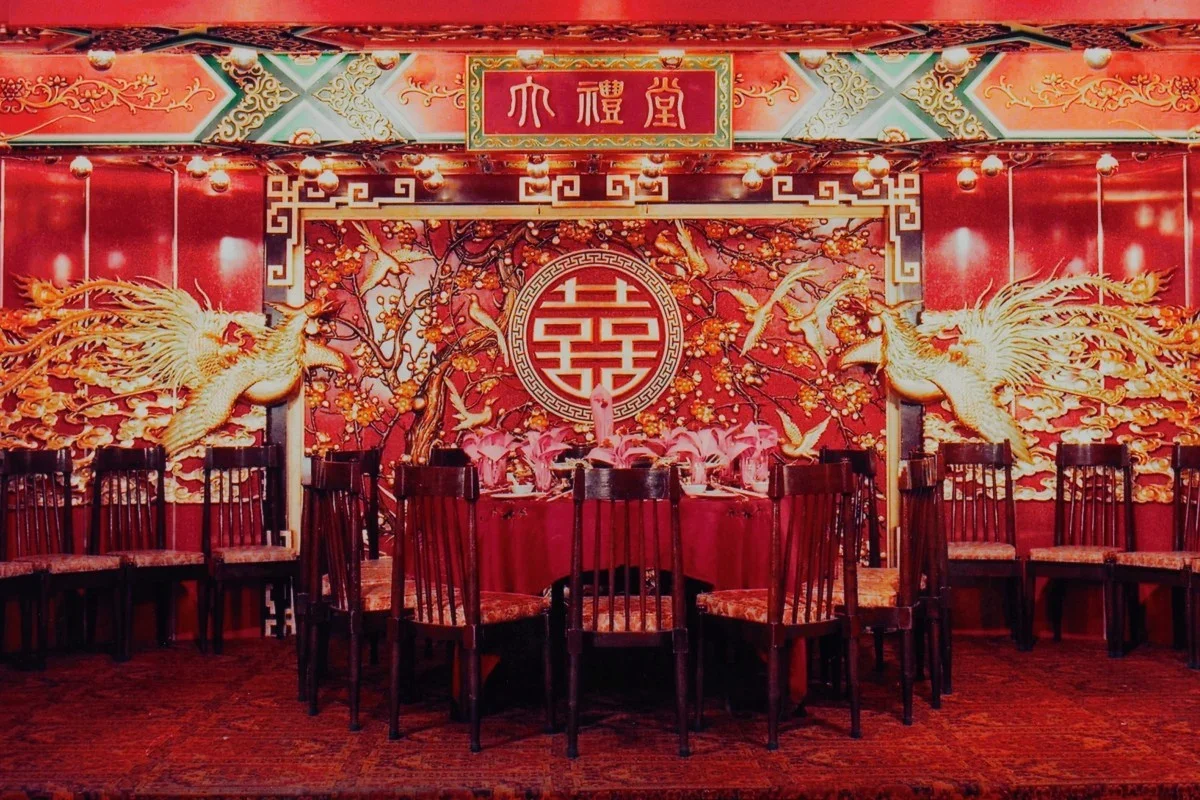
The iconic Dragon and Phoenix banquet hall from Hong Kong's historic Diamond Restaurant 鑽石酒家 (1947-2002) epitomises mid-century Cantonese wedding culture with its lavish, handcrafted scarlet woodwork and gilded carvings. (source: SCMP)
Imperial Waste and Street Chemistry
The city’s classed distribution of tea left a physical residue. Whole leaves sailed to Europe or ascended to the elite salons; intensely caffeinated tea dust stayed on the docks. Local hawkers transformed that harsh byproduct into invention.
In 1952, at an open-air Gage Street stall, Lan Fong Yuen 蘭芳園 perfected a method: straining bitter dust through sackcloth until the fabric stained tan, giving birth to silk‑stocking milk tea (絲襪奶茶 si1 mat6 naai5 caa4). Canned evaporated milk was chemistry as much as taste: its fat bound and masked harsh astringency, producing a thick, sustaining drink.
To fuel double factory shifts, vendors layered this tea over dark roasted coffee. The unlikely pairing became Yin Yeung 鴛鴦, named for mandarin ducks, whose dissimilar mates bond for life. In Cantonese, the metaphor captured both the contrast and the harmony of tea and coffee, a pragmatic hybrid born of industrial schedules.
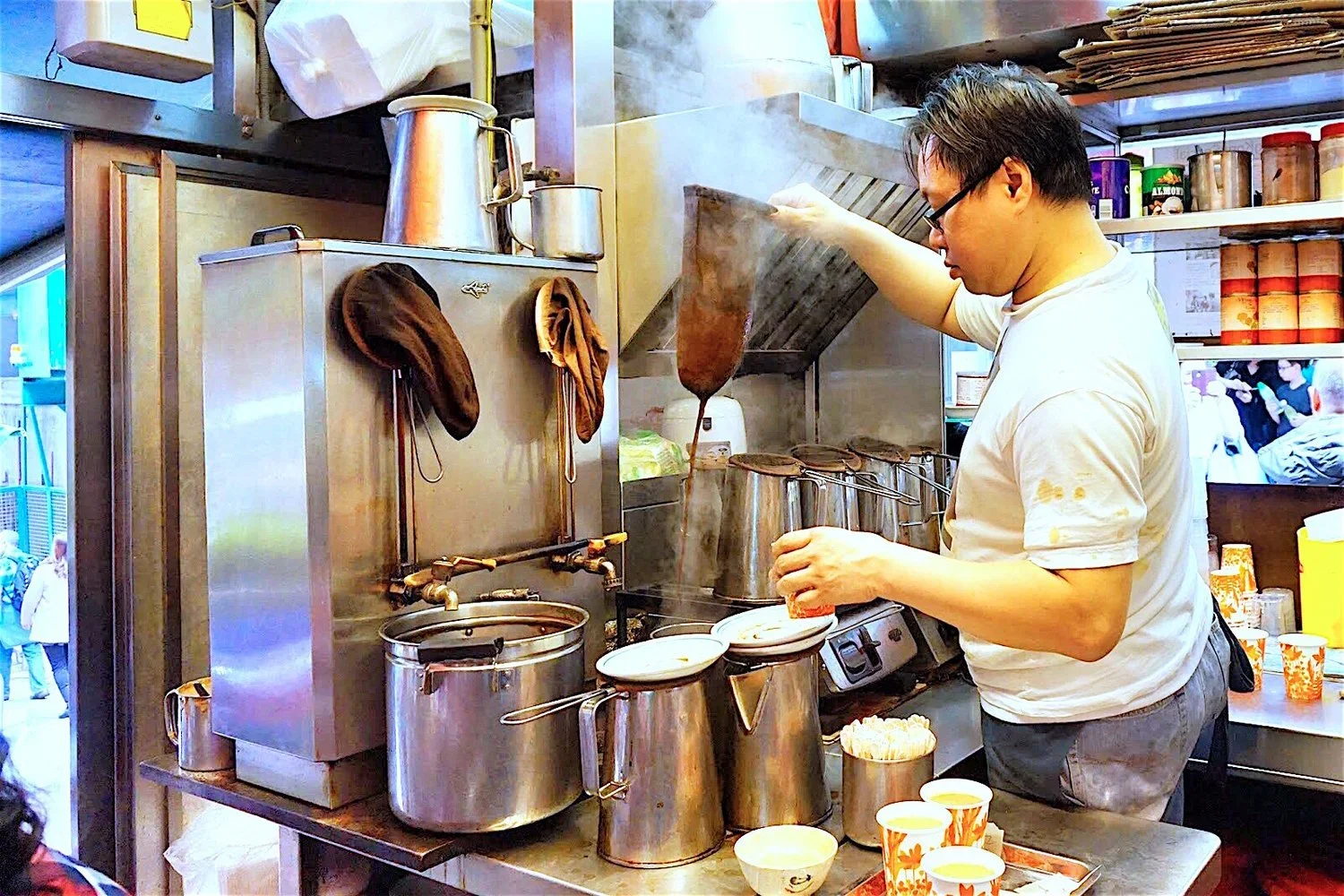
Preparing the traditional Hong Kong-style "silk stocking" milk tea (pantyhose milk tea) inside a cha chaan teng (source: Hello HK)
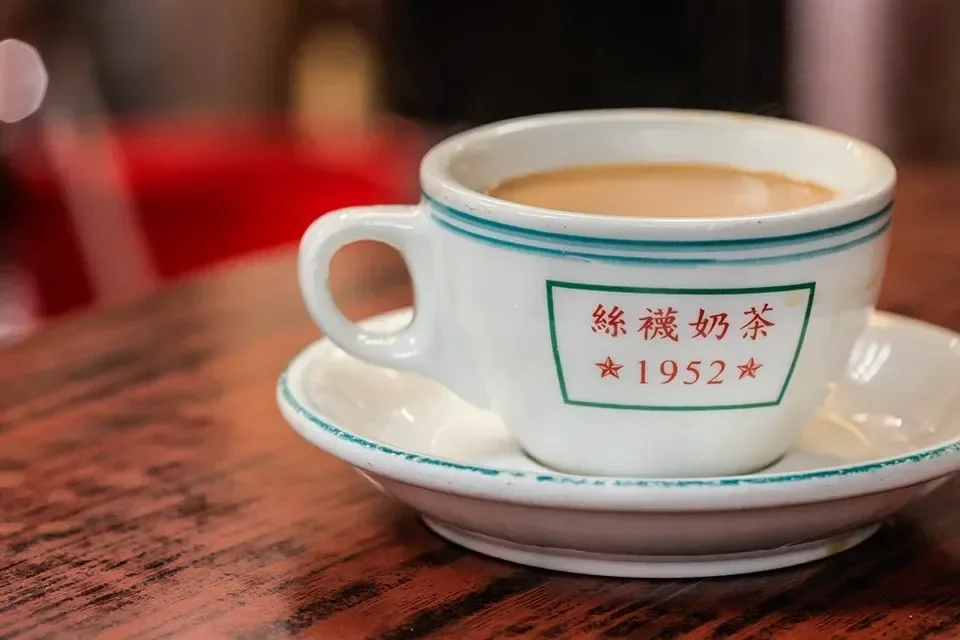
The result! (source: Discover HK)
From Roasters to Rollers
This intensive focus on roasting and curing didn't stop at teacups; it connected Hong Kong's beverage economy directly to its ashtrays. Tea leaves and tobacco required identical processing networks, prompting early merchant firms to treat them as sister products. Working-class residents bought daily provisions at "tea and smoke shops" (茶煙莊 caa4 jin1 zong1), validating the popular saying "three meals, tea, smoke, and rice" (一日三餐茶煙飯).
Tobacco processing followed a similar industrial trajectory. Mong Kok’s Tung Fong Street 東方街 (“Oriental Street”) recalls the Orient Tobacco Manufactory, later paved over as Yin Chong Street 煙廠街 (“Tobacco Factory Street”). In Wong Chuk Hang, British American Tobacco convinced planners to name Heung Yip Road 香葉道 (“Fragrant Leaf Road”) after its product, rolling tobacco directly into the city’s map.
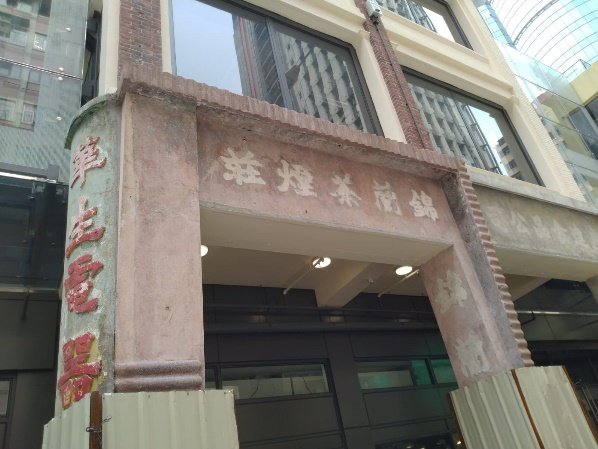
Signposts from the 1920s — hidden shop signs uncovered at 618 Shanghai Street, including “Kam Lan Tea and Cigarette Merchants,” a rare trace of pre‑war Mong Kok commerce (source: 618 Shanghai Street)
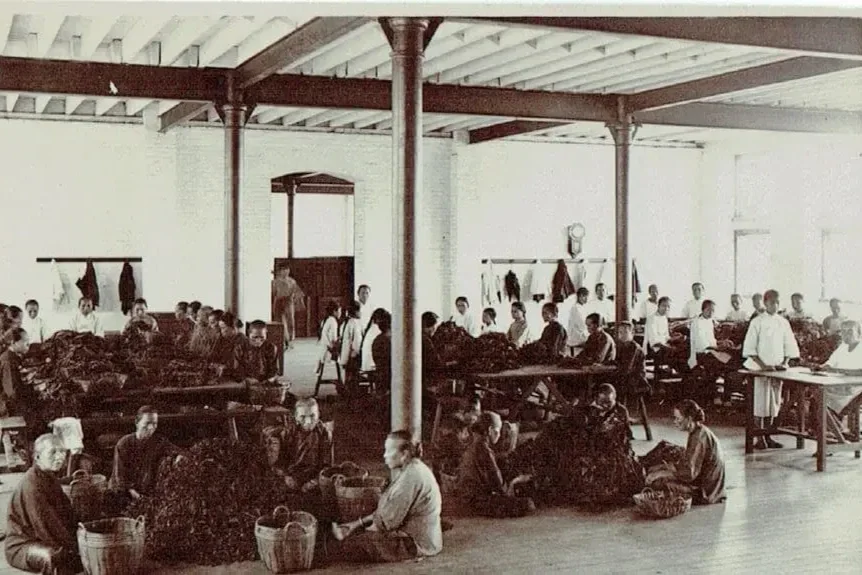
Orient Tobacco Manufactory — women sitting on the factory floor of Nathan Road’s vast tobacco works, a rare glimpse into the labour that powered Hong Kong’s early 20th‑century cigarette trade. (source: Industrial History HK)
Conclusion
Hong Kong’s street names chart its struggle against scarcity, disease, and colonial division. The genius of its drinking culture lies in resourcefulness: bitter tea dust, mechanical ice, industrial carbonation—all repurposed into a distinct identity.
Every glass of milk tea distils this geography. Iced lemon tea carries the runoff of Conduit Road and the chill of Ice House Street. Yin Yeung fuses Gage Street’s hustle with factory‑shift stamina. A spoonful of red bean ice recalls the fire‑prevention licences that created bing sutts. These historical forces are far from buried. They remain alive, remade and preserved daily inside a diner glass, proof that survival can be transformed into flavour.
Next Up: The Industrial Monopolies
The story leaves the tap and enters the balance sheet. Part III traces how sugar, ginger, soy sauce, and oyster sauce scaled rudimentary logistics into global empires, turning Hong Kong into a factory of flavour.
Epilogue: A Pang in the Record
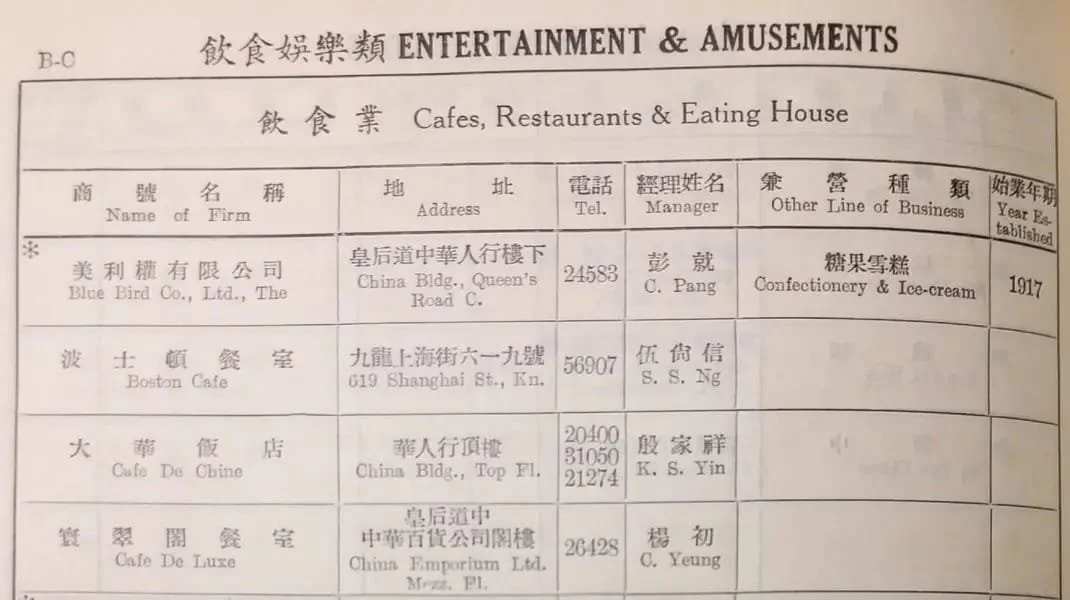
I’ve spent years now mapping Hong Kong’s street names, tracking down the obscure origins behind forgotten alleyways and concrete arteries for this series. You get used to seeing the same colonial officers, land developers, and nineteenth-century merchants pop up in the records. This piece took an unexpected turn when I stumbled upon a familiar name… my granddad!
I never met my grandad. He passed away in 1953, and our family history has always been told in vague fragments and long silences. This single line of faded print is literally the only paper trail I have ever found of his life. Finding his name after all this time spent digging through local records felt surreal. For months I’d been picturing strangers navigating Central’s sweltering streets all the way back in the 1920s. It turns out my own family was right there on the pavement, serving up scoops of ice cream.
Suddenly, a lifelong, borderline ridiculous ice cream addiction makes total sense. Turns out it's just genetics.