Empire on the Shelf
Sugar barons, soy dynasties, and a bun that conquered the world by accident
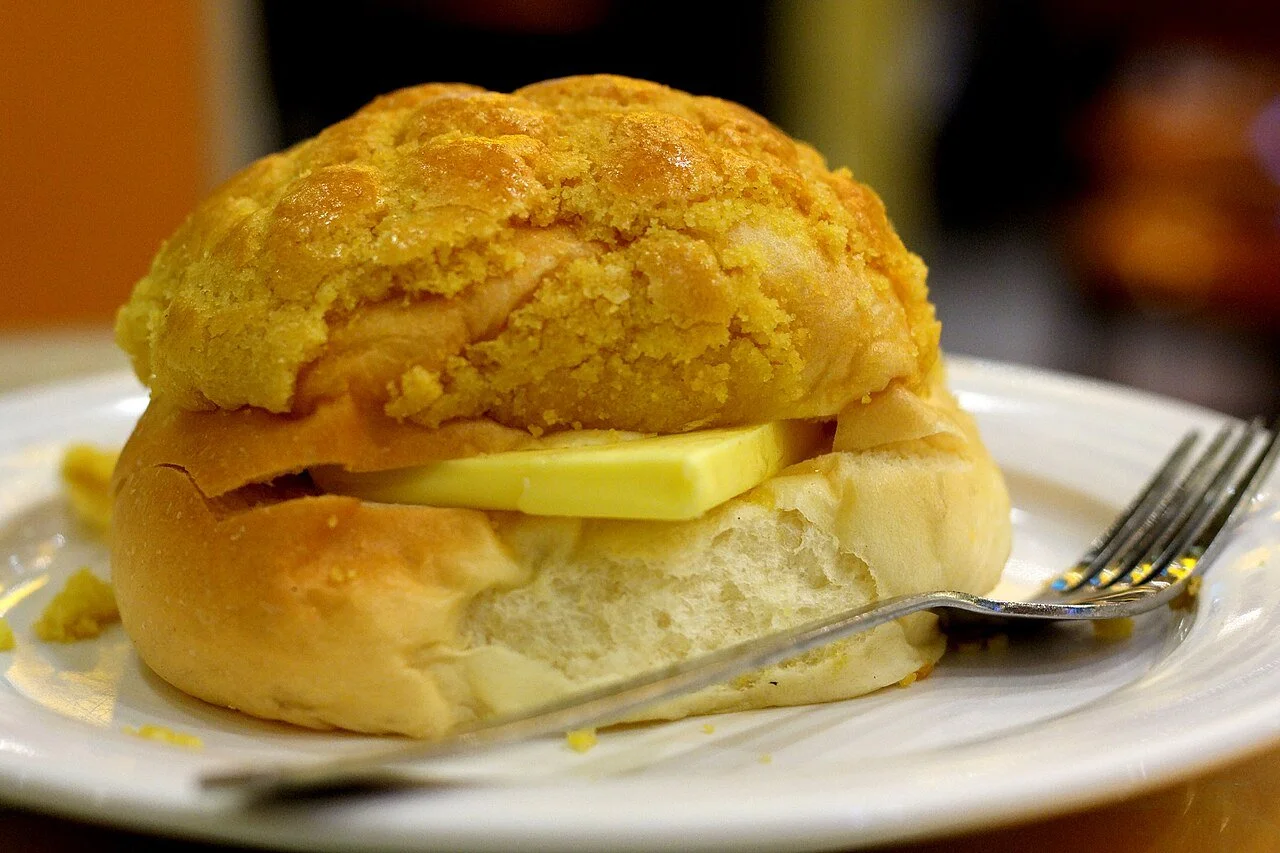
‘Bolo yau’: Pineapple bun with butter inside (source: wiki)
A pineapple bun (菠蘿包) is a structural lie: no pineapple, just a cracked golden crust of sugar, eggs, and heavy lard laid over austere colonial flour to disguise what lies beneath. Wedging cold butter inside bridges imported European baking with a stubborn local palate. It is a pastry born of improvisation on a rocky island that produced almost nothing and had to invent pleasure from scarcity.
Modern supermarkets rely on the same logic. Their fluorescent sterility hides histories of crisis and adaptation, yet every shelf carries traces of them. This series has traced how Hong Kong fed itself and how it drank; this final instalment turns to the packaged shelf, where raw ingredients are refined, bottled, and transformed into global household names. It is the contemporary expression of the same impulse that shaped the pineapple bun: a supply chain built by a city that refused to eat like everyone else.
Tinned Empire
Before Hong Kong exported its culinary identity, it imported someone else’s. Early colonial food systems bypassed the local environment, built on homesickness and an aversion to wet markets. Tropical humidity dissolved standard European provisions immediately, necessitating an ecosystem encased in metal.
Canned Colonialism
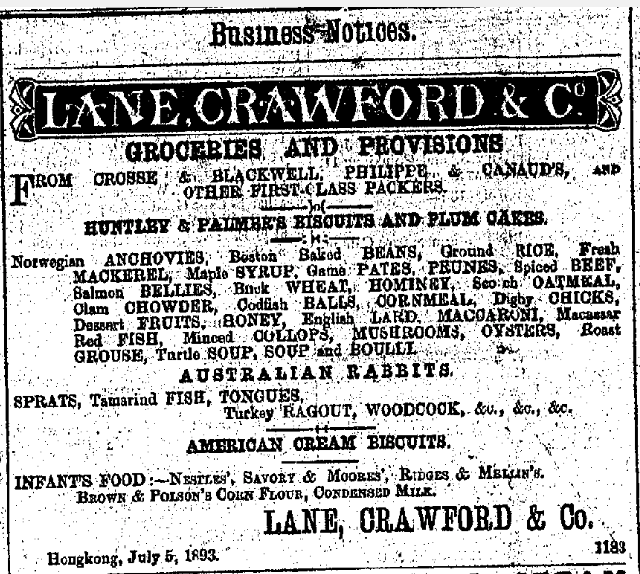
Lane Crawford’s 1893 menu of empire: anchovies from Norway, rabbits from Australia, and the illusion of Mayfair served fresh in Hong Kong (source: The China Mail, 18 July 1893)
The earliest fix was the tin. By 1842, Calcutta-based merchants like D. Wilson & Co. were unloading "Oilman’s Stores", the era's catch-all term for shelf-stable groceries. These shipments represented a desperate clinging to British domesticity. Batavia arrack and French claret helped tolerate the climate, alongside endless crates of preserved meat.
This appetite soon outgrew the chaotic shipping docks. To supply the wider expatriate market, two Scots Thomas Ash Lane and Ninian Crawford founded Lane, Crawford & Co. in 1850. They started entirely without glamour, trading from a makeshift bamboo matshed erected right on the waterfront dirt of what is now Des Voeux Road. Yet from this fragile structure, they began moving provisions from wholesale warehouses to proper shop floors, lining shelves with Crosse & Blackwell soups straight from London. This dedicated retail network finally allowed expatriate households to eat exactly as they would in a Mayfair dining room, entirely detached from the climate outside.
The Middleman’s Ledger
Foreign trading houses relied on bilingual compradors (買辦) to open retail outposts known as ban koon (辦館), shops that specialised in imported spirits and Western provisions sourced directly from sailors before formal supply lines existed. Everyday groceries, by contrast, came from the sze‑dor (士多), the neighbourhood “store”, which sold local staples. After the war, as the comprador system faded and mass importation became routine, the boundary between the two blurred: sze‑dor began carrying foreign goods, while many ban koons shifted toward mixed‑goods retail, their original role steadily dissolving.
It was in this fluid post‑war landscape that working‑class Chiu Chow immigrants secured ground‑floor leases and adopted the ban koon title for shops selling rice and oil. These storefronts quickly became more than retail counters: they operated as informal community banks. By running monthly tabs, ban koon owners advanced milk powder, canned goods, and cooking oil until payday.
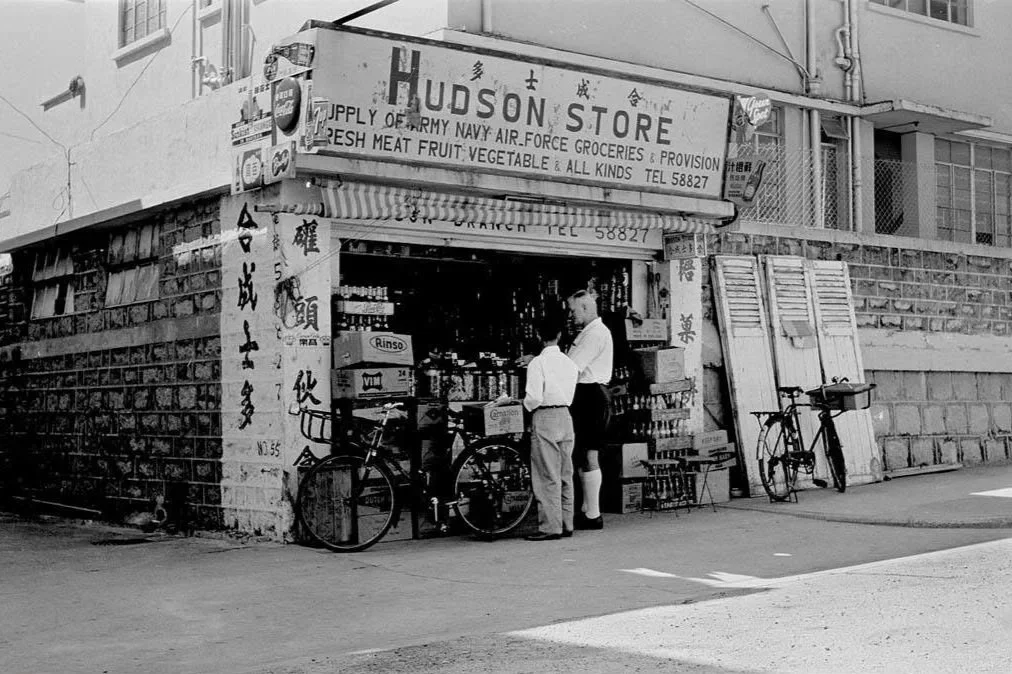
Hudson Store (合成士多) located on Nga Tsin Wai Road in Kowloon City, Hong Kong, photographed in 1958. Opened in 1956 by founder Mr. Wong (黃伯) and two partners, the shop operated for 59 years before closing its doors in 2015 (source: Facebook)
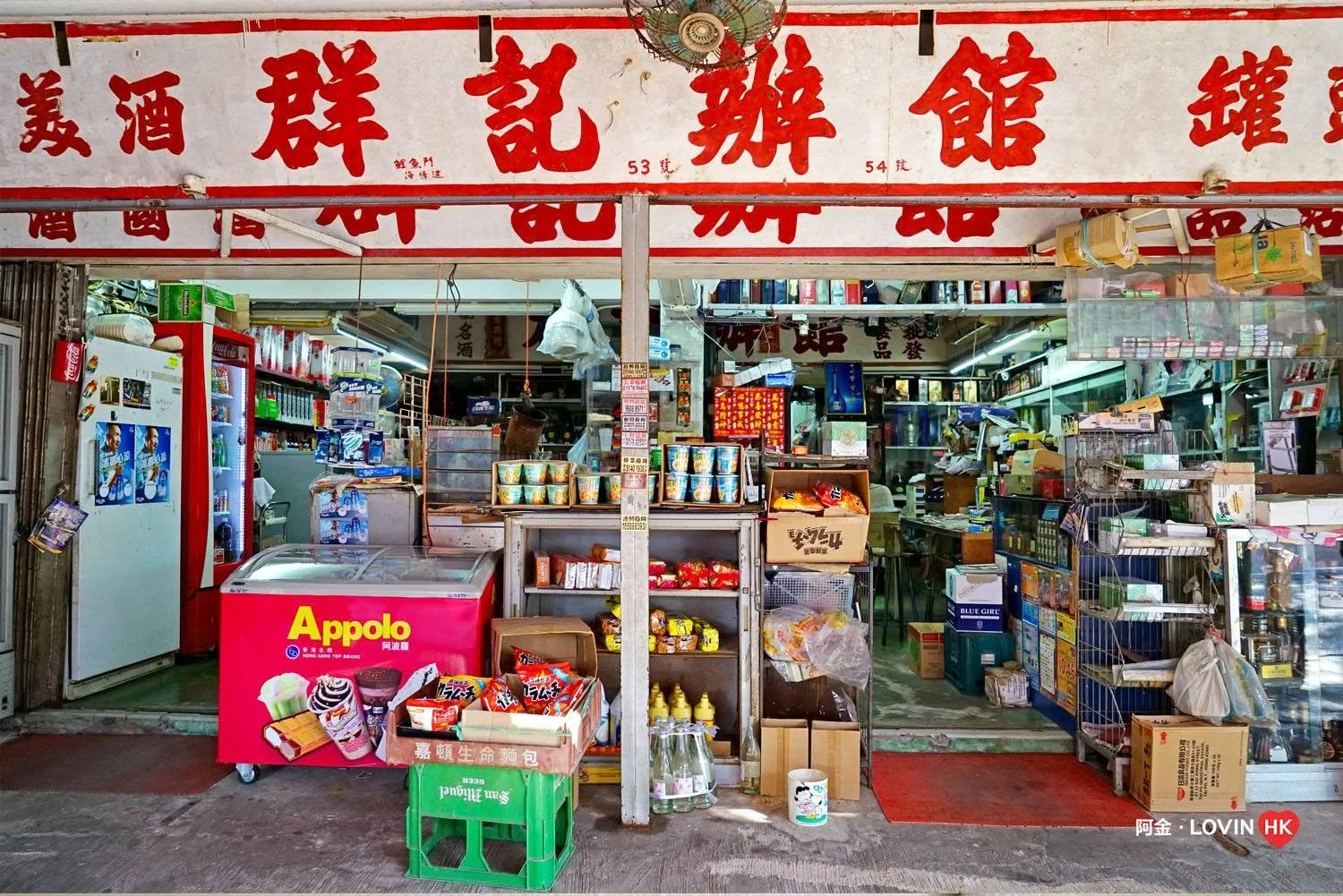
群記辦館 sits near the Lei Yue Mun Sam Ka Tsuen Pier, one of Hong Kong’s few surviving old‑style pier provision shops, still trading today (source: Facebook)
The Ledger's Last Days
That intimate model fell to corporate scale. Founded in 1945, Wellcome originally opened as a ban koon (惠康辦館). The definitive rupture arrived in 1960, when Dairy Farm and Lane Crawford launched the first supermarket: Dairy Lane (大利連). Dairy Farm acquired Wellcome four years later, introducing American self-service. The shopkeeper's ledger evaporated. When 5kg pre-packaged rice bags arrived in the 1970s, the traditional open-bin rice shop (米舖) was wiped out, and identical air-conditioned aisles deployed across every district. Yet the cycle of elite provisioning simply reset. Dairy Farm later opened Oliver's in the Prince's Building to stock imported luxuries, rebuilding the exact European supply chain Augustine Heard had pioneered a century earlier.
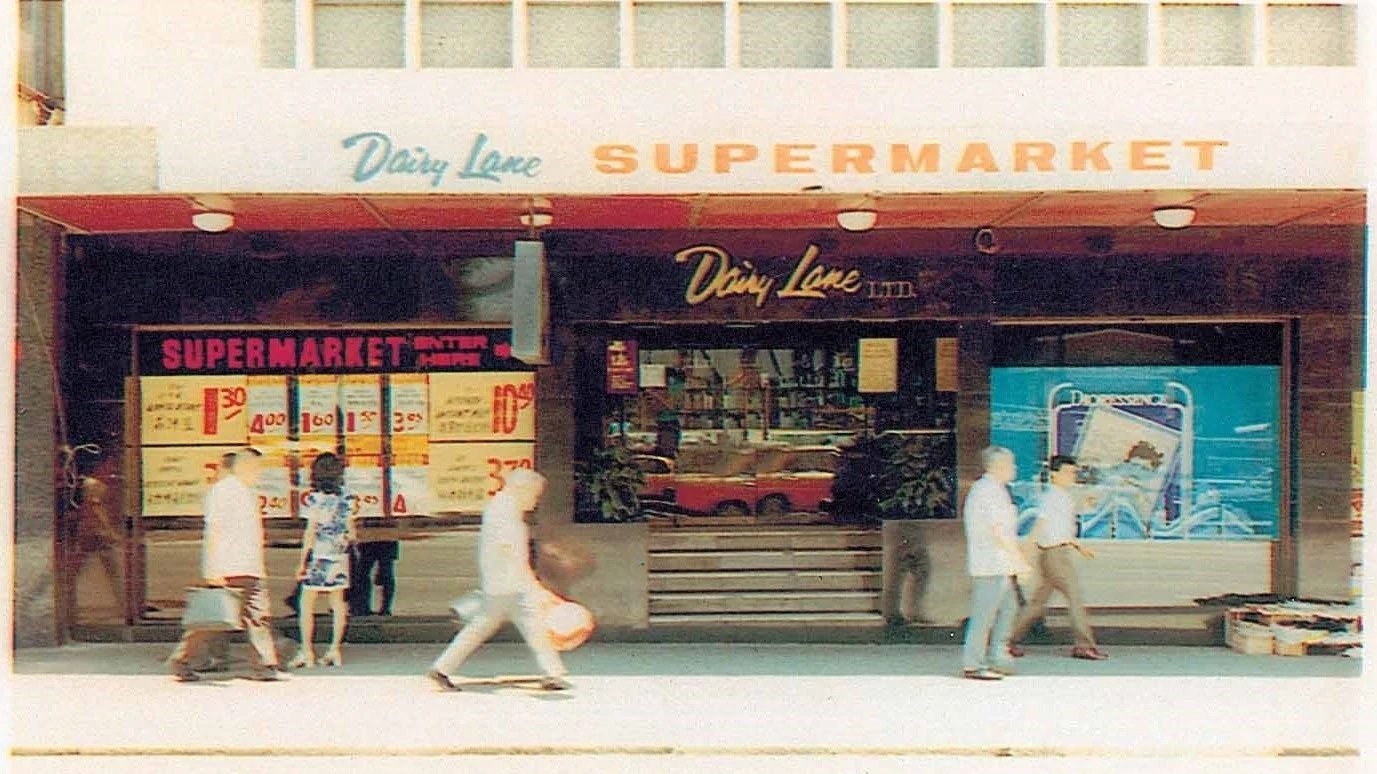
Dairy Lane Supermarket on Nathan Road (source: Our China Story)
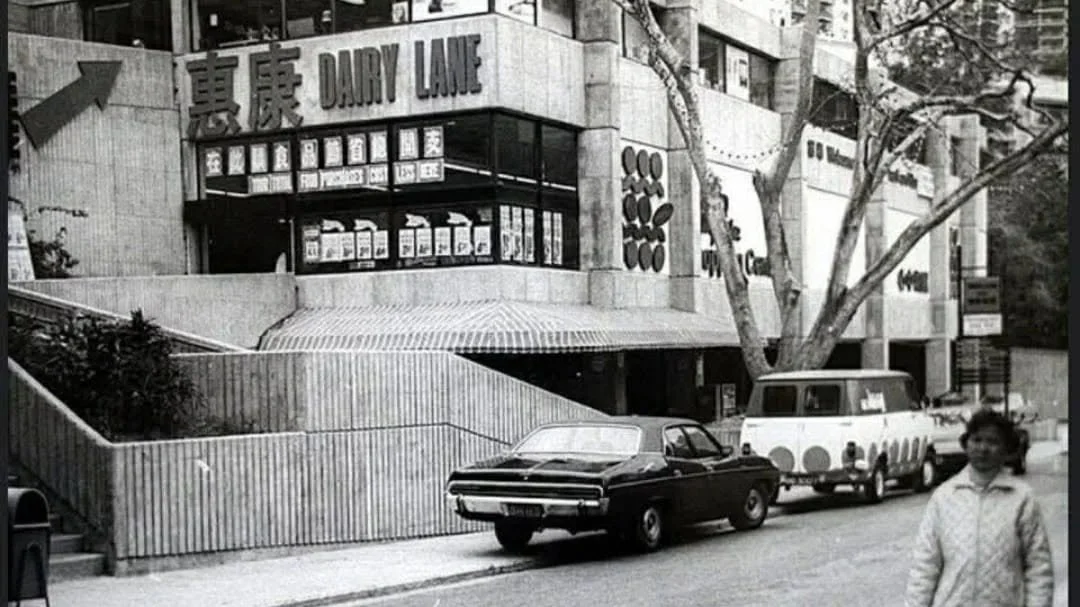
Wellcome supermarket in Repulse Bay in the early 70s, still trading under its original English name, Dairy Lane, before the brand adopted the now‑familiar ‘Wellcome’” (source: Facebook)
The Sweetening of a City
Hong Kong’s early grocery trade shipped finished goods in at a premium. Sugar inverted this. The city imported raw material, refined it industrially, and exported the result.
Cane Before Crystal

East Point Sugar Refinery after the 23 September 1874 typhoon, the colony’s tallest chimney toppled, the refinery roof torn open, while the neighbouring distillery’s stack survived with only partial roof damage (source: gwulo)
Sugar first came through Hong Kong the way other groceries did: refined, at a markup, someone else's problem to process. That changed in 1870, when a modest outfit called Wahee, Smith & Co. leased waterfront land at East Point, Causeway Bay, from Jardine, Matheson & Co. and began importing raw cane from Java, the Philippines, and the Straits Settlement of Malacca to refine on site. It was a proof of concept: cheap raw cane, refined locally, beating the cost of shipping in finished sugar. However, the company wasn't strong enough to survive its own idea, and within the decade its partners had gone bankrupt.
Sweet Rivalry
Two corporate fiefdoms then aggressively rearranged the eastern coastline. Jardine, Matheson & Co. moved first, absorbing Wahee, Smith's failed operation and relaunching it as the China Sugar Refinery in Causeway Bay in 1878. Two corporate fiefdoms aggressively rearranged the eastern coastline. Jardine, Matheson & Co. moved first, establishing the China Sugar Refinery in Causeway Bay in 1878. Three years later, John Samuel Swire launched a counter-offensive in Quarry Bay. Taikoo Sugar Refinery began production in 1884; it took four decades, a 1923 strike, and a 1925 boycott, but by 1925 it had grown into the largest single-unit refinery in the world. It operated as a sovereign state, complete with a private reservoir, a hospital, and a dedicated cable car hauling European staff over steep gullies to hillside bungalows.
Today, Jardine's dominance is reduced to Sugar Street 糖街, while Swire's behemoth transformed into the Taikoo Place commercial district, leaving behind Tong Chong Street 糖廠街, literally 'Sugar Factory Street'.
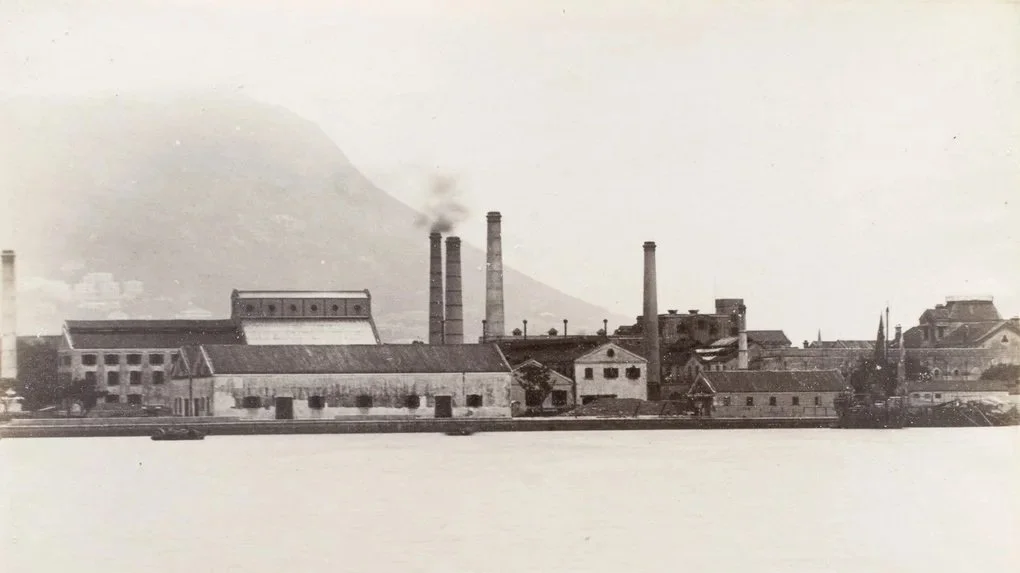
China Sugar Refinery, East Point in 1897 (source: University of Bristol)
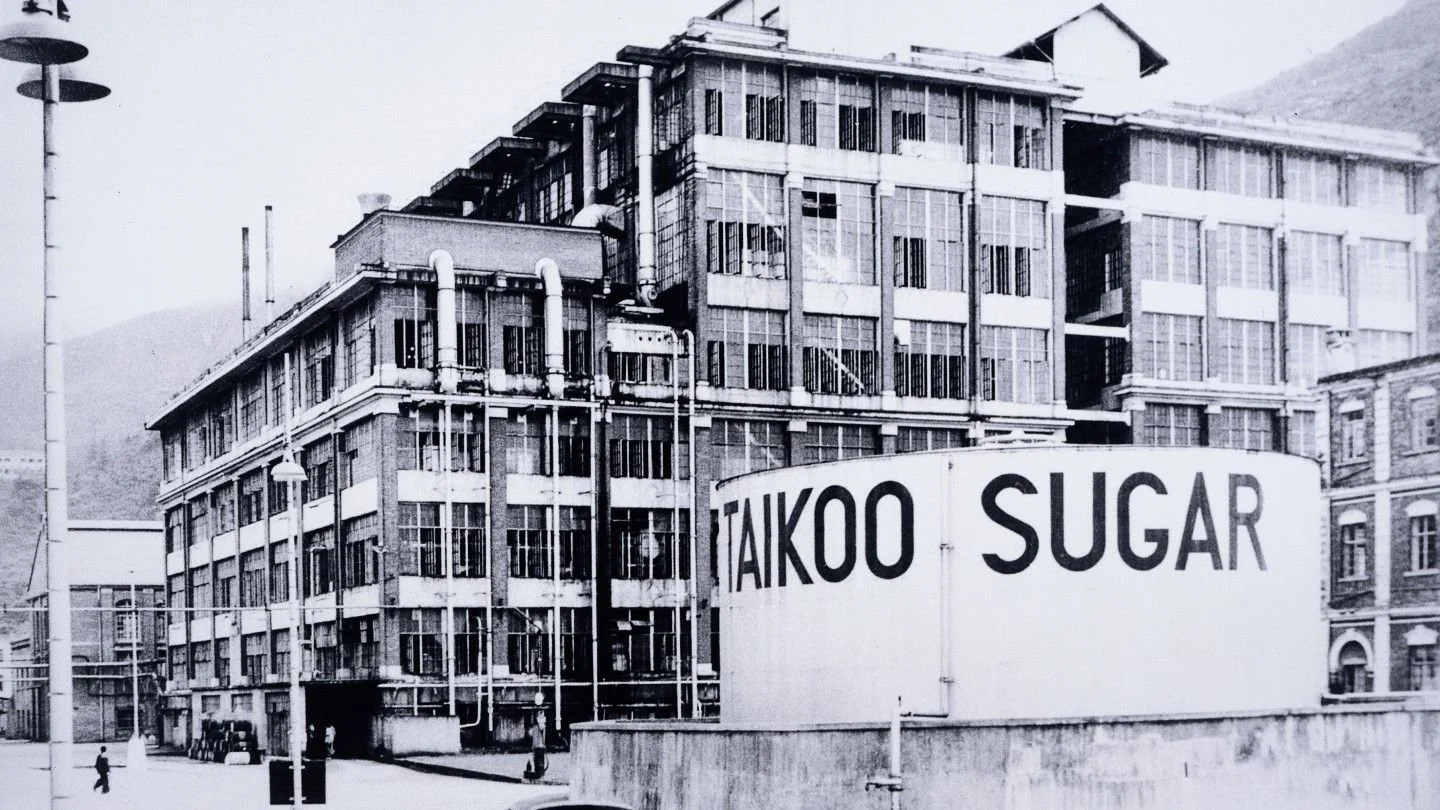
Taikoo Sugar Refinery was taken in the 1950s (source: Taikoo Place)
The Ghost Refinery
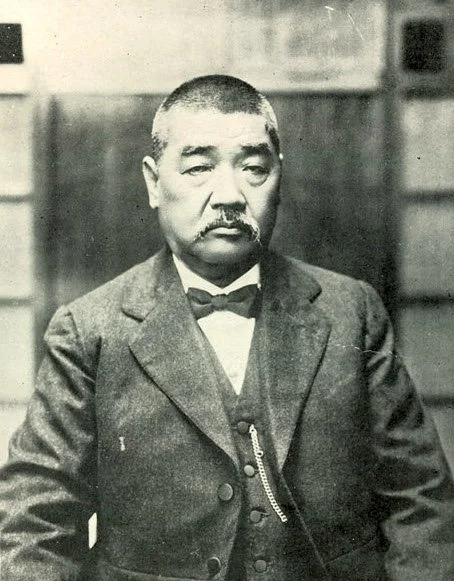
Kwok’s portrait taken around 1921 (source: wiki)
A few kilometres west in North Point, the map reveals a brilliant spatial irony. Fujianese merchant Kwok Chun-yeung (郭春秧), also known as Kwik Djoen Eng, reclaimed a stretch of North Point shoreline in the 1920s for a sugar plant he would never finish building.
The factory he never built names Tong Shui Road 糖水道, 'Sugar Water Road'. The supply line that would have fed it survives in Java Road 渣華道, a nod to his intended raw cane. The housing development pulled in refugees, creating Chun Yeung Street 春秧街, today a wet market built entirely upon a corporate failure.
Sweet, Not Too Sweet
That corporate war left one lasting effect: sugar cheap enough to change ordinary diets. Historically, Cantonese sweet soups, or tong sui (糖水), had been occasional luxuries. When Jardine and Swire flooded southern China with cheap crystal and rock sugar, desserts were unintentionally democratized. Coupled with Republican‑era migration from Guangzhou, the collapse in raw‑sugar prices turned elite remedies into everyday street food.
Late‑night parlours sprang up and, over time, modernised the scene with chilled creations. In 1984 Lei Garden introduced Mango Pomelo Sago (楊枝甘露), a now‑ubiquitous dessert that blends tropical fruit with sago, a starch used in southern China for millennia. The city’s new sweets spread fast, but Hong Kong’s palate stayed restrained. The lasting legacy of sugar barons is a local standard summed up in Cantonese: “ho sik, m tai tim” (好食,唔太甜)—“delicious, not too sweet.”
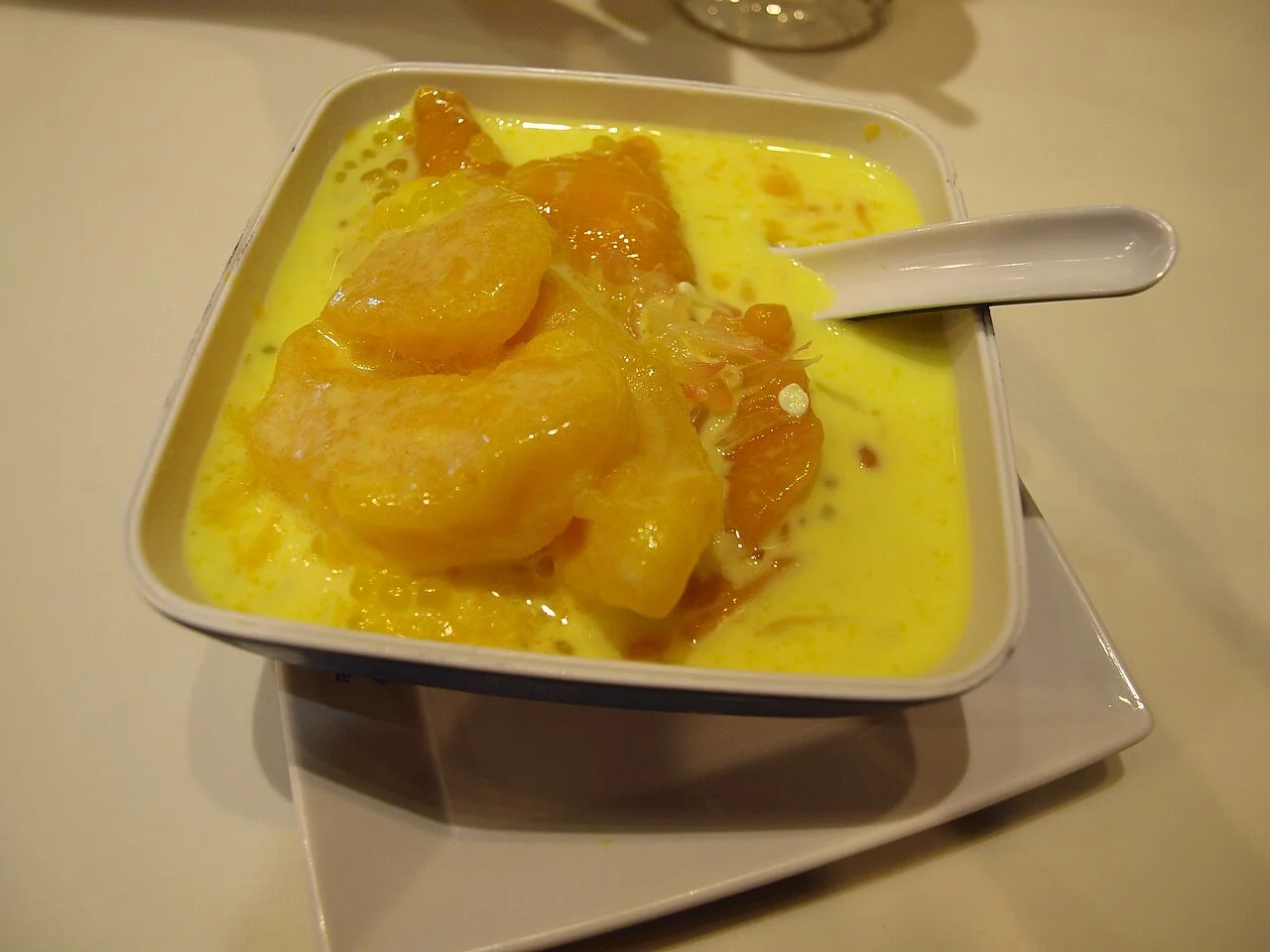
Mango pomelo sago — a 1984 Lei Garden invention that somehow went from Guanyin’s willow‑branch manna to the pan‑Asian dessert that conquered every menu it touched (source: wiki)
Getting Saucy
Sugar was refined by conglomerates with private cable cars. Savoury, meanwhile, was driven by family firms. At its mid-twentieth-century peak, Hong Kong supported over a hundred independent sauce and condiment makers. Scores of rival artisanal brewers operated cheek-by-jowl, transforming empty Kowloon lots into intensely pungent production lines. Today, the surviving trademarks vastly outrank the physical streets that made them.
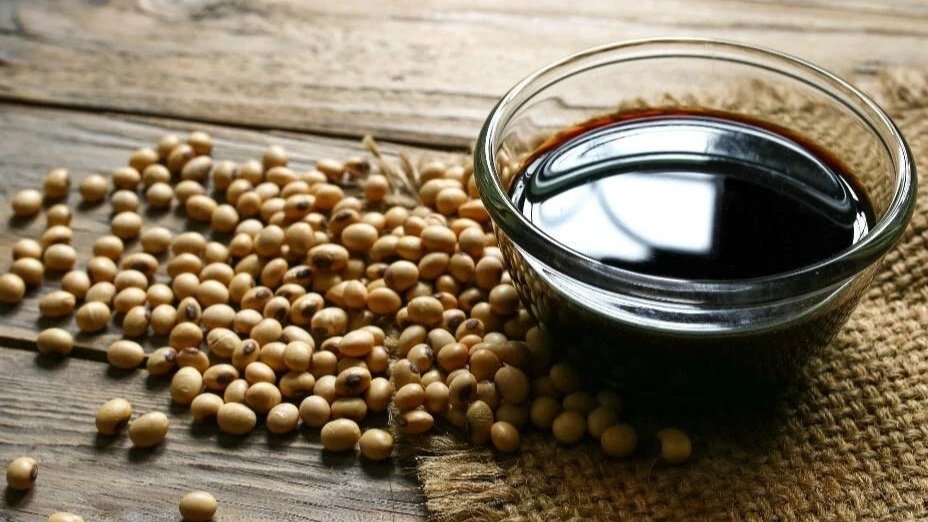
Shutterstock
Fermenting the Pavement
The industry anchoring this soy export relied on deeply held guild traditions. While soy sauce (豉油) first appeared as a royal delicacy in the Southern Song cookbook, local brewers preferred a much lowlier origin myth. Late-Qing folklore insists the trade's Patron Saints accidentally discovered the fermentation process when forgotten soybeans left in a pocket began to emit a distinct, savoury aroma. This happy accident of neglected laundry is still ritually celebrated across the sector on the 26th day of the 8th lunar month.
The Grammar of Export
That folk tradition quickly scaled. Language travelled first: after Peru abolished slavery in 1854, plantation and guano‑mine owners imported tens of thousands of Cantonese indentured labourers, and Peruvian Spanish absorbed Cantonese foodwords: sillao (豉油) and kión (薑) remain standard on Andean shelves today.
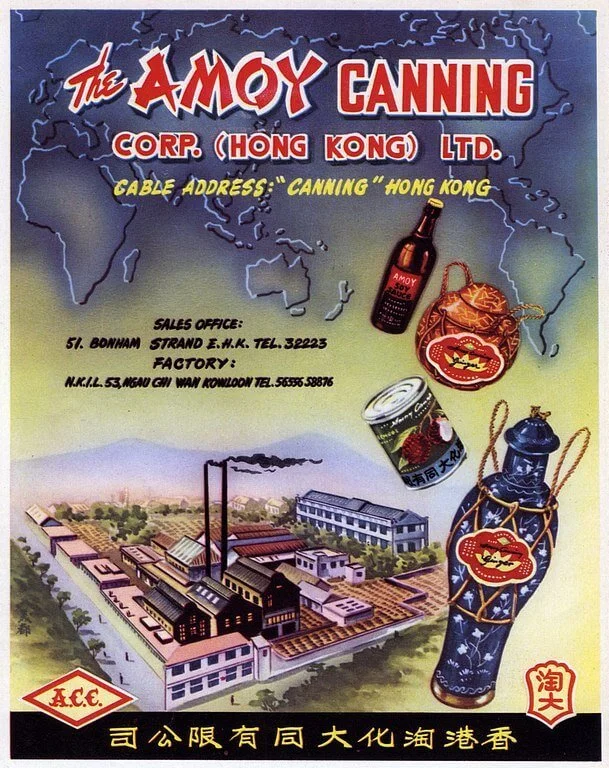
A 1947 advertisement lists the firm as Amoy Canning Corporation Ltd. (香港淘化大同公司), marking its Ngau Tau Kok factory as the centre of its early postwar expansion. (source: Industrial History HK)
The goods followed. By the 1880s Hong Kong was already industrialising soy production and routing condiments into imperial markets. Governor Sir John Pope Hennessy’s 1881 tour of a Yau Ma Tei sauce works found vats not only making soy but packing ketchup for Europe — barrels shipped to a London grocer, decanted into small bottles, and returned to Hong Kong at a premium — a neat mercantile loop that made local manufacture part of an international brand circuit.
Feeding this dual appetite demanded immense space. By 1908, Mong Kok’s Soy Street 豉油街 had earned its name from the sprawling open-air fermentation yards that required a ground-floor footprint no longer imaginable in Kowloon.
Dark Matter
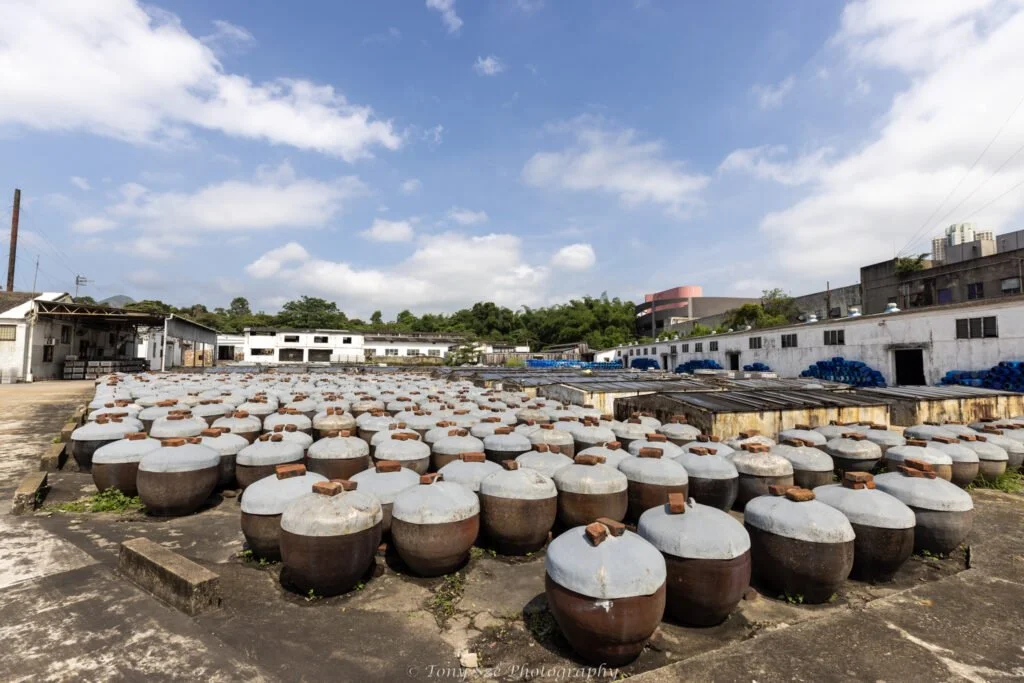
In the 1920s, refugee master brewers set up preserving yards across Hong Kong’s flat urban districts, where the six-month sun-drying phase demanded vast stretches of land. That shift set the stage for Amoy (淘大醬油), one of Hong Kong’s earliest attempts to scale flavour for global markets. The company began in Xiamen in 1908 but moved to Ngau Tau Kok in 1928, building a vast processing plant that anchored the neighbourhood and turned preserved foods into export commodities. For decades, Amoy’s sauces and condiments travelled far beyond Hong Kong, eventually reaching supermarket aisles from London to Sydney.
After the war, government clearance of squatter settlements pushed these producers into the agricultural hinterland of Yuen Long, leaving their former urban footprints to developers. When the factory’s fermentation vats were finally dismantled, the site was redeveloped into Amoy Gardens 淘大花園, a private housing estate. Only one trace of the brand’s spatial legacy remained: the estate’s dense, interconnected plumbing, which in 2003 became ground zero for the SARS outbreak.
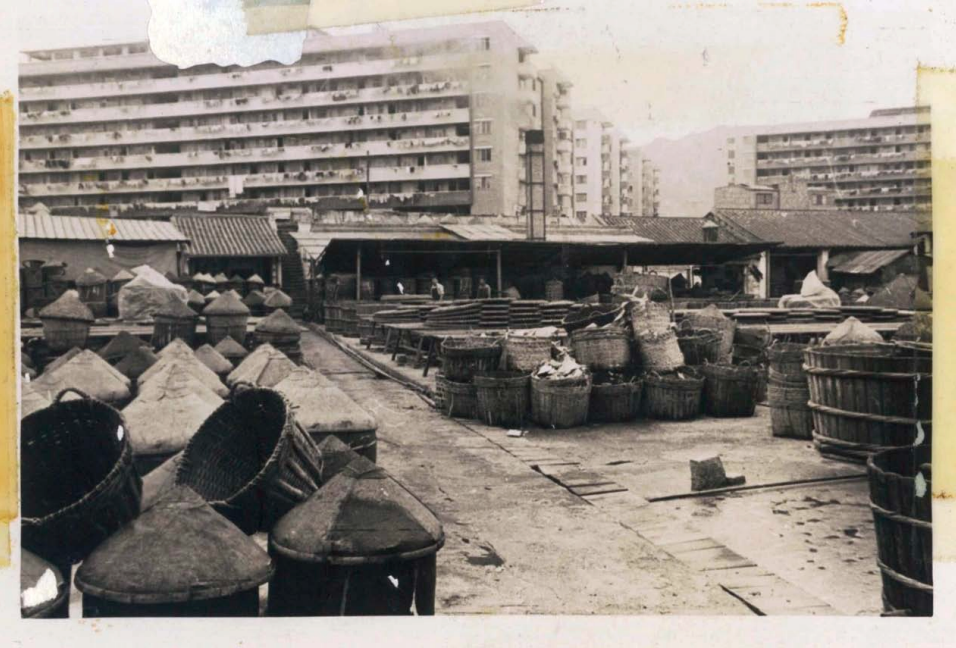
Drying ground at Mee Chun’s factory in Kowloon City in early 1960s (source: HKU Scholars Hub, Kam, Ho Ching. Fermenting Tradition: Soy Sauce Making in Hong Kong with Kowloon Soy Ltd as a Case Study. HKU thesis, 2012.)
A Swiss Fiction
Some legacies of the sauce trade bypassed the factory floor entirely. In 1860, a chef named Chui Lo Ko began serving roast pigeon and heavily sauced steaks to European seafarers in Guangzhou. His restaurant, Tai Ping Koon (太平館), pioneered "soya sauce Western" (豉油西餐), an early exercise in culinary translation that approached foreign menus using the familiar vernacular of Cantonese seasoning.
When the Chui family relocated the enterprise to Hong Kong in 1938, they brought this hybrid cuisine with them. The undisputed anchor of this menu is a simple soy-braised chicken wing. The marinade relied strictly on regional ingredients, blending sweet soy with Shaoxing wine and star anise. According to the story, a foreign diner once praised the sticky glaze as "sweet." A waiter navigating limited English transcribed the compliment as "Swiss" (瑞士雞翼). That single phonetic slip disguised a provincial braise as Alpine cuisine, cementing one of Hong Kong's most enduring culinary fictions.
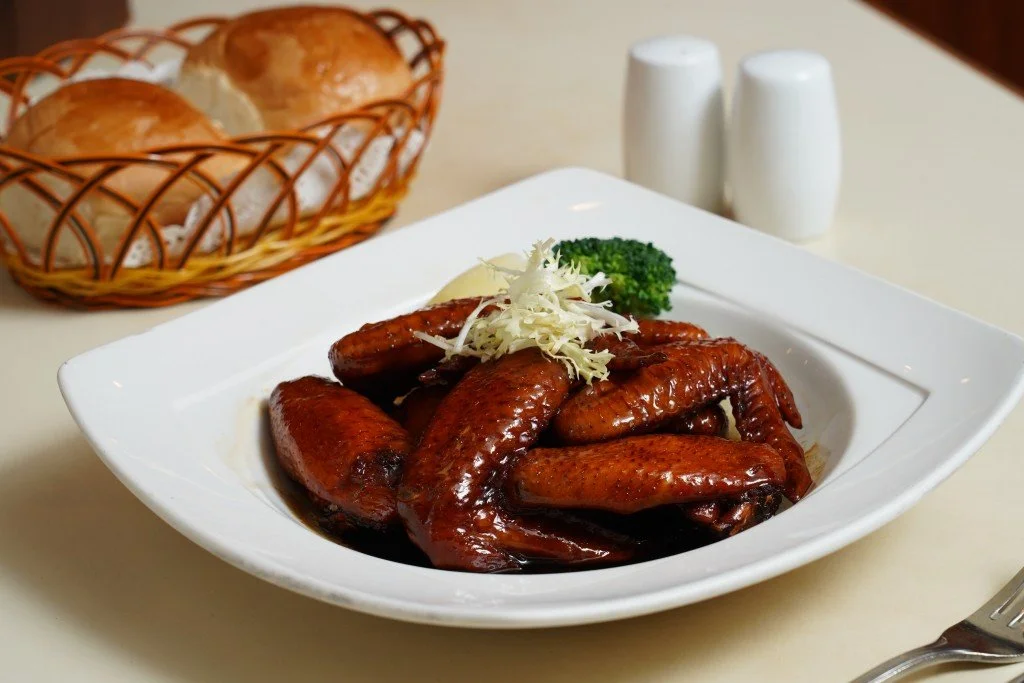
How a waiter’s misheard ‘sweet’ turned a Cantonese soy glaze into Hong Kong’s most famous Alpine impostor (source: ST Headline)
From Mud to Skyscrapers
While the soy industry fought for sunlit earth, the next condiment empire abandoned the terrestrial plane entirely. It grew directly out of brackish estuarine mud. Fishermen across the Pearl River Delta boiled down surplus bivalves, reducing the catch into a thick, concentrated extract.
The Forgotten Pot
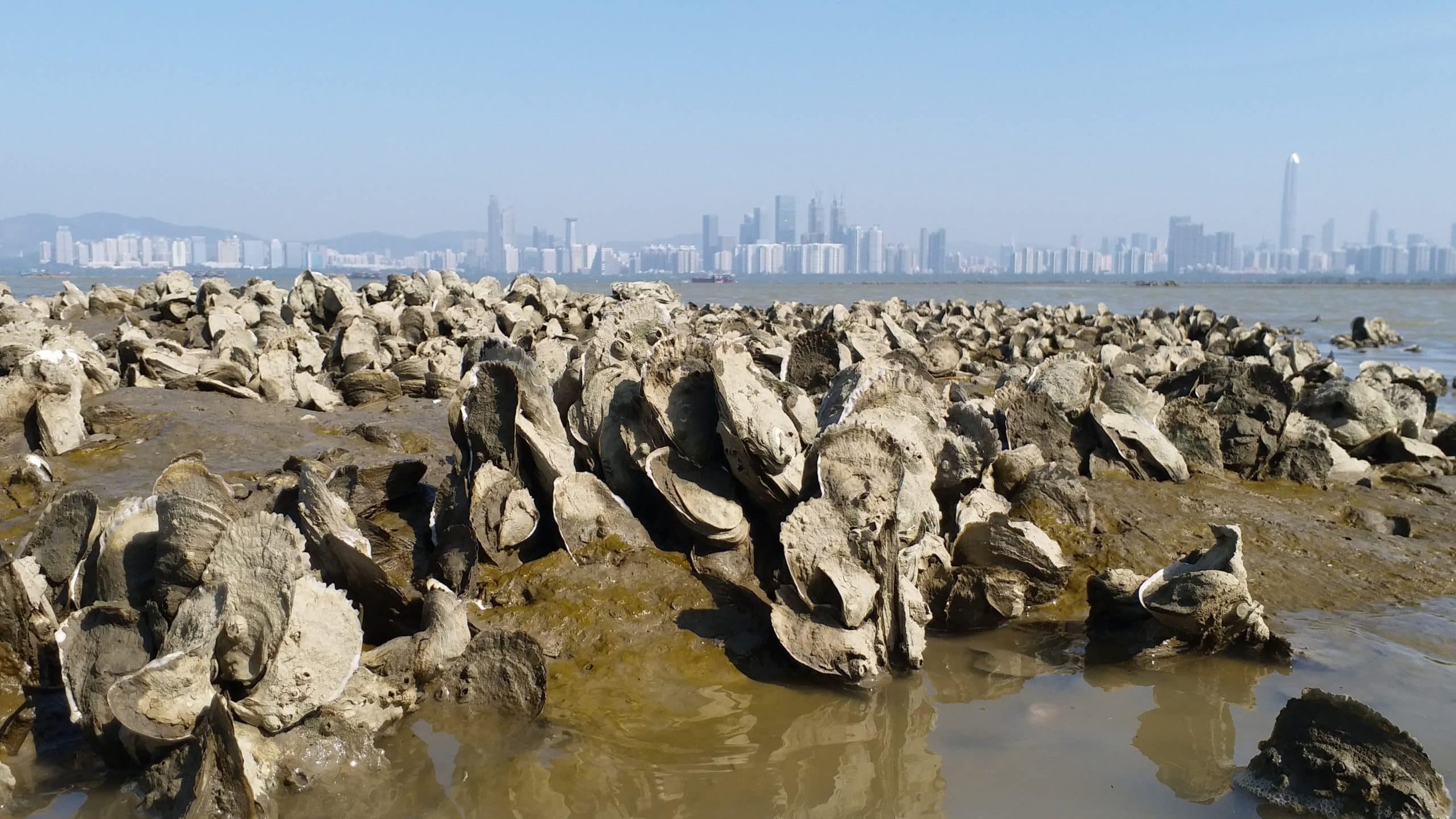
Abandoned oyster farm near Lau Fau Shan (source: TNC)
Deep Bay 后海灣's oyster beds sit where saltwater and freshwater collide — the exact salinity, farmers discovered, that plumps a shell. For over two centuries, oyster farming anchored in Lau Fau Shan, earning the area the moniker "Oyster Village". Across the territory in Sai Kung, toponyms like Ho Chung 蠔涌 (‘Oyster Creek’) and Ta Ho Tun 打蠔墩 (‘Oyster Pier’) map the trade onto the coastline.
The Accidental Empire
Even as Deep Bay fuelled a post-war export boom, the city's most recognisable brand arrived late. Lee Kum Kee (李錦記)'s origin is a well-documented coastal error. In 1888, Lee Kum Sheung left a pot of oyster soup simmering in Guangdong. Hours later, he discovered a thick, viscous paste. Relocating to Hong Kong in 1932, the city provided the mercantile launchpad to project this provincial accident globally.
By the 2010s, the sauce had gone extraterrestrial, travelling aboard China's space missions. Back on Earth, the family paid £1.3 billion in 2017 for London's 'Walkie Talkie' skyscraper, a dark symmetry for a trade built on boiled liquids acquiring a glass tower whose concentrated solar glare famously melted a Jaguar below.
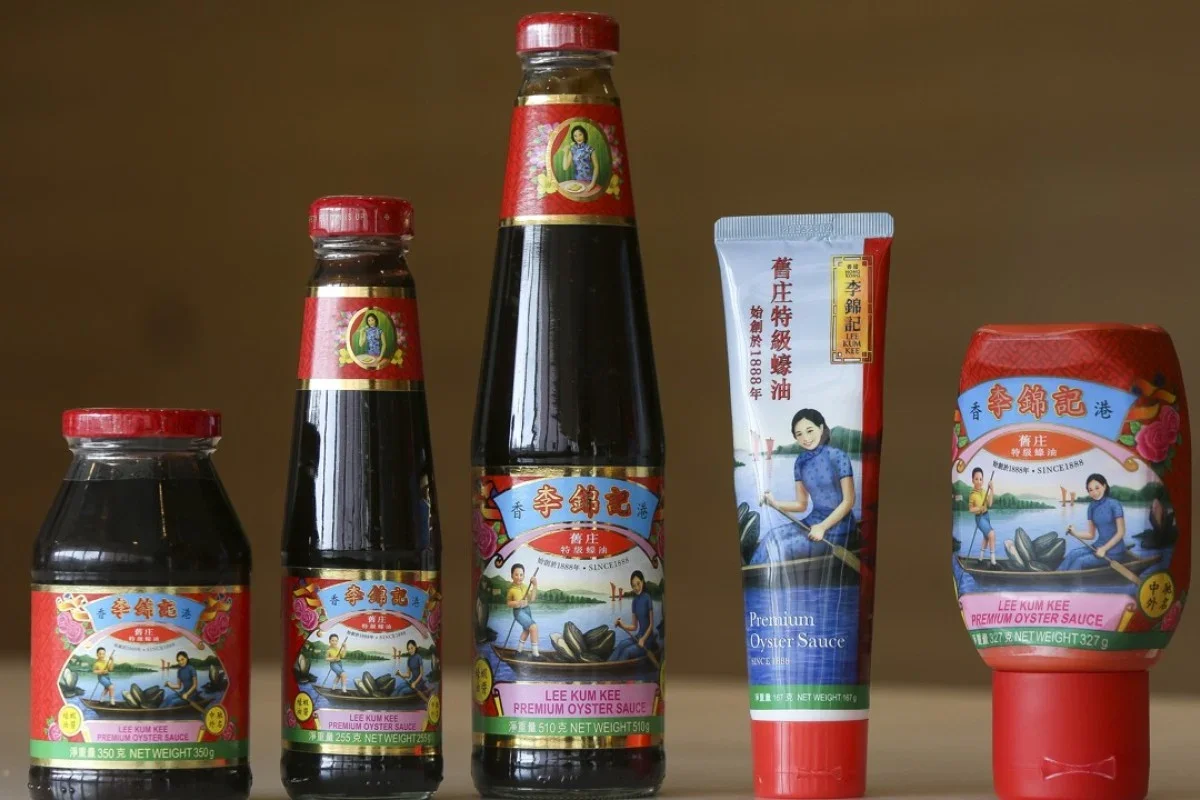
Lee Kum Kee’s premium line of oyster sauce (source: SCMP)
Sugar's Sideline
The soy sauce industry left one further trace, and it relied entirely on sugar. During the mandatory sun-drying downtime, sauce brewers needed a sideline, and found it in the industrial surplus pouring from coastal refineries.
The Canton Hawker's Recipe
Sugar functioned as a preservation technology. Boiling citrus peel, plums, and ginger in vats of syrup turned highly perishable crops into durable export commodities (leung gwo, 涼果). Post-war licensing eventually split the trades, but the fruit preservers no longer needed the sauce yards.
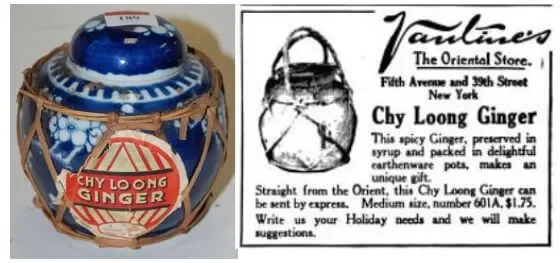
Porcelain ginger jar from Chy Loong Ginger Factory alongside a 1920 American magazine advertisement for the product from Vantine's in New York (source: Industrial History HK)
In the early 1800s a Canton street seller named Li Chy (李濟) noticed while Chinese customers were indifferent to sugar, foreign sailors and merchants loved it. He began cooking ginger in syrup until it crystallised and sold the sweetened ginger as a treat aimed at those homesick foreigners.
One batch reportedly reached an English diplomat and then Queen Victoria, who is said to have inspired the "Cock" brand name. Under that brand, Chy Loong ginger sugar reached grocery shelves across Europe. By 1845, Canton-made Chy Loong ginger sugar was already being advertised in Boston newspapers. A year later, Li moved his factory to Hong Kong to capture the export trade directly.
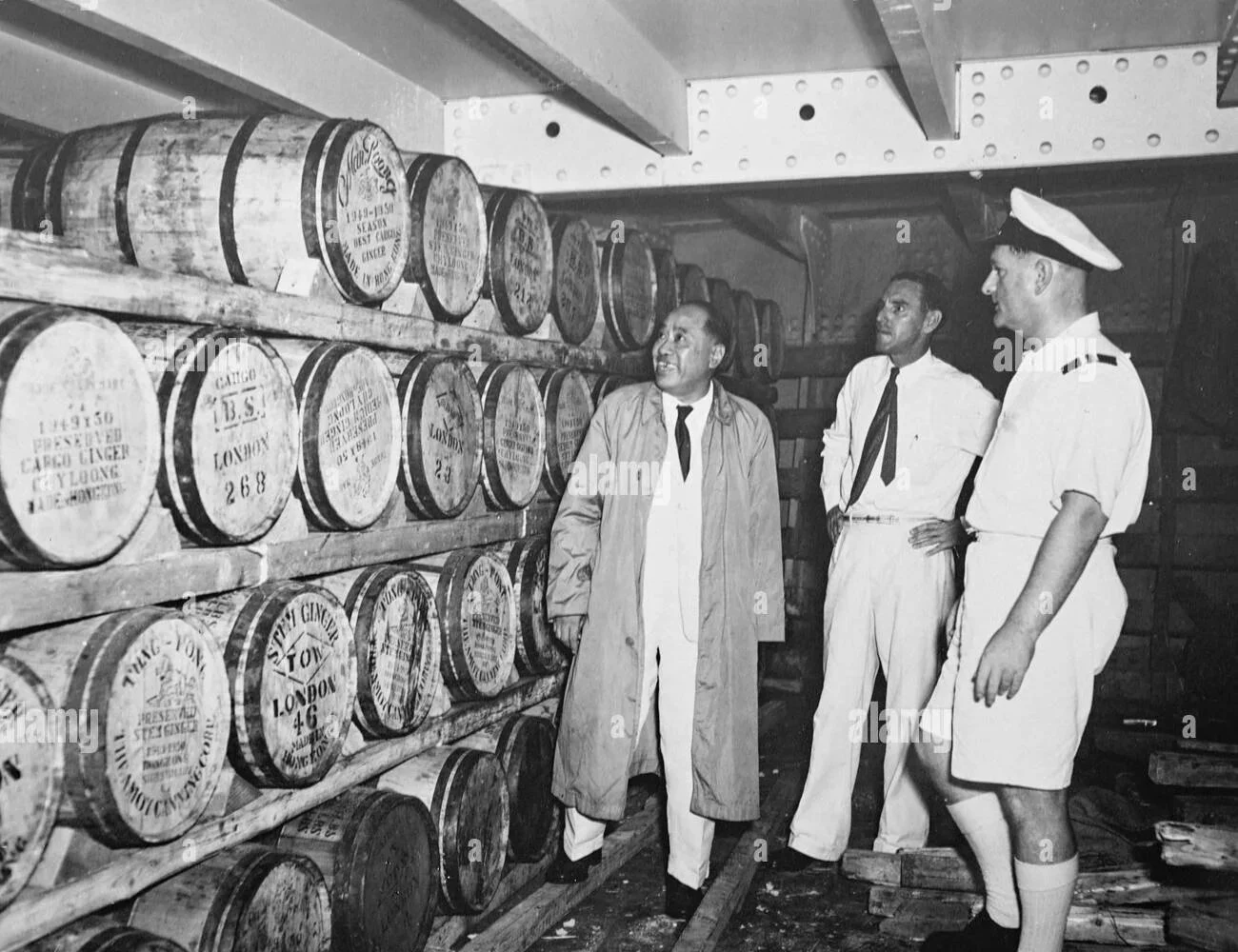
U. Tat‑chee inspecting a record shipment of preserved ginger aboard R.M.S. Canton, 11 Oct 1949 — over 6,000 casks bound for Britain that helped make Hong Kong the colony’s principal post‑war supplier of the sweetened spice (source: alamy)
The Ginger King
For a century Chy Loong was one voice in a chaotic trade; by 1937 eleven small factories were vying for the same export markets. Hong Kong–born partner U Tat‑chee (余達之) ended the scramble by absorbing ten rivals into a single syndicate, the Hong Kong Preserved Ginger Distributors. By the late 1940s the cooperative was exporting thousands of tonnes a year, making the colony Britain’s default postwar source for preserved ginger.
U Tat‑chee, the “Ginger King”, reinvested his fortune in real estate, developing the elite enclave Yau Yat Chuen 又一村. Tat Chee Avenue 達之路 still bears his name, and the street houses the Hong Kong Productivity Council, the government’s flagship centre for manufacturing innovation and industrial upgrading. A ginger empire that once consolidated artisanal factories now underwrites the city’s official machinery for efficiency, technology, and competitiveness.
The Stubborn Storefront
While U Tat‑chee industrialised preserved ginger into a global export, others moved in the opposite direction. When Yiu Fung (么鳳) opened on Foo Ming Street in 1964, it positioned its preserving house as a hyper‑local luxury, pricing its salted dried plums high to cultivate an elite, neighbourhood‑scale clientele. The Ginger King’s cooperative vanished into concrete; Yiu Fung still stands on the same pavement, its glass jars of plums, kumquats and chenpi quietly proving that even the smallest Cantonese delicacy can survive half a century by being uncompromisingly good.
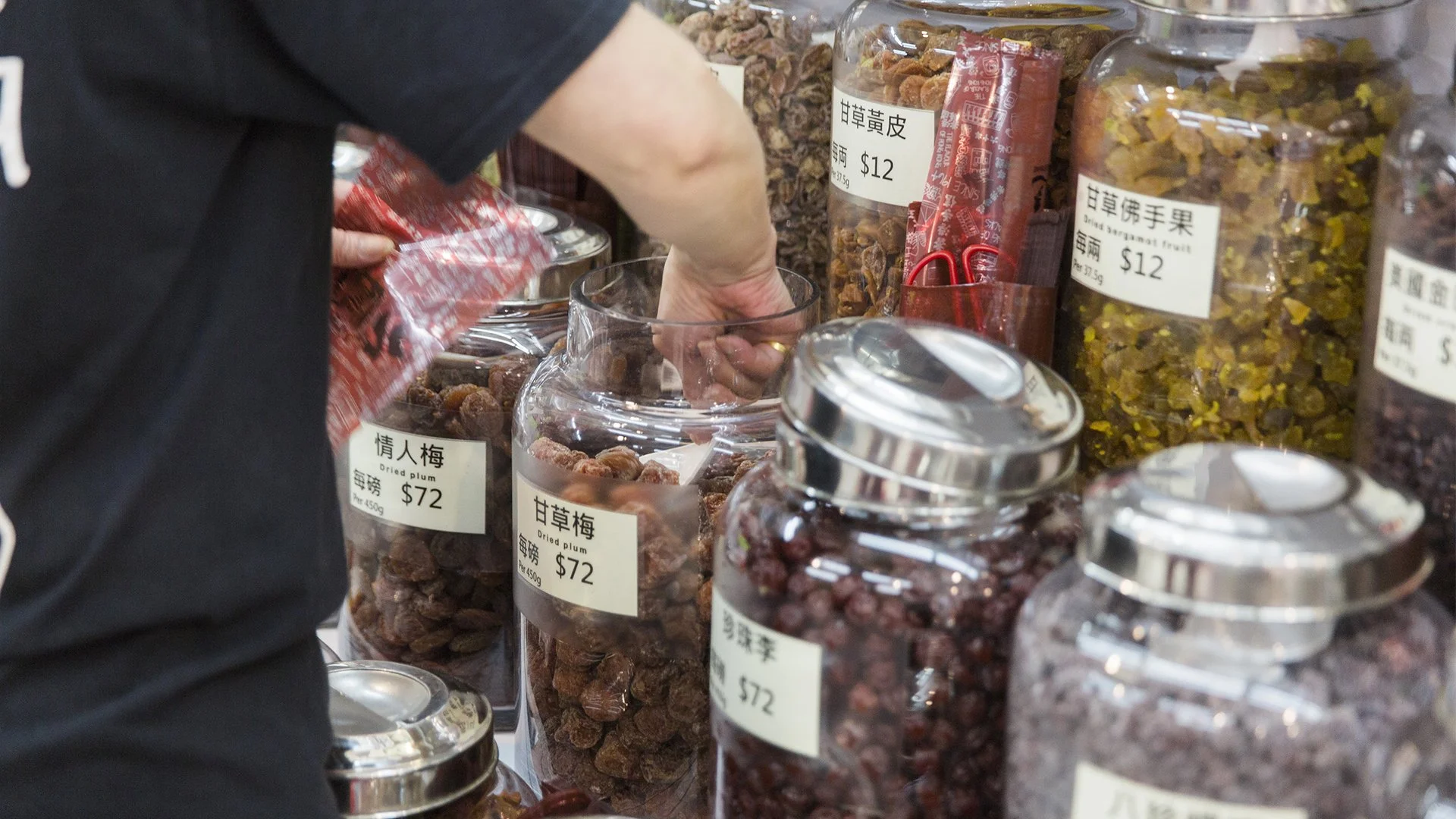
Traditional Chinese preserved fruits inside glass jars at the Yiu Fung Store in Causeway Bay (source: hysan)
Bread, Bankruptcy, and Bolo Bao
Bread arrived as a garrison necessity, leaving behind a trail of arsenic, fatal ambition, and wartime hardtack.
Arsenic and Loaves
The baked loaf arrived as a purely foreign commodity, and the colony's Chinese population made its objections known in the most direct way possible — with arsenic. In 1857, a Chinese-owned Wan Chai bakery laced the morning delivery of colonial loaves with arsenic, a fraught, though undeniably effective, form of political negotiation.
The colonial response was industrial. Western institutions stepped in to secure a dependable supply. Lawrence Pierson Ward established the Wanchi Steam Bakery in 1863 near the modern junction of Wan Chai Road and Wood Road. He baked both soft loaves and naval hardtack. Following Ward's death, the Hong Kong and China Bakery Company absorbed the facility. It was eventually folded into the sprawling provisioning empire of Lane, Crawford & Co., permanently shifting the city's bread supply from local storefronts to heavily guarded corporate infrastructure.
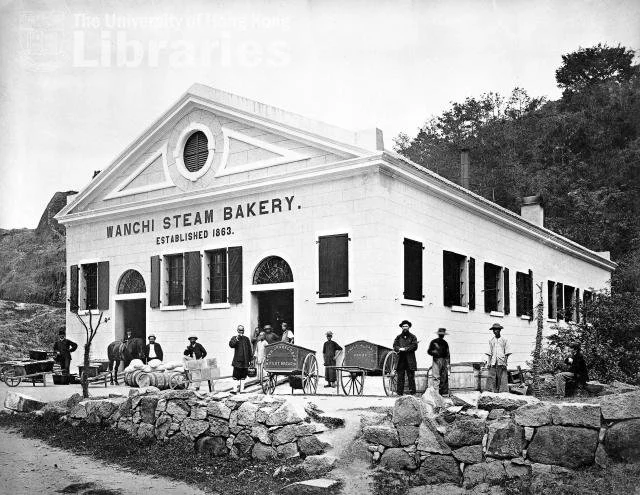
The Wanchi Steam Bakery in 1869. Almost a decade earlier a Chinese-owned bakery in Wanchai had spiced its breakfast rolls with arsenic during a period of great tension in the colonly (source: HKU Digital Repository)
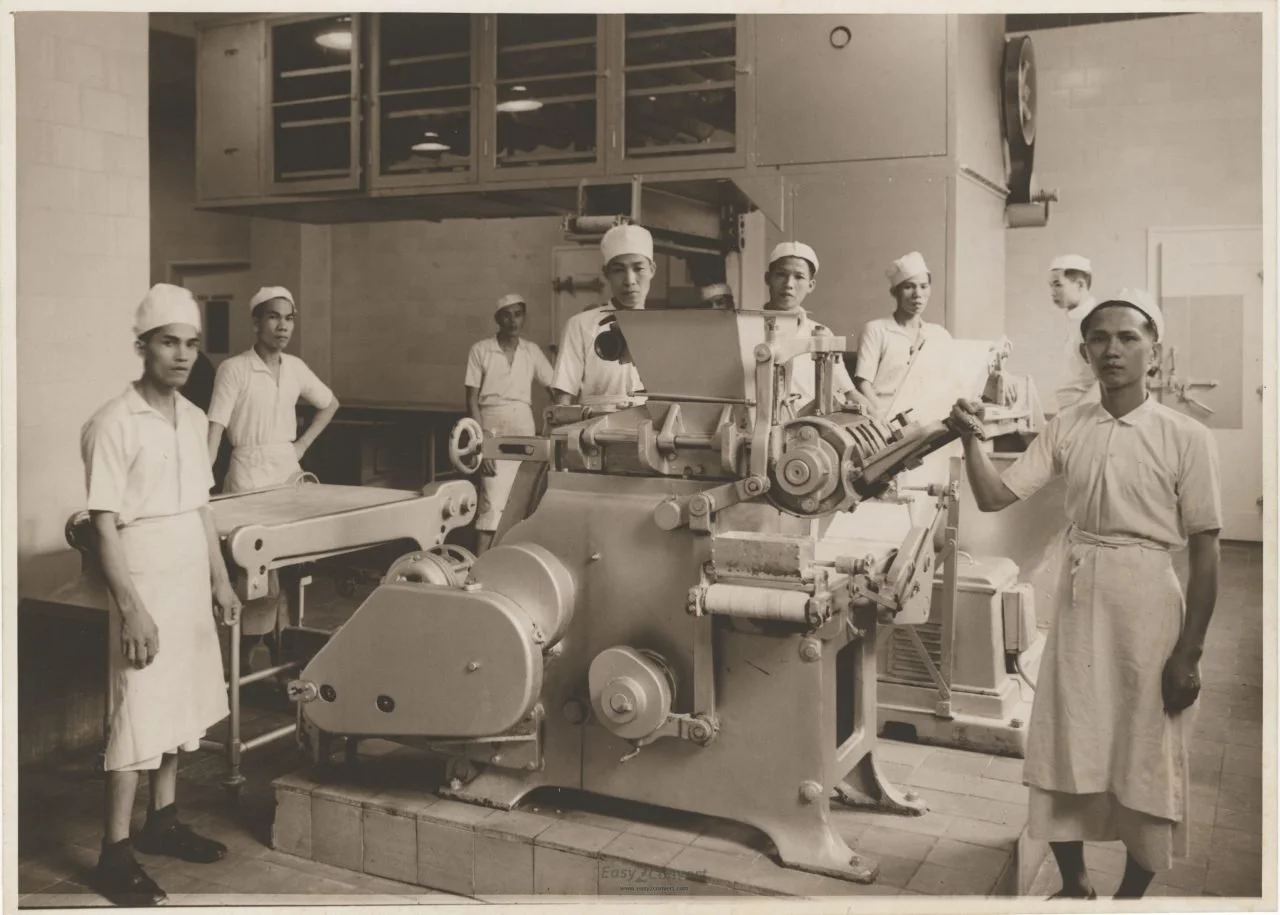
Lane Crawford Bakery (source: Vogue HK)
The Mill That Named a Camp
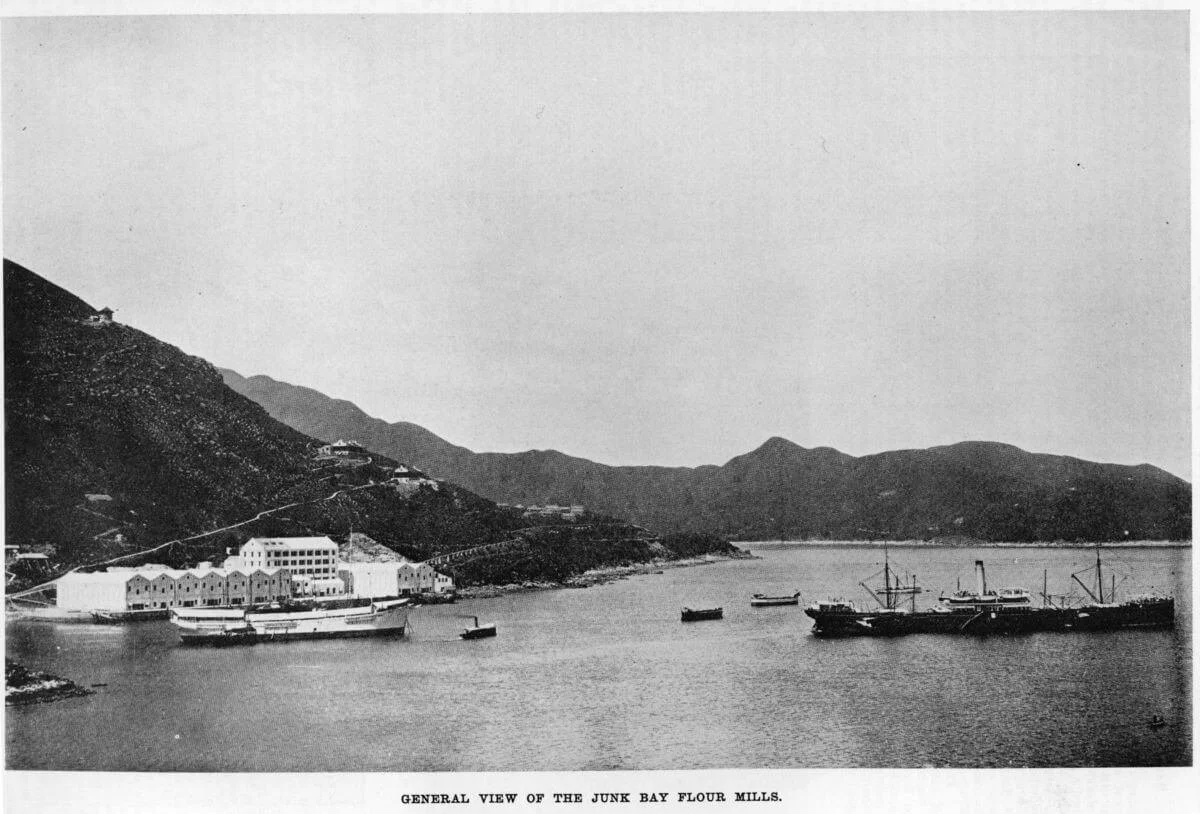
The local map serves as a graveyard for milling ambitions. Early Hakka water-mills in Fo Tan are memorialised only by Min Fong Street 麵房街 ("Millhouse Street") and Min Fong Lane 麵房里 ("Millhouse Lane").
A grander failure occurred further east in Junk Bay. In 1905, A.H. Rennie, a Canadian who had spent fifteen years in Hong Kong as sales agent for the American miller Portland Flouring Mills, convinced two of the colony's most prominent financiers: Sir Paul Chater and Sir Hormusjee Naorojee Mody, whose legacy anchors Chater Road 遮打道 and Mody Road 麼地道, to back the Hongkong Milling Company. Built on 435 acres of reclaimed shoreline, the venture collapsed under crippling debt within three years. Rennie promptly drowned himself.
Local gossip falsely claimed he had hanged himself at the factory. The area was swiftly christened Tiu Keng Leng 吊頸嶺 ("Hanging Ridge"). When refugees settled the abandoned site in the 1950s, a government official sanitised the morbid geography. He swapped the Chinese characters for a more optimistic homophone, 調景嶺, officially translating to "Adjusting the Situation". English maps simply recorded it as Rennie's Mill, permanently binding the landscape to a fatal industrial bankruptcy.
Feeding the Machine
By the mid-twentieth century, rice alone could not sustain a manufacturing workforce running around the clock. The Garden Company (嘉頓) stepped into the void, having produced 90,000 kilograms of hardtack for the army during the Sino-Japanese War. Garden used imported machinery to feed the working class cheaply with standard 'Life Bread'.
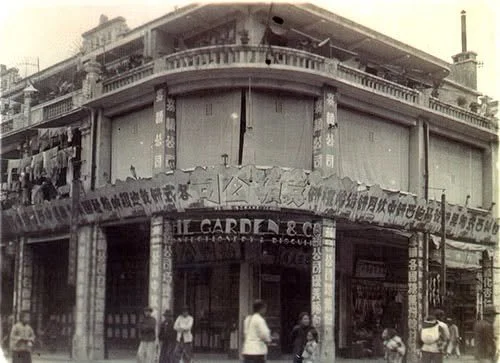
Three-storey store on Ap Liu Street, Sham Shui Po in 1931. Operating on locally manufactured machinery, the production plant made biscuits during the day and bread at night (source: Garden)
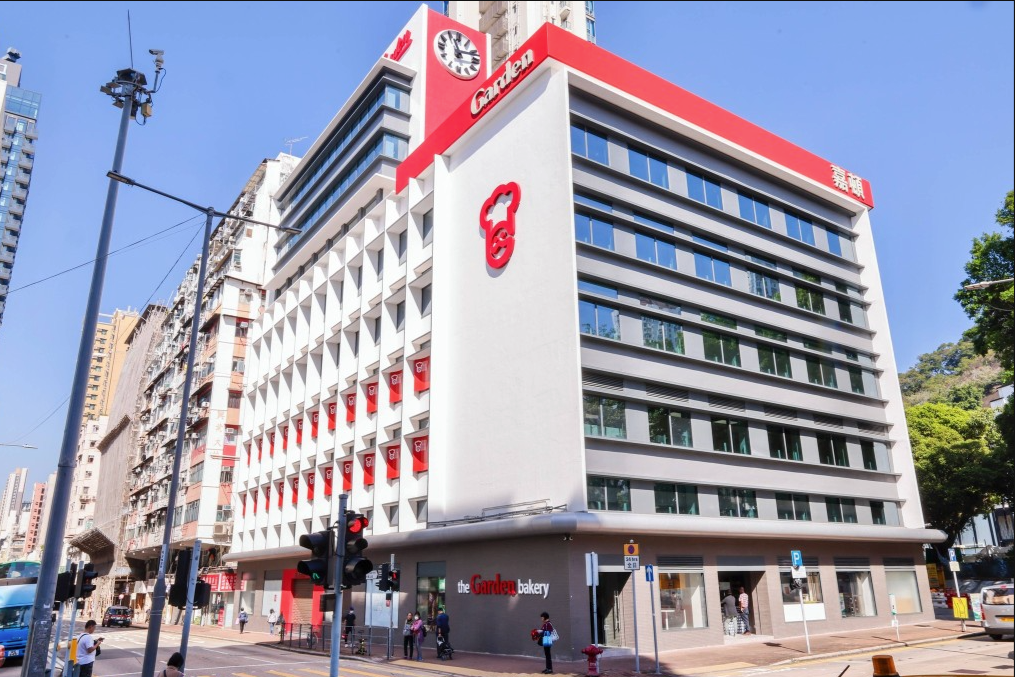
Garden’s GDN‑Lab in Sham Shui Po: where a century of factory bread meets its small‑batch sourdough (source: ST headline)
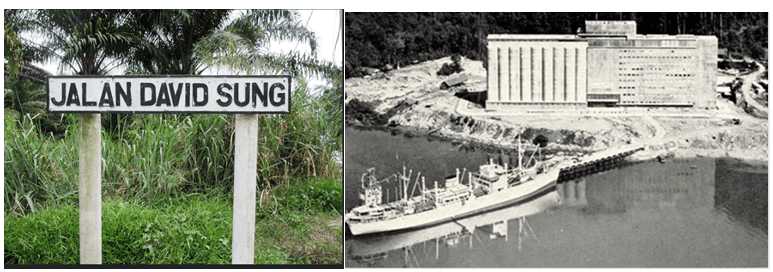
Street sign of Jalan David Sung and aerial view of the MFM plant in Lumut (source: Industrial History HK)
Mechanising the loaf required an equally industrial supply of wheat, arriving by the shipload and needing somewhere to go. Hong Kong Flour Mills, founded by David L. F. Sung, opened on the Kennedy Town waterfront in 1954, purpose‑built to vacuum imported wheat directly from ocean liners into its basement silos. When the Sung brothers later built Malayan Flour Mills in Lumut, Malaysia, several miles of new roads were laid and one of which became Jalan David Sung. Malaysia named a street after the Hong Kong mill owner; Hong Kong never did.
A decade later, Kowloon Flour Mills followed suit, raising its own concrete silos along the Kwun Tong waterfront. Most of the district’s industrial base eventually drained away, replaced by glass offices and creative‑industry campuses, but Kowloon Flour Mills never left. It remains one of Hong Kong’s last functioning flour mills, its brutalist mass holding its ground against the city’s regeneration tide, a rare piece of industry still doing the work it was built for.
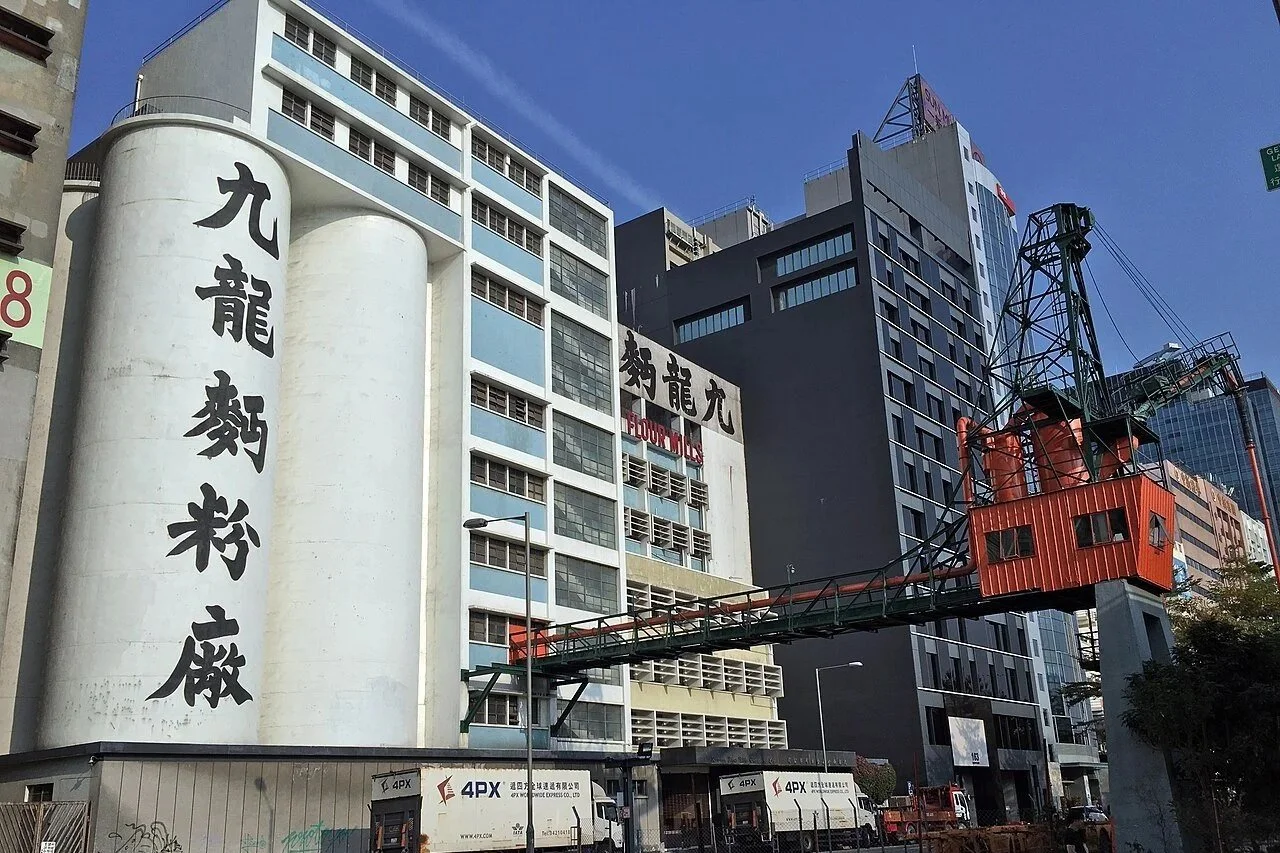
The Kowloon Flour Mills, located near the Kwun Tong Promenade, has been under operation since 1966 (source: wiki)
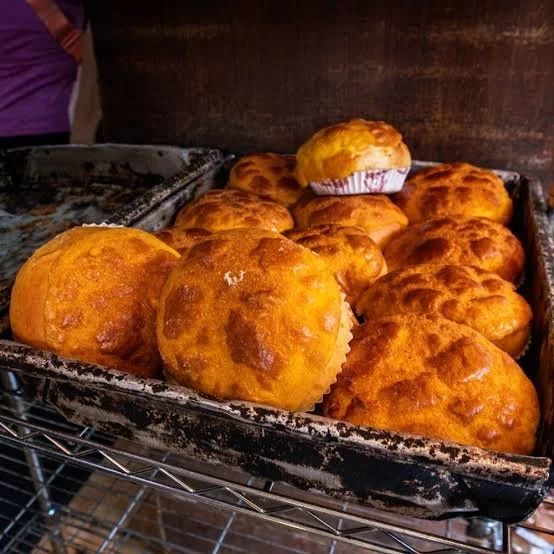
I love bolo baos so here’s another photo of them (source: Indulgent eats)
The Pineapple Crust Rebellion
As mass‑milled flour became a working‑class staple, a culinary adaptation took shape: local bakers transformed Western‑style enriched loaves into something louder and sweeter. They topped a soft, heavily enriched dough with a dense roof of sugar, eggs, and fat; baked at high heat, the topping fractured into a golden mosaic — the pineapple bun was born. Containing absolutely zero fruit, it secured its place in a local culinary canon defined by delicious misdirection, sitting comfortably alongside soy‑glazed wings called “Swiss.”
For decades, this sugar‑armoured carb stayed rooted in cha chaan tengs. But eventually, even this hyper‑local icon slipped past the harbour. Singapore even has “the world’s first bolo bun concept store”. A Hongkonger, naturally, would note the obvious: of course the Lion City had to import our pastries— why reinvent the wheel when you can give it a new logo?
History by the Bite
The physical machinery is mostly gone. Quarry Bay’s coastal refineries, and Junk Bay’s flour mills have all vanished beneath concrete. Yet, while the surface was paved over, the geography simply relocated to the diet. Hong Kong’s spatial memory is haggled over in wet markets, brewed in ice rooms, and stacked on pantry shelves. Between a misunderstood Swiss wing and the shattered crust of a pineapple bun, the city’s spatial history is not archived. It is eaten.