Fantastic Beasts
… and where to find them in Hong Kong
Hong Kong’s streets are a ledger of property deeds haunted by a bestiary. In a city where square footage is the only true religion, the map remains stubbornly populated by the divine. Dragons coil through cul-de-sacs and phoenixes skim the terraces, while the kei lun, the shy unicorn of Chinese myth, guards suburban gates. These are the (瑞獸): auspicious beasts drafted to elevating neighbourhoods.
Yet this bestiary is not purely mythic. Beneath the celestial layer lies a stratum of biological ghosts: the predators and livestock that claimed these slopes before they were leveled for the studio-flat economy. From wet-market songbirds to the thoroughbreds of colonial sport, the city’s nomenclature preserves a vanished metabolism. Ultimately, these names are a quiet superstition, a hope that fortune might linger if a mortgage is anchored to the right creature.
👇 Click through the animals to see the streets they anchor - you can even filter by district:
The Dragon
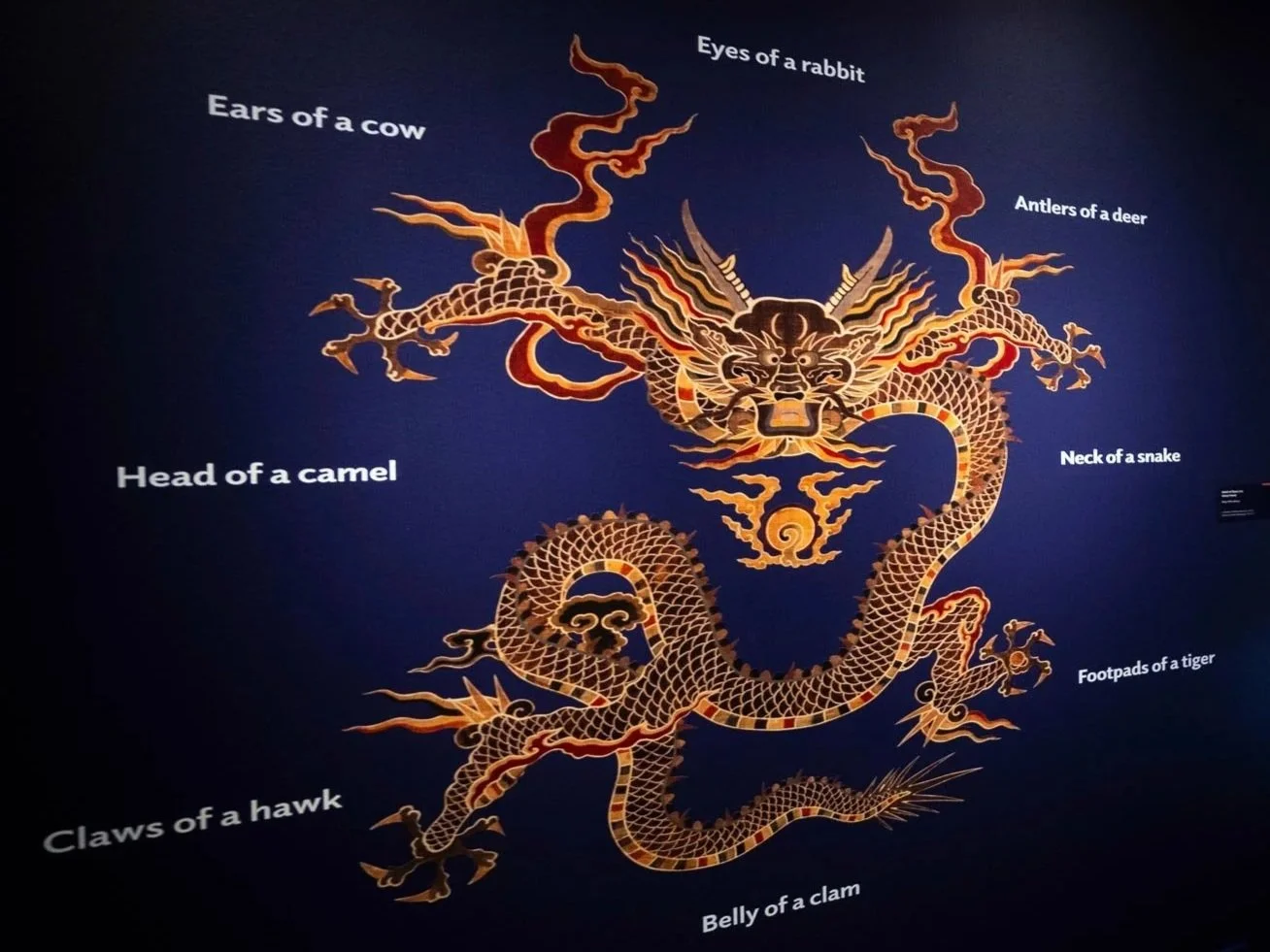
Nine in one - the many different parts of a dragon (source: University of Alberta)
The dragon is China’s longest-running state-approved mascot: benevolent, rain-making, and conveniently available for both emperors and estate agents. Unlike the Western fire-breather, the Chinese dragon is a cosmic civil servant tasked with making rain. Once the exclusive preserve of the throne, it now moonlights in exam halls where parents urge children to "become dragons."
Kowloon’s Mythic Naming
The dragon’s most famous footprint is, of course, Kowloon (九龍, "Nine Dragons"), a name that surfaced on maritime maps in the 16th century. The origin story is a charming bit of PR involving the boy emperor Zhao Bing (趙昺), who fled the Mongol advance in 1277. Legend has it that the emperor counted eight surrounding peaks and dubbed them dragons, after which his chancellor pointed out that the sovereign himself was the ninth.
Geography offers a more literal, if less poetic, explanation. Nine granite ridges run south into the peninsula, conduits of energy known in feng shui as "dragon veins" (龍脈). In the local lexicon, the number nine likely represents a symbolic abundance rather than a precise geological audit.
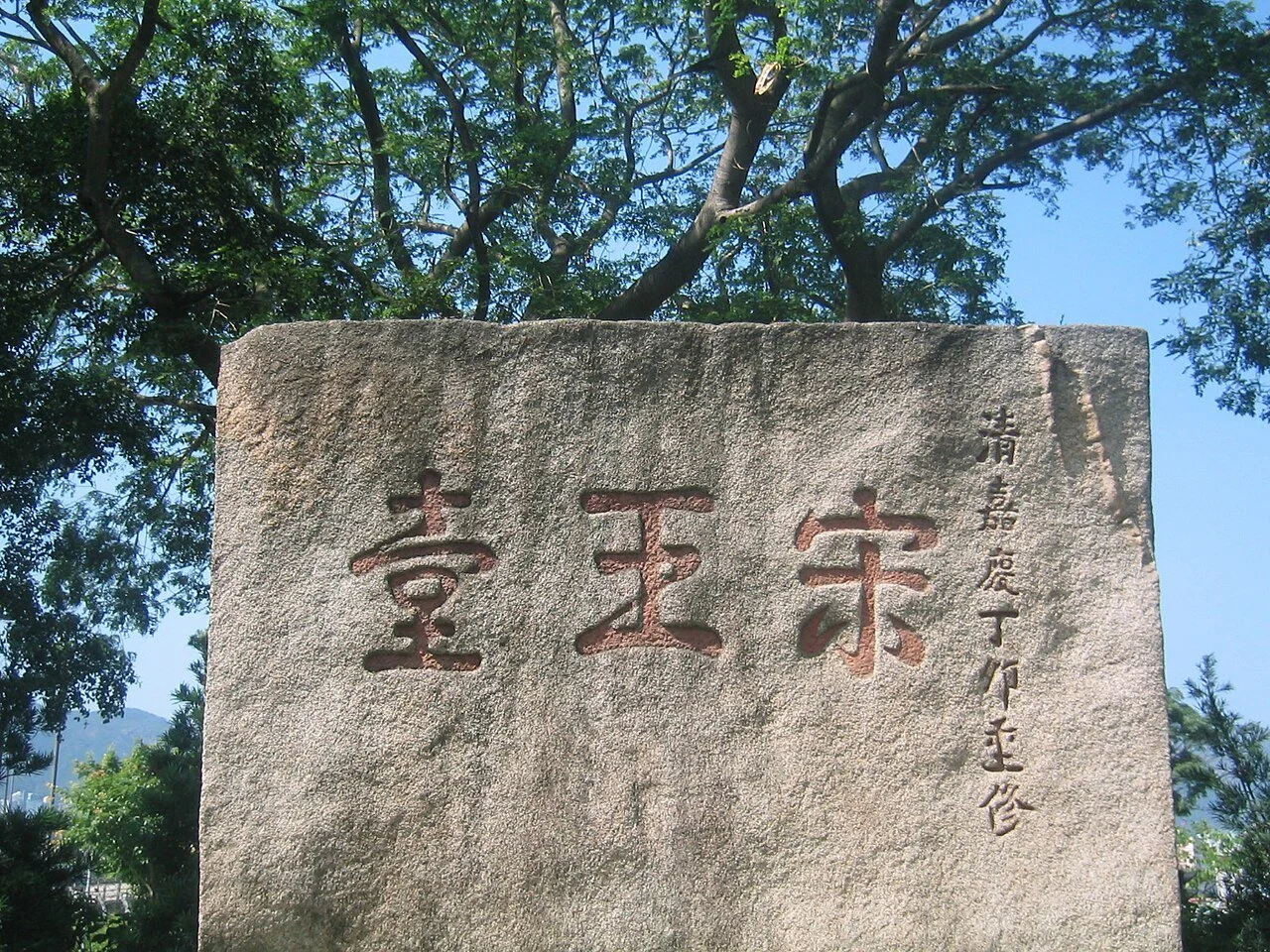
Song Wong Toi ("Terrace of the kings of the Song dynasty") , once part of a massive sacred boulder, this remnant honours the boy emperor who unwittingly completed the "Nine Dragons" count (source: wiki)
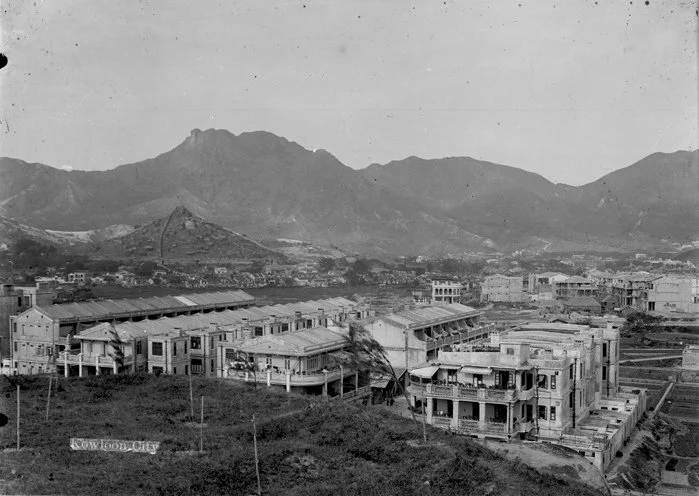
Mountains of Kowloon, 1930s (source: wiki)
Incense, Plague, and the Archive
Fire Dragon Path (火龍徑) in Tai Hang serves as a rare instance of a street name acting as a literal archive. Tai Hang (大坑) translates to "Big Nullah," the stream that once flowed Mount Butler to the harbour. When the waterway was paved over in 2013, the new pedestrian path was named to honour the Tai Hang Fire Dragon Dance.
The ritual dates to the 1880s, when villagers performed a three-night dance with a straw dragon bristling with incense to drive away a plague. Each Mid-Autumn, the dragon still coils through these narrow streets in a haze of sparks. Nearby, Dragon Road (皇龍道) and Dragon Terrace (金龍臺) fold these auspicious associations into modern real‑estate marketing.
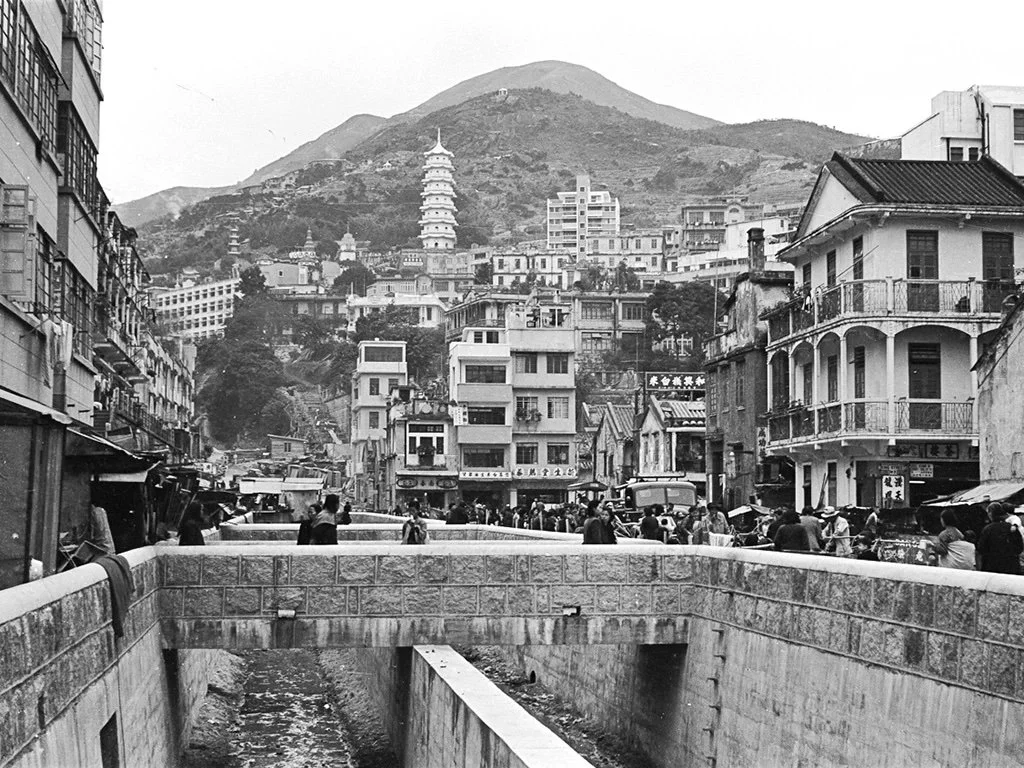
A glimpse of the original "Big Nullah" (Tai Hang) flowing toward the harbour in 1959, long before it was covered to become the Fire Dragon Path (source: City in Time)
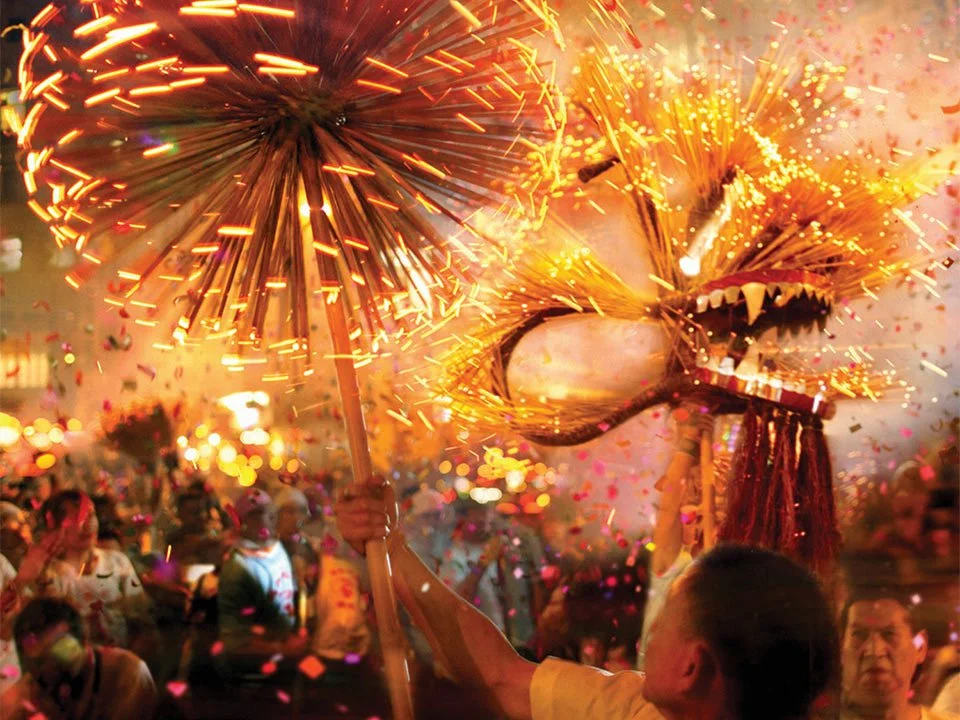
The fire dragon awakens (Source: GASCA)
The Vanished Artery of Kowloon
Long before Temple Street became a tourist staple, Kowloon Street (九龍街) was the peninsula’s commercial engine. Despite the singular name, it was an urban cluster—a dense thicket of shops near modern-day Tung Ching and Carpenter Roads in Kowloon City. Established in the Ming dynasty, this marketplace served Fujian trade ships and briefly rivalled the fledgling British developments across the harbour.
The Lung Tsun Stone Bridge (龍津石橋) briefly linked the market to the sea, but the railway and the 1916 Kai Tak reclamation severed that connection. The bridge was demolished in 1928; the street was eventually buried and erased. Today, its name survives only in Kowloon Road (九龍道) in Sham Shui Po, a different street entirely, which inherited the title but none of the history.
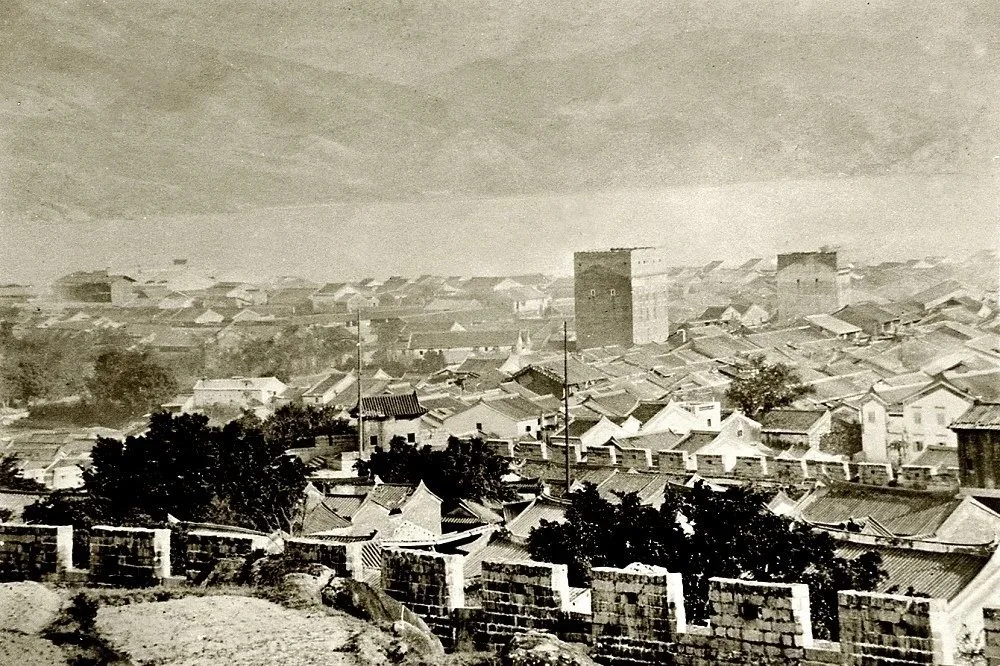
Aerial view of Kowloon Walled City, c.1910, with Kowloon Street market and its pawnshop towers. (source: HK Memory)
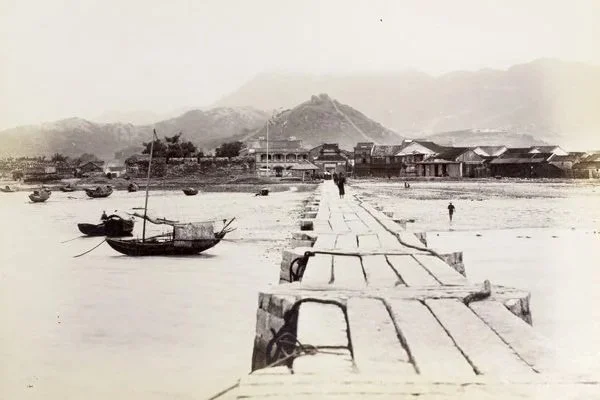
Lung Tsun Stone Bridge and Kowloon Walled City, 1898 (source: HPC Bristol)
The Phoenix
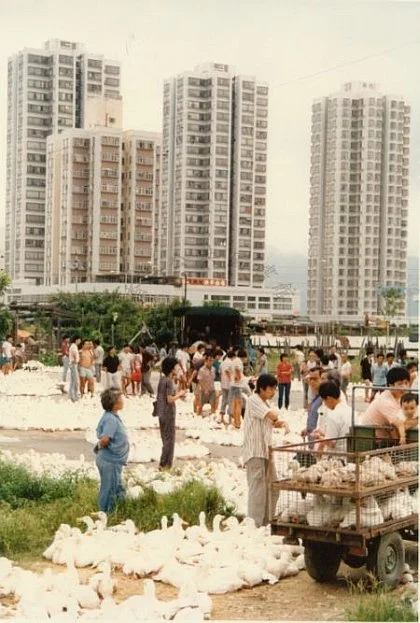
Before it became the land of phoenix in 1960s (source: terewong)
The Chinese phoenix, or fung wong, is no mere firebird. In classical lore it embodies virtue, cosmic harmony, and the balance of yin and yang, appearing only in eras of peace and just governance. Traditionally paired with the dragon, it symbolised the empress to the emperor, marital harmony to imperial power.
While several pockets of the city claim the name, the primary anchor is Fung Wong Tsuen (鳳凰村) “Phoenix Village”. Established in the 1910s on the slopes east of Chuk Yuen (竹園), the village was a deliberate invocation of feng shui by early residents. When the government later developed the district, the "Fung" prefix was retained, cementing the mythical bird in the street directory.
From Coop to Cosmos
Where the Western phoenix rises from ashes in a blaze of renewal, Hong Kong, however, has enlisted the phoenix for more terrestrial duties - real estate rebranding.
Yuen Long offers the most dramatic case study. The area was once Kai Dei (雞地), “Chicken Ground,” a name that reflected its thriving poultry trade. As the district modernised, “Chicken” began to feel a little too barnyard for a rising residential market. The solution was swift: the coops disappeared, and the phoenix arrived as the district’s new aspirational emblem. A cluster of phoenix‑themed streets followed, promising harmony, fragrance, and upward mobility, where one was even named Fung Heung Street (鳳香街, “Phoenix Fragrance Street”).
A similar elevation occurred at Kai Pak Leng (雞伯嶺), or "Chicken Elder Ridge." It was renamed Fung Kong Tsuen (鳳降村): "Phoenix Descending Village", under the convenient geographical fiction that the ridge resembles the gentle descent of the mythical bird. It is a testament to the power of a name: in Hong Kong, if the land looks like a chicken, you simply call it a phoenix until the market believes you.
The Kei Lun
The kei lun (麒麟) is the quietest member of China’s mythic pantheon: a deer‑bodied, single‑horned creature said to appear only in eras of perfect peace, stepping so lightly it spares every blade of grass.
Its serenity met an unexpected test in the Ming dynasty, when giraffes arrived from East Africa and were promptly declared living kei lun. The reclassification endured; even today, the Japanese word for giraffe remains kirin. From there, the creature’s afterlife took a commercial turn. Kirin Beer adopted the qilin in the 19th century, promising a blessing in every bottle, a tidy irony for a vegetarian beast drafted into brewery work.
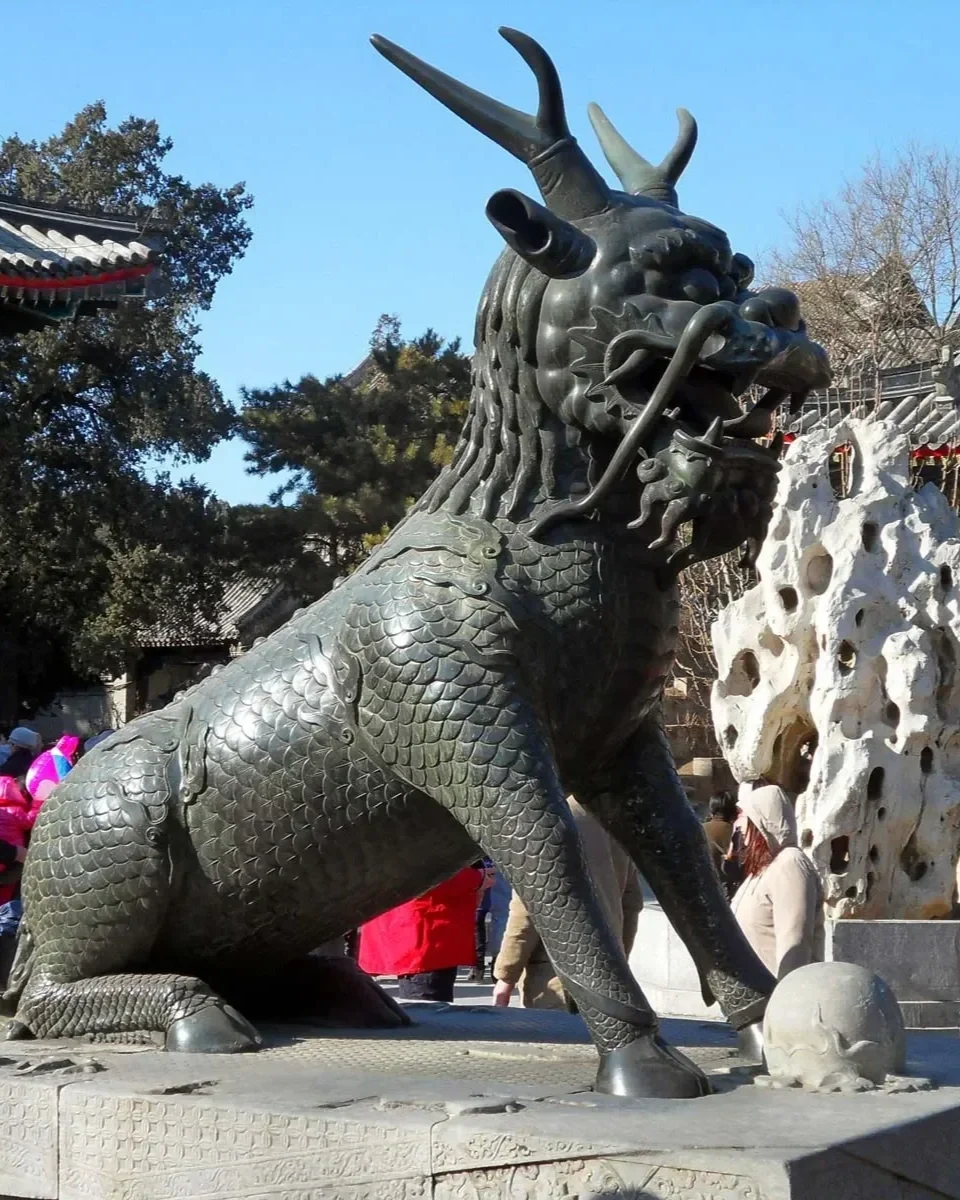
Qilin statue at the Summer Palace in Beijing (source: britannica.com/)
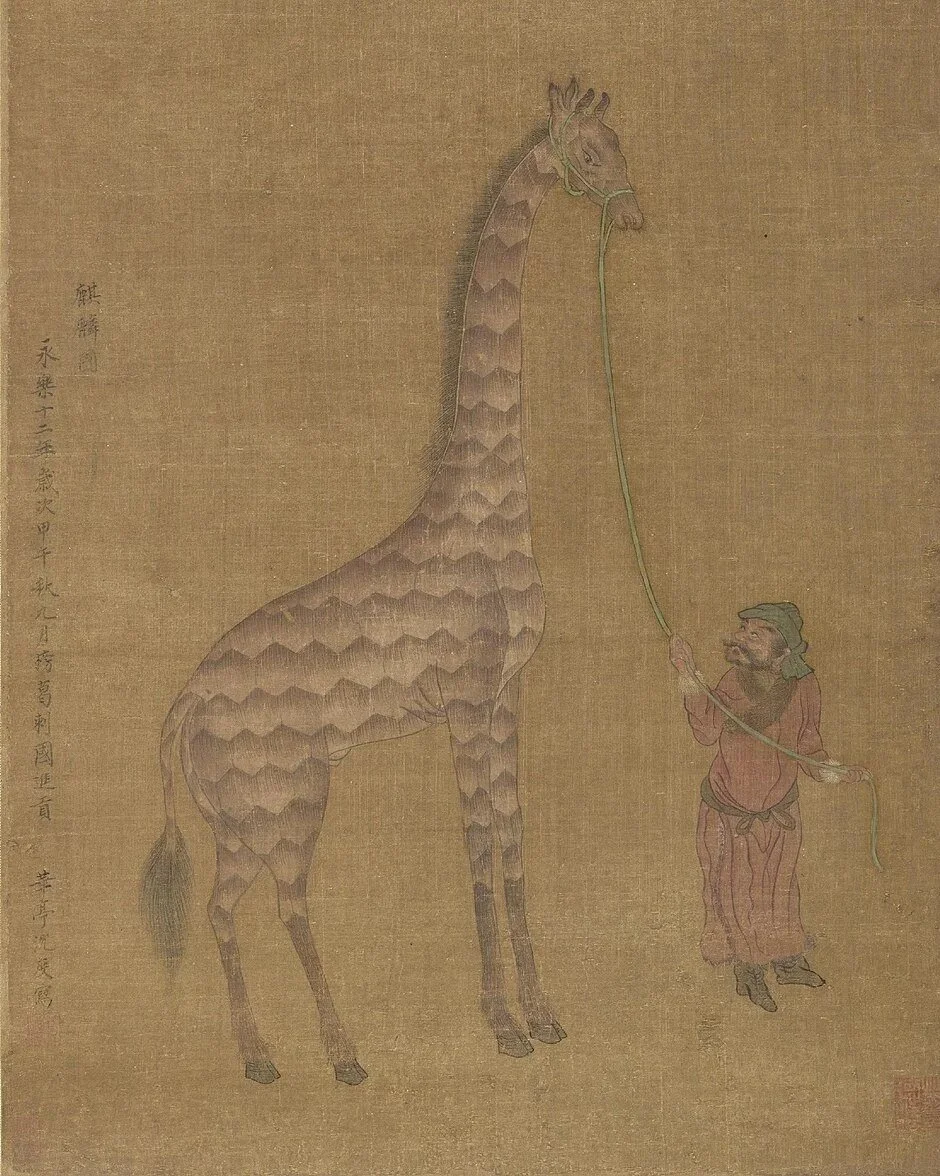
A painting depicting a tribute giraffe and a handler sent to China in the 15th century (source: wiki)
The kei lun’s presence in Hong Kong is most physically anchored in Tuen Mun. The Hakka village of Kei Lun Wai (麒麟圍), settled since the Song dynasty, used the creature as a spiritual perimeter, a guardian against whatever might slip through the cracks of the growing city.
The kei lun dance itself, however, is a mobile ritual of vigilance that extends far beyond a single village. While the dragon dance chases the sky with a massive, undulating team and the lion dance captivates crowds with acrobatic leaps and explosive, cat-like curiosity, the kei lun operates on a different frequency. Its performance is grounded in the sharp, staccato rhythms and low, defensive stances of traditional kung fu. It is brisk, cautious, and far quieter than its cousins, trading the lion’s playful spectacle and thundering drums for a more somber, rhythmic precision. Even the most retiring beast, it seems, can be enlisted to hold the line.
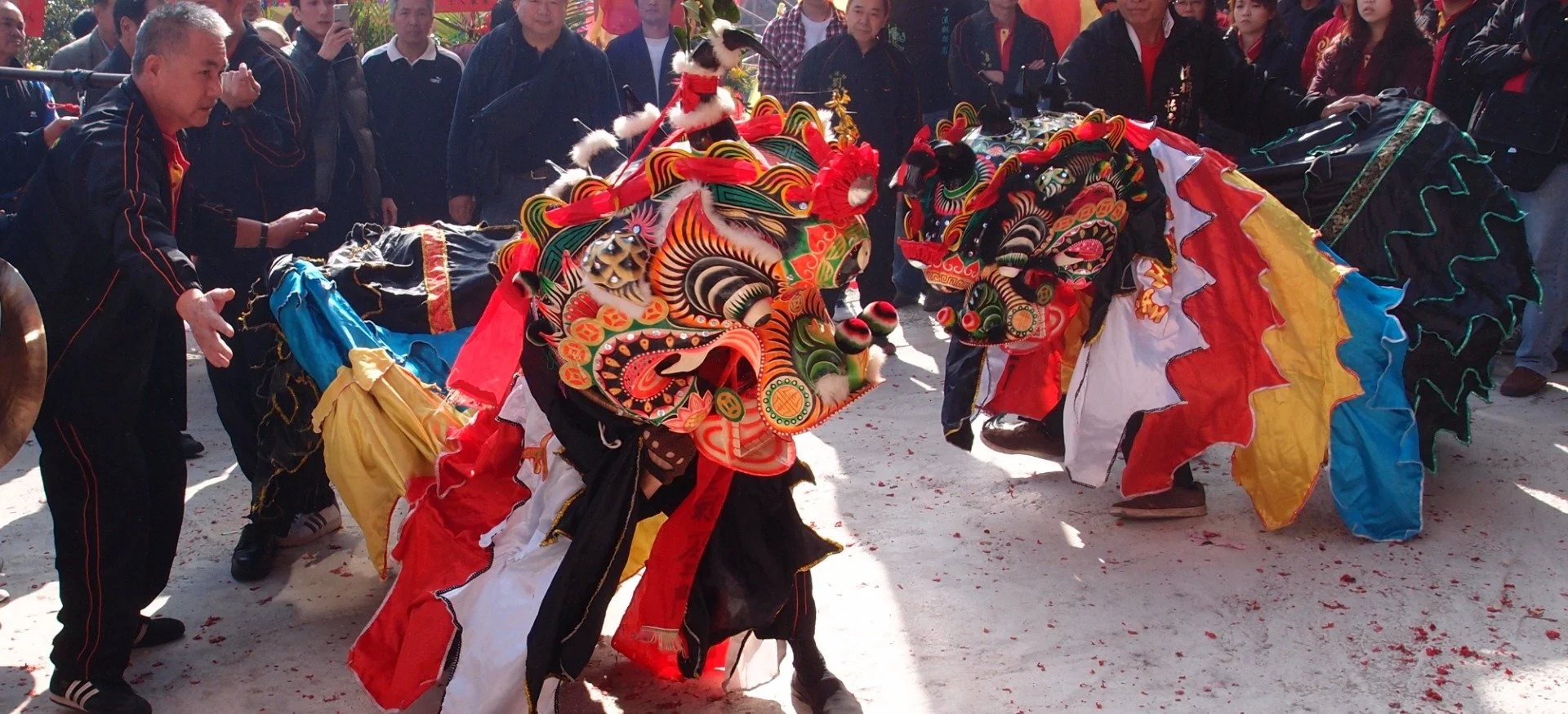
Hakka Kei Lun Dance in Hang Hau in Sai Kung, been part of the National Intangible Cultural Heritage since 2014 (source: icho.hk)
The Horse
The High-Speed Spirit
The horse is the most referenced creature on the streets of Hong Kong, signifying speed and success. The idiom maa5 dou3 gung1 sing4 (馬到功成, “Success upon the horse’s arrival”) promises instant victory, while maa5 lou6 (馬路, “Horse Road”) anchors the animal in the city’s infrastructure.
This symbolism is stamped across the Tseung Kwan O Industrial Estate, where horse‑themed streets act as small prayers for mobility and ascent. Chun (駿, “Fine Steed”) signals latent talent; Chun Fat Street (駿發街, “Fine Steed Prosperity Street”) and Chun Sing Street (駿昇街, “Fine Steed Rise Street”) echo the hope that progress might arrive at a gallop.
Near the airport at Chek Lap Kok, the horse is drafted into logistics. Chun Wan Road (駿運路, "Fine Steed Fortune/Transport Road") bridges the dual meanings of wan (運): both movement and luck.
Philanthropy at a Gallop
Horseracing, of course, is central to Hong Kong’s modern identity. During the 1997 handover, the assurance that “the horses will keep running” became shorthand for continuity, though the track has proved far steadier than the politics around it. Happy Valley (跑馬地, “Horseracing Ground”) remains the home of the racecourse and the Hong Kong Jockey Club.
Founded in 1884 as a colonial enclave, the Club has since evolved into a state‑sanctioned monopoly and the territory’s largest taxpayer. It funnels betting revenue into a vast philanthropic portfolio, underwriting everything from universities to heritage conservation. Its influence reaches deep into the New Territories: Jockey Club Road (馬會道) in Sheung Shui marks the Club’s funding of the Shek Wu Hui Jockey Club Clinic in the 1960s, then the area’s only public medical facility.
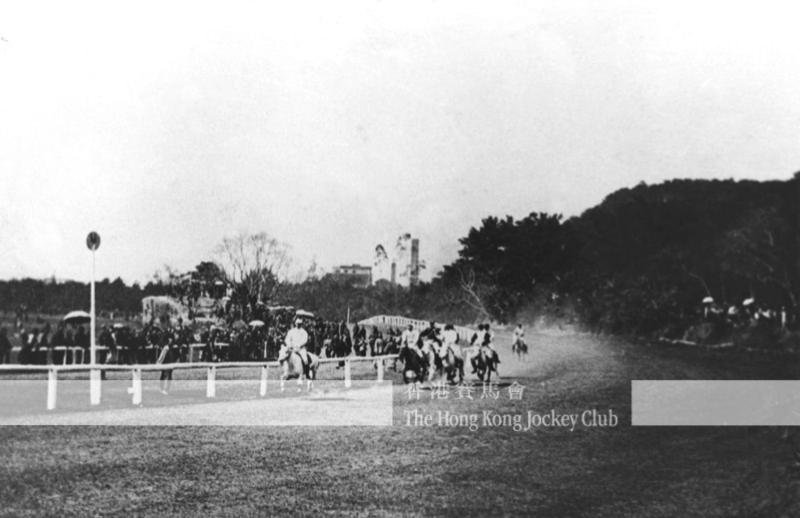
Happy Valley Racecourse, 1894 (source: HK memory / HKJC Archives)
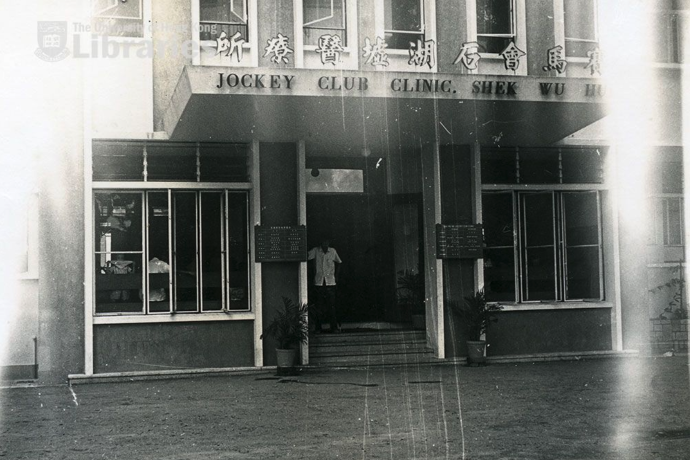
The Jockey Club Clinic on Jockey Club Road of Shek Wu Hui in Sheung Shui, opened in 1961 (source: HKU Library)
Saddles, Shoes, and Phonetic Trips
The landscape itself carries equestrian traces. Ma On Shan (馬鞍山, “Horse Saddle Mountain”) takes its name from a saddle‑shaped ridge, while Horse Shoe Lane (馬蹄徑) in Ngau Tau Kok nods to the iron curve of a hoof.
Yet in a city of shifting dialects, the map often stammers. In Ma Wan (馬灣), the ma honours Mazu (媽祖), the Goddess of the Sea, rather than a stallion. Elsewhere, the horse is a byproduct of reclamation. Ma Tau Wai Road (馬頭圍道) began its life in 1926 as 碼頭圍道) "Pier Walled Road." As the shoreline migrated outward and the old Lung Tsun Pier (龍津碼頭) vanished under concrete, the character for "Pier" (碼頭) drifted into the homophonic "Horse Head" (馬頭). By 1976, the government formalised the slip of the tongue.
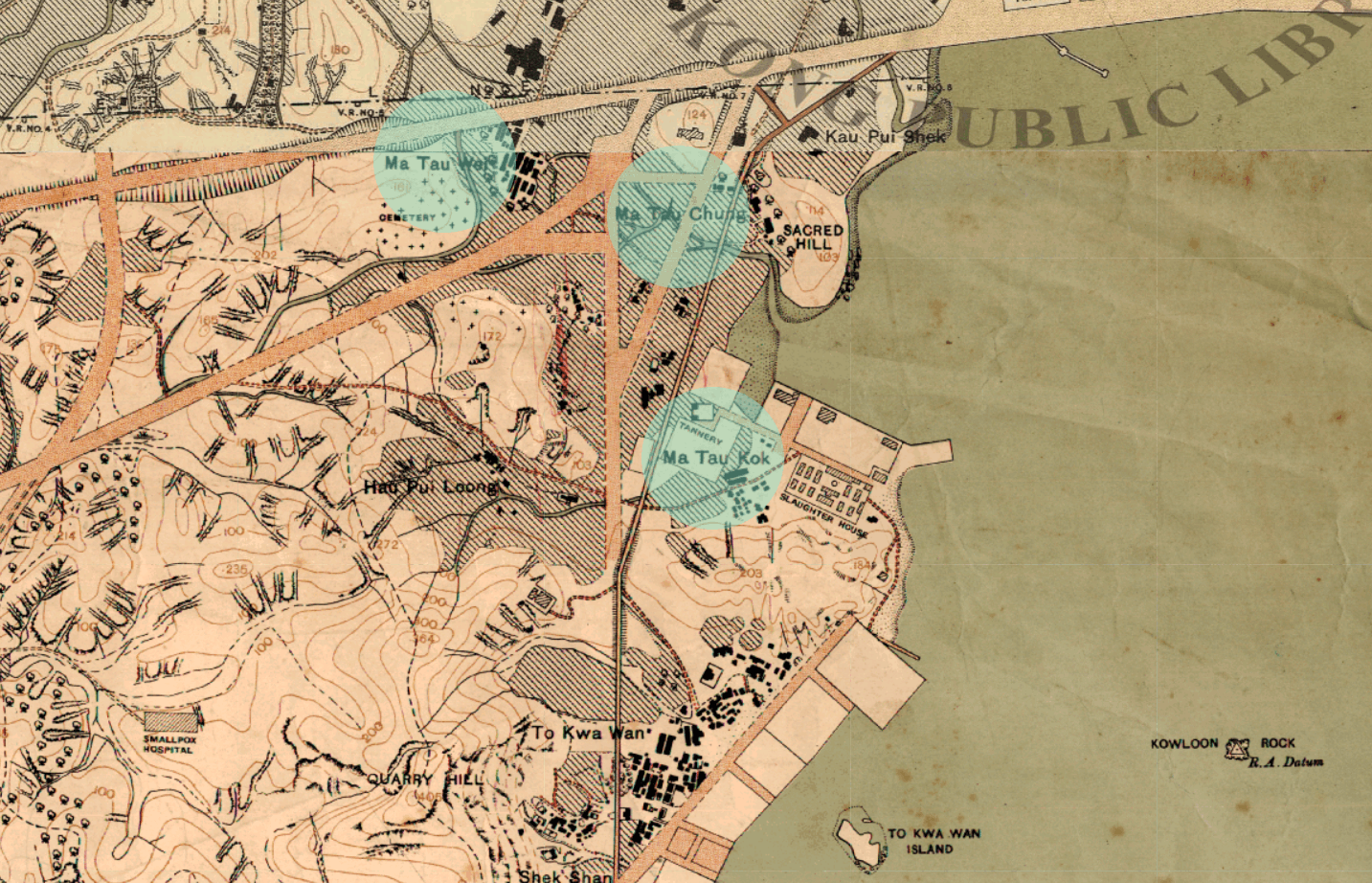
Kowloon map from 1924 showing Ma Tau Kok, Ma Tau Chung, and Ma Tau Wei (source: HK Maps)
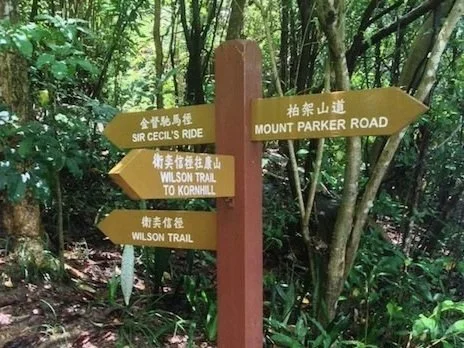
Leisurely hike on HK Island (source: bluebalu.com)
The Governor’s Morning Trot
Colonial leisure left its own marks in Sir Cecil’s Ride (金督馳馬徑) and Lady Clementi’s Ride (金夫人馳馬徑).
Sir Cecil Clementi, the 17th Governor and a fluent Cantonese speaker, preferred the saddle to the desk. In 1929, he formalised his personal riding routes as public trails, naming the first after his wife, Marie Penelope Rose. What began as a governor’s morning trot ended up shaping the island’s recreational geography, extending a network of paths from Wan Chai Gap to Mount Parker.
The Birds
If the dragon and phoenix occupy the heights of the cosmology, Hong Kong’s smaller birds handle the everyday burdens: security, renewal, and romance. They are the avian middle class of the street map, tasked with managing the anxieties of the household.
The crane has long signified longevity. In Hung Hom, Hok Yuen Street (鶴園街, “Crane Garden”) is the last trace of the white birds that once nested in the village’s feng shui woods. Those woods have since been replaced by a dense belt of auto‑repair shops, leaving the name to stand in for a sanctuary that no longer exists. A characteristic local slippage persists in the record. While the map insists on the crane (鶴), the birds were almost certainly egrets (鷺), common tenants of the marshes. Yet the crane’s signature promise has found an afterlife in data rather than ecology, with Hong Kong recording one of the highest life expectancies in the world.
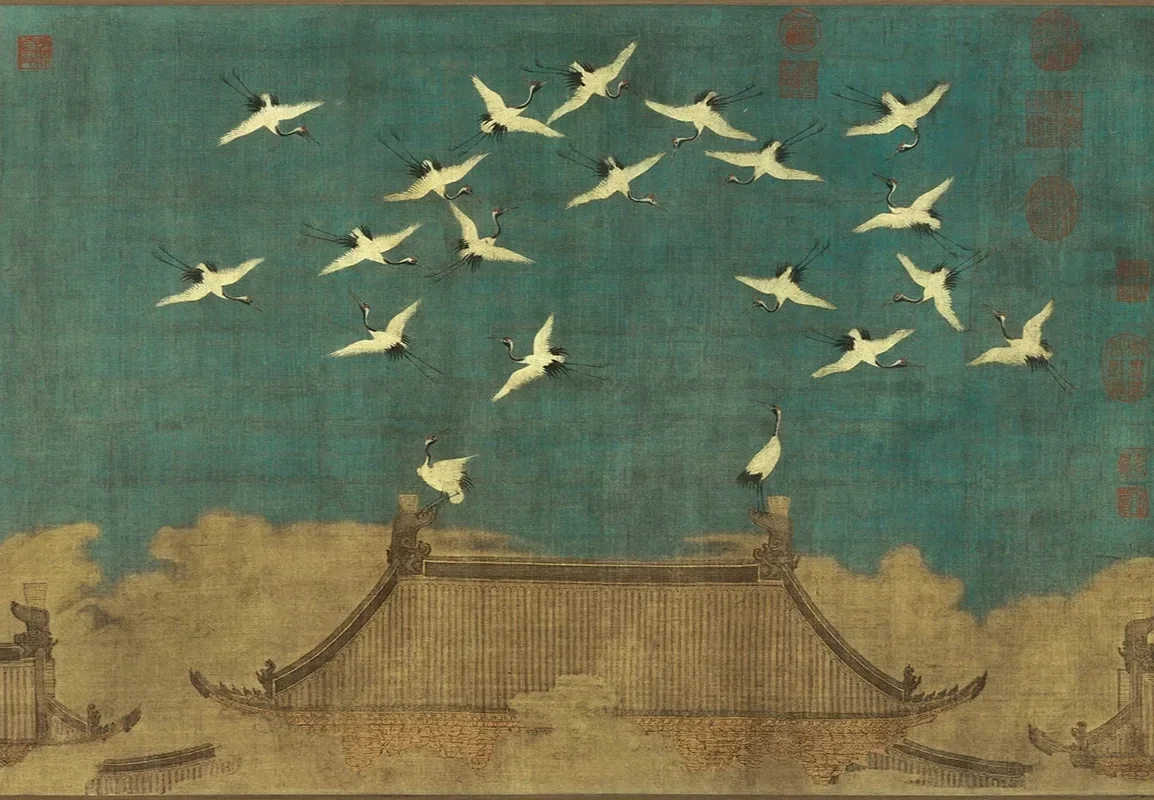
Auspicious Cranes (瑞鶴圖) by Zhao Ji, circa Song Dynasty (source: China Online Museum)
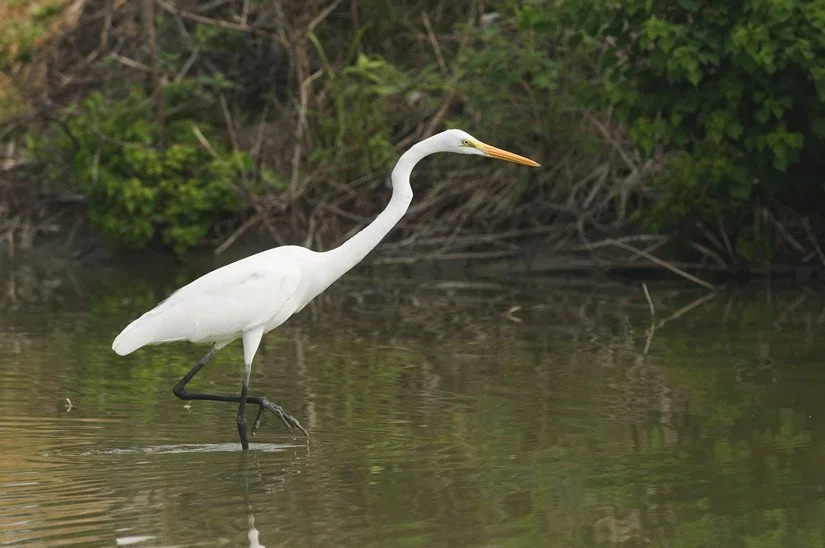
Not a crane, but close enough: an egret (source: wetlandpark.gov.hk)
The swallow is a more domestic affair. Known as the "joy bird," its arrival signals that a household is in good standing with the heavens. In Sheung Shui, Yin Kong Village (燕崗村, “Swallow Hill Village”) has carried this promise for six centuries—an impressive amount of time to pin one’s hopes on a migratory tenant. Where the swallow tends the home, the Red Luen tends the heart. Hung Hom’s Red Luen Road (紅鸞道) takes its name from the celestial matchmaker star, a cosmic overseer of romance. In a city of dating apps and compressed timelines, naming a major road after a mythological matchmaker feels less like optimism than a quiet admission of need.
The Deer
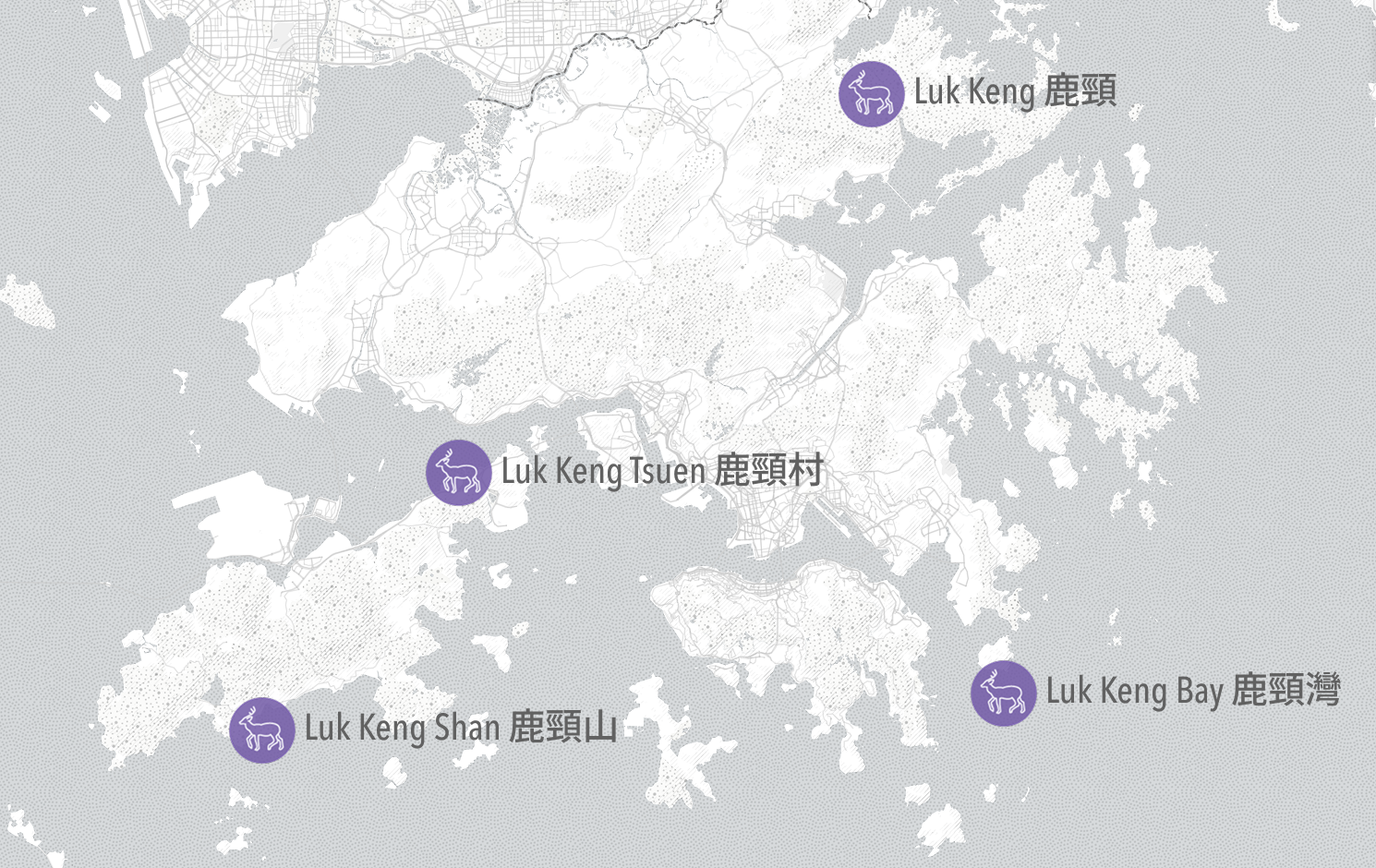
The many Luk Kengs in Hong Kong
The deer has long stood at the crossroads of cosmology and bureaucracy. In Chinese tradition, its shifting colours mark the passage of centuries, while its white form becomes the mount of Sau Sing (壽星), the God of Longevity. The animal’s name 鹿 (luk6), echoes 祿, the stipend of an official, collapsing celestial endurance into worldly promotion. To invoke the deer was to ask for both time and rank: a long life and a reliable income.
When Hakka clans settled the northern New Territories in the Ming dynasty, they inscribed this symbolism directly onto the landscape. Luk Keng (鹿頸, “Deer’s Neck”) and Luk Mei (鹿尾, “Deer’s Tail”) were deliberate cartographies of fortune. The inlet was mapped as a living body, its head and tail aligned to channel auspicious energy.
The precise origin of Luk Keng’s name, however, remains elusive. Oral accounts describe a ridge resembling a deer’s neck when viewed from below. Scholarly readings place it within the mountain chain, a narrowing between head and torso visible from above. A third line of interpretation looks to coastal geomorphology: short, curved inlets across Hong Kong: Sha Tau Kok, Lantau, Tung Lung Chau, Shui Hau share the name, suggesting the term referred to bays rather than anatomy. Guangdong examples add another layer, where geomancers named villages after “deer‑shaped tombs,” likening ridges to animal necks in the language of feng shui.
The Tiger
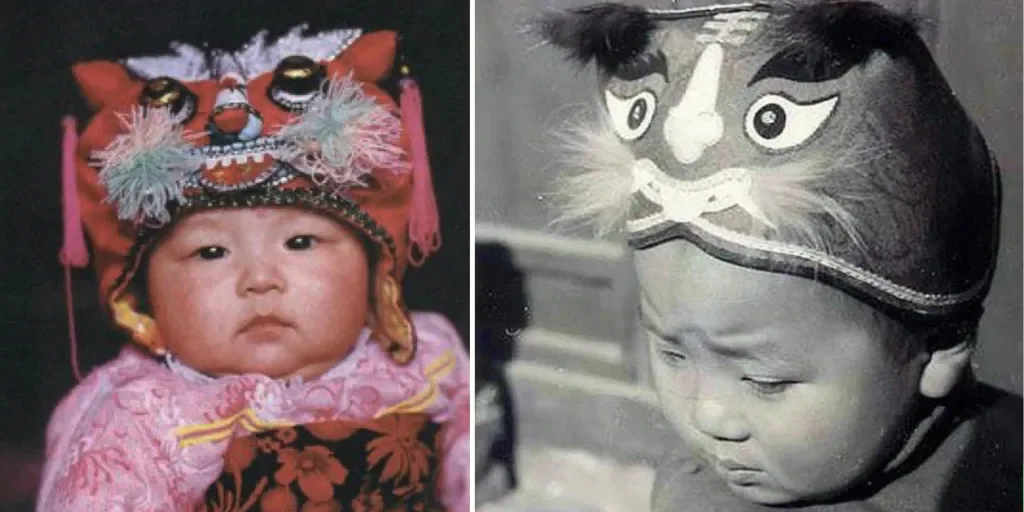
Adorable tiger hats <3! (source: Deyi living)
In Chinese cosmology, the tiger is drafted into sovereignty and defence. Its brow carries the character for king (王), and as the White Tiger of the West, it embodies the force needed to repel misfortune. From temple walls to the stiff felt of a child’s tiger‑hat, the animal served as a portable shield.
In Hong Kong, this authority was a matter of survival. The South China tiger remained a presence in the hills well into the colonial era, a predator that occasionally pulled villagers from their doorways. Hakka settlers clearing exposed ridges named them Fu Tei (虎地, “Tiger Land”), Fu Tei Pai (虎地排), Fu Ti Au (虎地坳), enlisting the creature’s aura as a defensive claim. Naming the ground after the beast was a way to borrow its power before encountering the real thing.
The physical evidence of this era once hung as a trophy in the officers' mess of the Central Police Station (now Tai Kwun). The "Tiger of Sheung Shui," shot in 1915 after killing two officers, spent sixty years snarling at the colonial brass from a mounted head. Today, the specimen resides in the Police Museum on the Peak. Yet the tiger’s protection was never straightforward. Its ferocity could be read as volatility, prompting renamings that softened the omen. Lok Fu (樂富, “Happiness and Wealth”) was once Lo Fu Ngam (老虎岩, “Tiger Rock”), and the district was rebranded in the 1970s to blunt the tiger’s edge while keeping a faint phonetic echo.
Aquatic Creatures
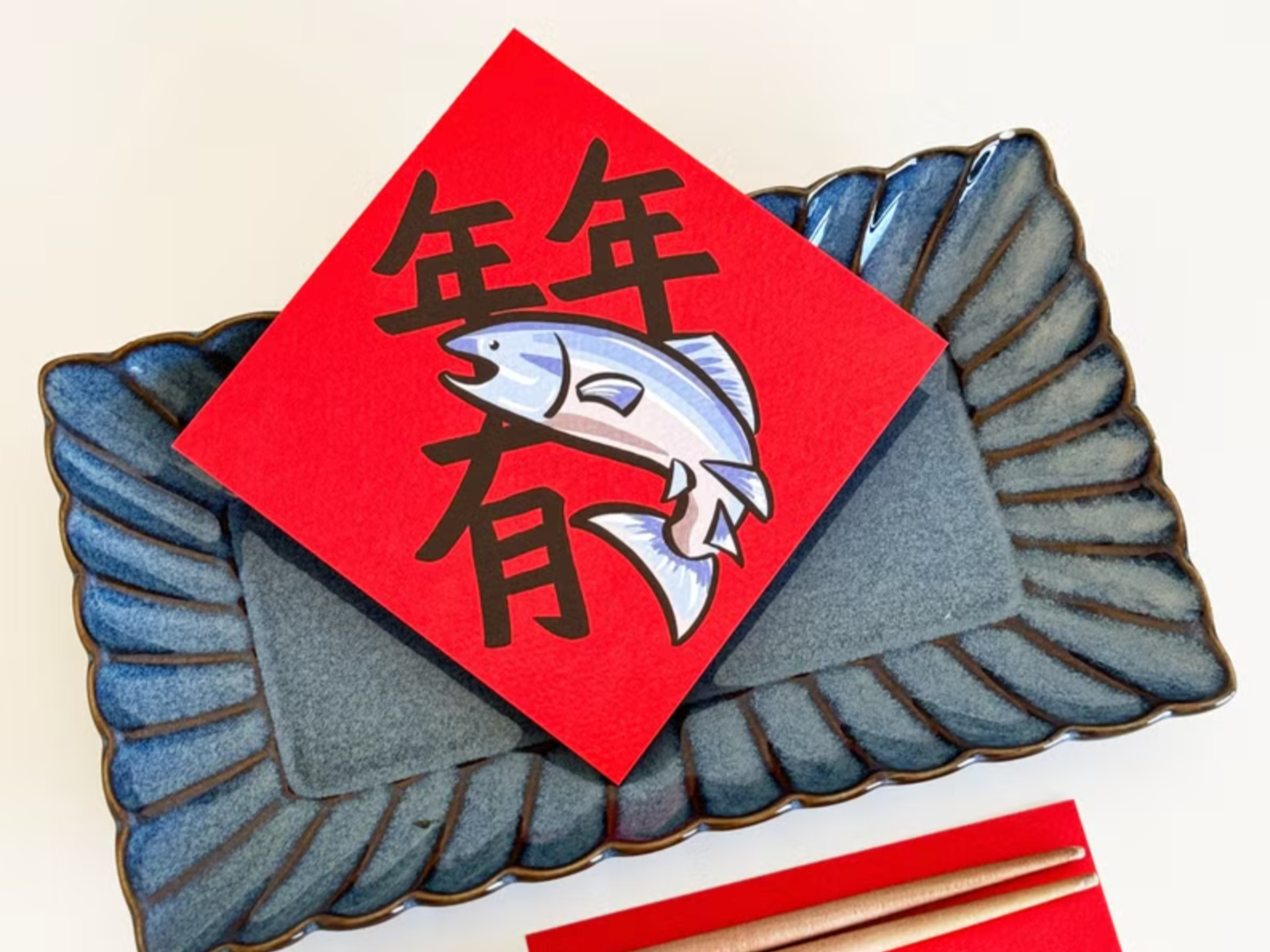
‘Year year have fish’ (source: Ohla Lab @ pinkoi)
In the local lexicon, yu (魚, “fish” jyu4) is a homophone for abundance (餘, jyu4), bridging the gap between a physical catch and a financial surplus. This auspicious connection is why a name like Tsui Yu Road (聚魚道, “Gathering Fish Road”) functions as a perpetual charm for the neighborhood; to "gather fish" is to invite an overflow of wealth that persists long after the actual nets have dried. This sentiment is codified in the ubiquitous New Year blessing njin4 njin4 jau5 jyu4 (年年有餘), wishing that every year ends not just with fish on the table, but with abundance that never runs dry.
Beyond the symbolic prosperity of the fish, the city’s toponymy preserves the memory of marine life that once dictated the rhythm of coastal survival. Hau Tei Square (鱟地坊, “Horseshoe Crab Ground”) in Tsuen Wan marks the mudflats where these prehistoric creatures once bred. Their habitat is now sealed beneath shopping arcades, leaving the name as the only trace of a species evicted by the tower block. In a similar vein, the oyster acted as a foundational pillar of the region's southern maritime identity. Places like Sai Kung’s Ho Chung (蠔涌, "Oyster Creek") and Ta Ho Tun Road (打蠔墩路, "Oyster Pier Road") serve as stony reminders of a time when the "oyster pier" was the center of gravity for local trade.
The Bestiary of Fortune
To Kwa Wan is a census of auspiciousness. Once a shoreline of shipyards and grease-stained workshops, the district remains anchored by a dense layer of names designed to steady a neighborhood built on shifting reclamation. Today, much of this mythological roster sits within redevelopment zones, testing whether ancient guardianship can actually stall URA’s advance.
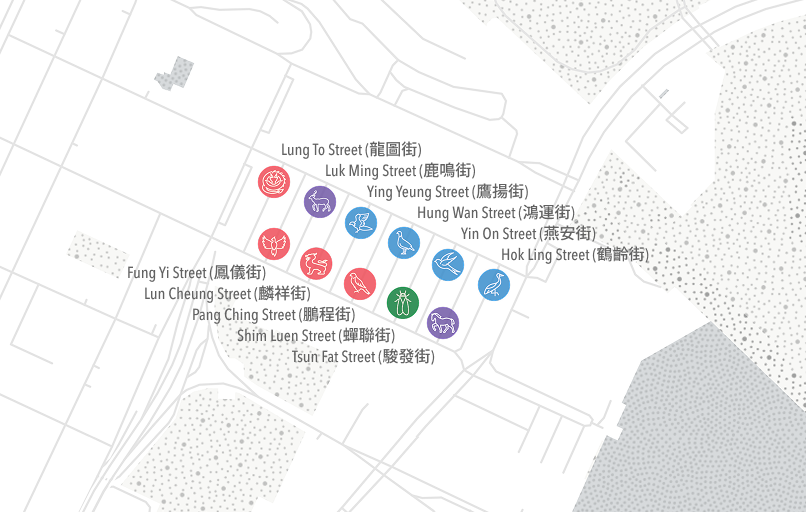
The To Kwa Wan animal cluster
The neighborhood begins with high-altitude security. Lung To Street (龍圖街, “Dragon Map”) and Fung Yi Street (鳳儀街, “Phoenix Etiquette”) provide the heavy lifting of imperial authority, while Lun Cheung Street (麟祥街, “Kei Lun Auspiciousness”) drafts the kei lun into local service.
From protection, the map shifts to ambition. Pang Ching Street (鵬程街, “Roc’s Journey”) invokes the legendary flight of the giant bird as a metaphor for upward mobility, while Ying Yeung Street (鷹揚街, “Eagle Soaring”) adds a sharper edge to local ambition. Joining them is Tsun Fat Street (駿發街), named for the "Prosperous Steed”, a symbol of charging momentum and rapid wealth. In a district where advancement was hard-won, these were the coordinates of hope.
Everyday stability is written into the remaining narrow lanes. Hok Ling Street (鶴齡街, “Crane Age”) invokes longevity, while Yin On Street (燕安街, “Swallow Peace”) promises domestic calm. Luk Ming Street (鹿鳴街, “Deer Call”) signals the arrival of talent, and Hung Wan Street (鴻運街) summons the "Great Luck" of the wild goose. Perhaps the most optimistic is Shim Luen Street (蟬聯街); named after the modest cicada, it invokes a cycle of rebirth and "unbroken succession".
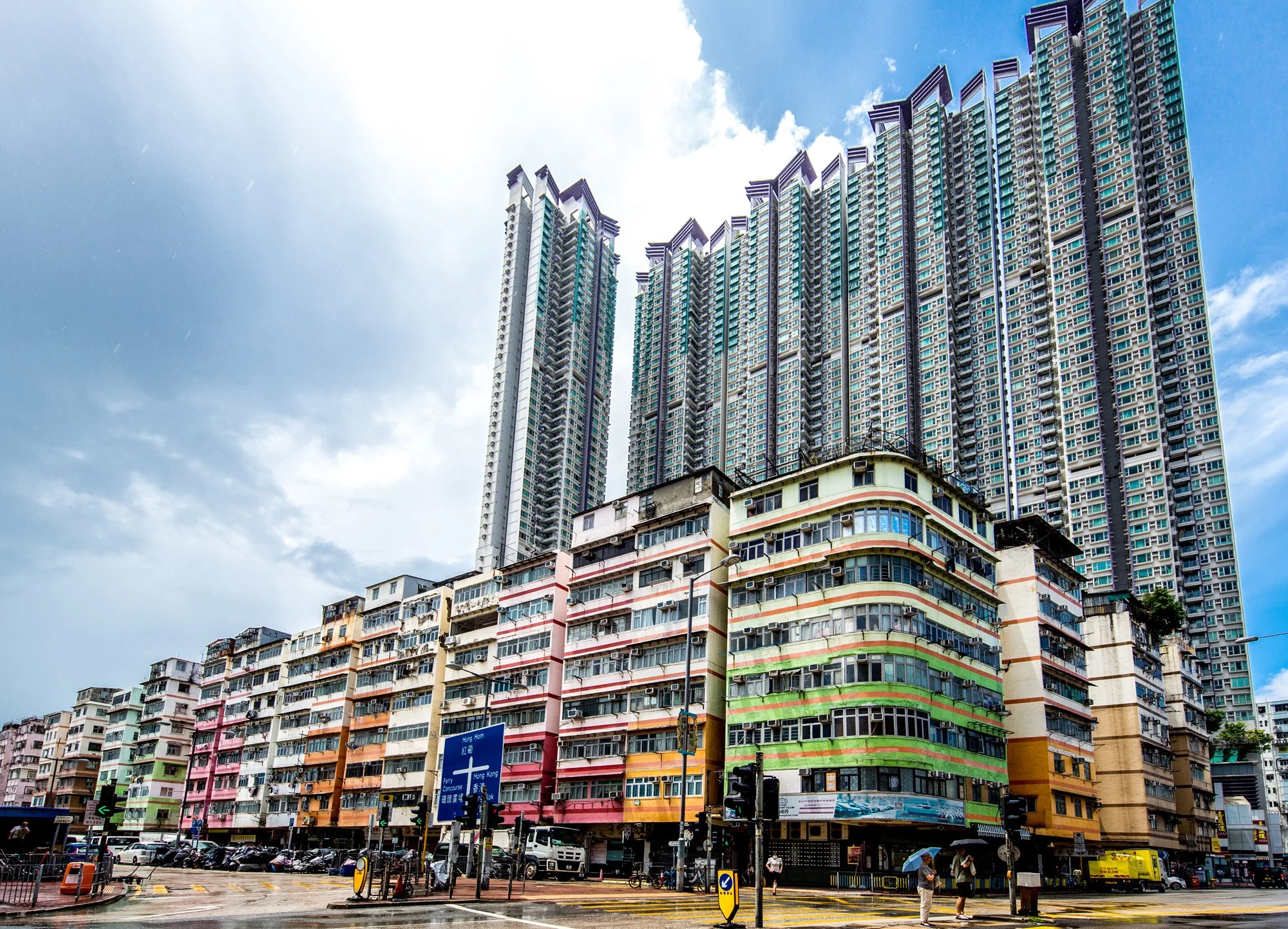
Can dragons, phoenixes, cranes, and cicadas ward off the URA’s advance? (source: Better Me magazine)
Spot the creatures!
Trace the creatures who shaped our street names — real or mythical, auspicious or ordinary — and see how luck was mapped.
Conclusion
In a territory governed by plot ratios and acquisition notices, these names operate as a parallel system. They serve as a kind of spiritual infrastructure built to steady a city that rarely stands still. Yet even this symbolic machinery has its limits. Dragons, cranes, oysters, and kei lun can anchor a neighbourhood’s hopes, but they struggle against the more terrestrial forces of redevelopment.
What the map ultimately shows is a city that asks its street signs to do more than direct traffic: they are required to absorb anxiety, promise protection, and perform a quiet alchemy in the face of forces that no creature—auspicious or otherwise—has ever successfully held back.