How a city with no cotton washed, traded and sewed its way to the spindle
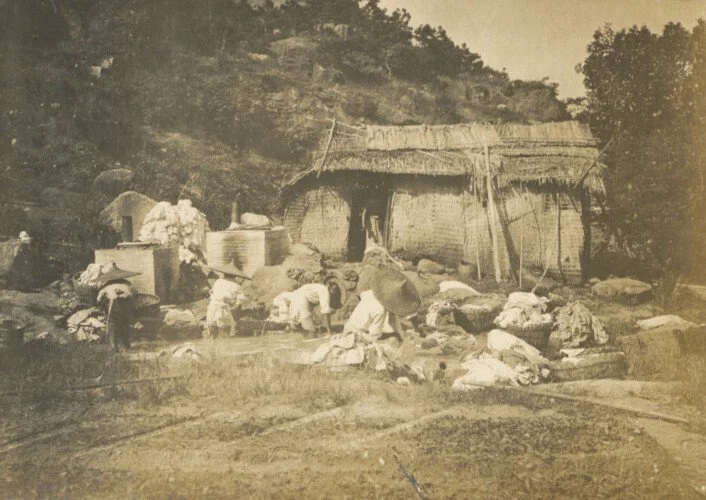
Local washermen at work in a pool of water in Hong Kong, c. 1903 (source: HSBC Archive)
Hong Kong's textile story begins in an unlikely place: a stream, a stone and a pile of dirty laundry.
Long before the city became a manufacturing powerhouse, Chinese washermen used its rocky streams as improvised laundries, beating clothes against granite boulders. In time, Hong Kong would make shirts for the world but the road from washing clothes to making them was anything but straightforward.
The city had no cotton fields, no sheep for wool and little flat land for sprawling mills. Yet by the mid-twentieth century, textiles employed close to half its manufacturing workforce. Hong Kong built its industry backwards: washing first, then trading and garment-making, with spinning arriving last, after one embarrassing false start.
A garment passes through five stages: spinning, weaving or knitting, dyeing, sewing and washing. Most textile industries begin with raw cotton and work towards the finished product. Hong Kong began at the other end. Its street names preserve the clues — in roads recalling cloth, dyeing and laundry, and in places whose industrial purpose has long since vanished.
Dirty Laundry
Hong Kong’s earliest textile trade needed the one resource the territory had in abundance: rocky streams. By the mid-nineteenth century, Chinese washermen were using streams and granite boulders as an improvised laundry, a technique one American visitor summed up as an attempt to “split a rock with a shirt”. During the California Gold Rush, miners reportedly sent dirty shirts across the Pacific to be washed here, accepting months of delay and hefty fees. By the late nineteenth century, the trade employed more than 700 people. French laundries advertising “sanitary washing” struggled to compete: customers preferred rough handling to a higher bill.
In time, the washing trade acquired an address. In Tai Hang, where Hakka villagers had long washed clothes in streams tumbling from Jardine’s Lookout and Mount Butler, the government formalised the trade around 1900 by building nearly twenty stone-and-brick tanks. British barracks, hospitals and government offices entrusted their linens to these same washermen. The site became known as Fan Yi Tum (番衣氹), “Foreign Clothes Pools”, a name that identified its clientele, while the adjacent road became Wun Sha Street 浣紗街, “Washing Silk Street”.
Mong Kok had a similar trade in the 1920s, with women washing neighbours’ clothes beside a watercress stream. Development later buried both sites. Tai Hang’s tanks lie beneath paving; Mong Kok’s stream runs through a sewer, its memory preserved in Sai Yee Street 洗衣街, “Wash Clothes Street”.
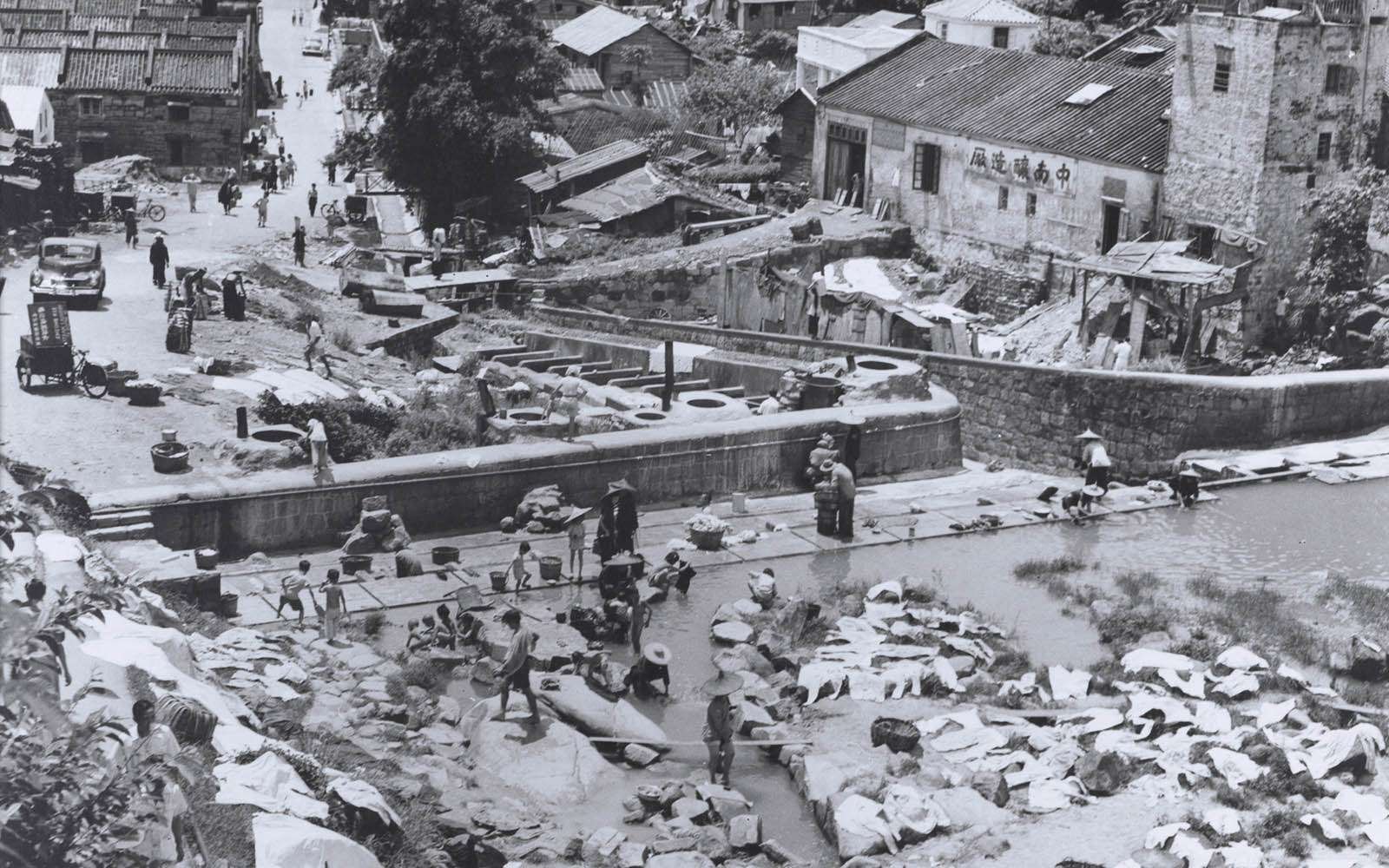
Laundry in Tai Hang nullah, 1949, taken by Douglas Moore, Creative Commons BY-NC 3.0. (source: City Unseen HK), check out footage of workers washing in 1930s here.
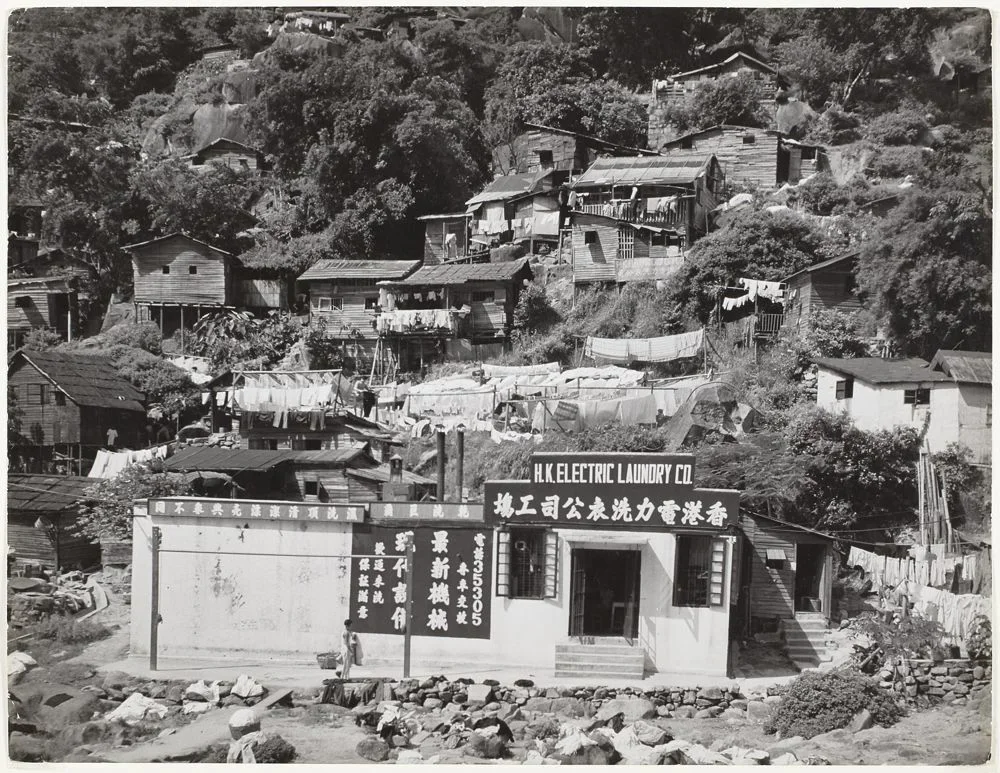
Hong Kong Electric Laundry Co. in the Wun Sha Street squatter and shanty village in Tai Hang in 1952 (source: M+)
The Imported Thread
Before Hong Kong made much cloth of its own, it had already built a business around cloth made elsewhere. Jervois Street in Sheung Wan has two names. The English honours a British general; the Chinese, 蘇杭街 (sou1 hong4 gaai1), points more than a thousand kilometres north, to Suzhou and Hangzhou, the silk-producing heartland of Jiangnan. The name followed the merchandise. By 1881, the government gazette counted 156 So Hong shops selling silk, printed cloth, thread and ribbons imported from the mainland.
Jervois itself was rendered in Chinese as 乍畏 (zaa3 wai3), a transliteration that could be read as “dread”, hardly an inviting name for a shopping street. Customers stuck with the informal Chinese name, which the government did not officially adopt until 1978, long after the shops had dispersed. Spinning, as an early experiment would show, was another matter.
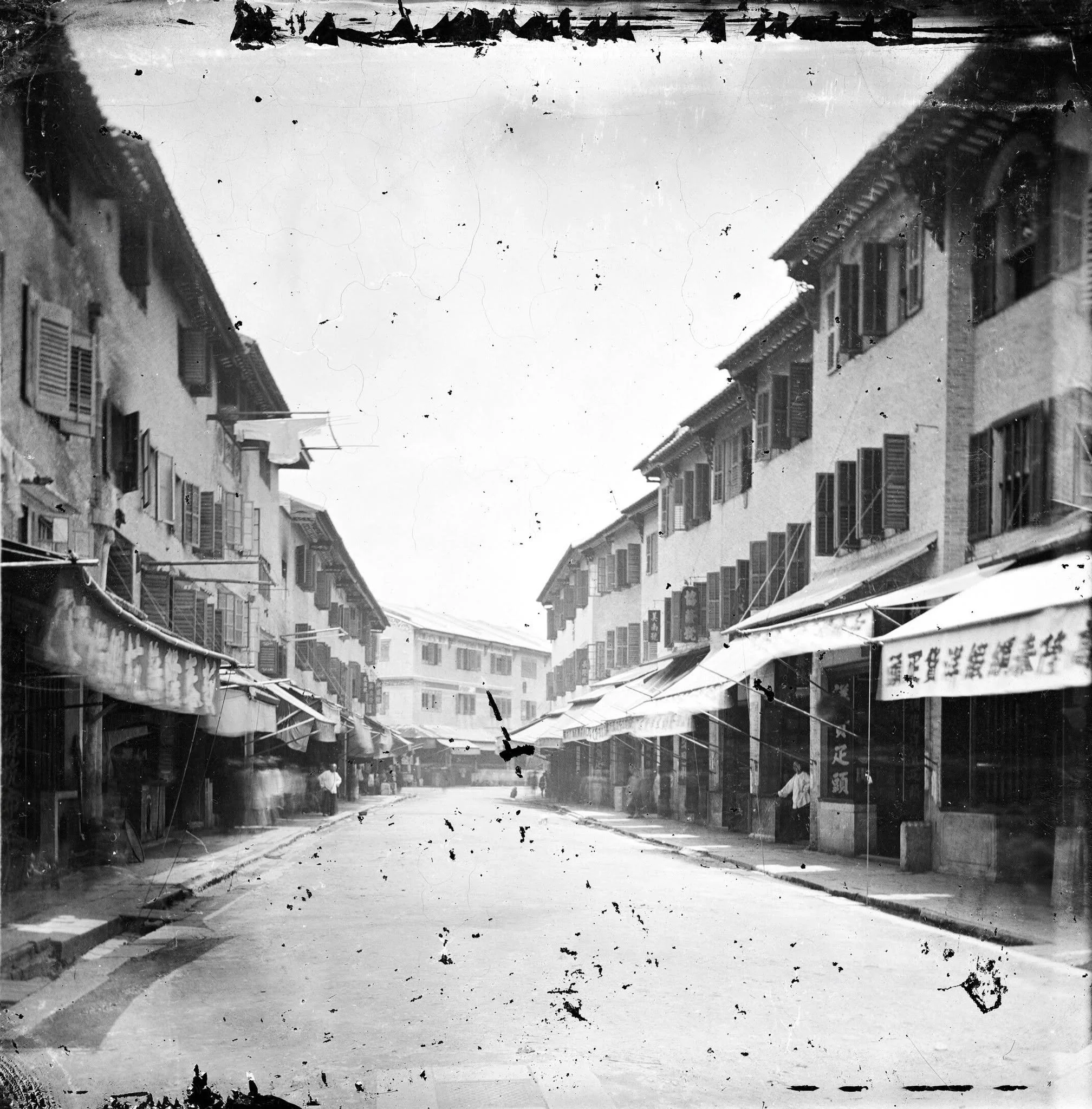
Jervois Street with fabric streets on both sides, taken by John Thomson between 1868 and 1871 (source: Wellcome Collection)
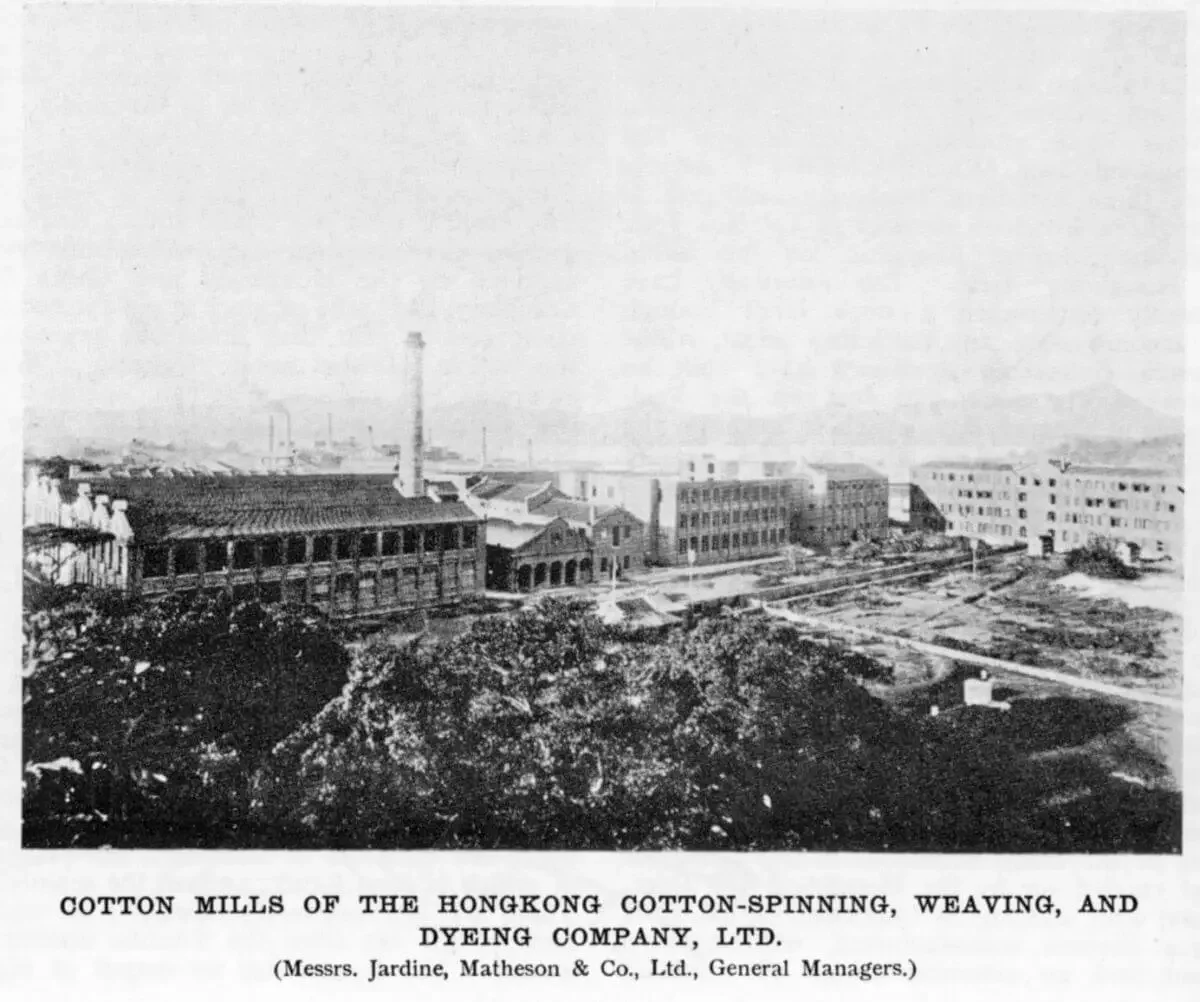
The ill-fated cotton mill, taken in 1903 (source: Industrial History HK)
Spindle Trouble
In 1897, Jardine, Matheson agreed to manage a cotton mill at East Point. The Hongkong Cotton-Spinning, Weaving and Dyeing Company began operating the mill in 1899, and by 1908, the mill was running more than 55,500 spindles supplied by Platt Brothers of Oldham.
After heavy losses, Jardine injected fresh capital and the mill enjoyed several profitable years. By late 1910 or early 1911, however, it had closed. High labour costs, shortages of skilled workers, electricity and clean water, and Hong Kong’s humidity all counted against it. David Landale, Jardine’s taipan, reportedly calculated that Shanghai could yield more than three times the profit. The machinery was shipped there in 1913; the company entered liquidation the following year.
The site was later sold to the Sisters of St Paul de Chartres. Cotton Path 棉花徑, beside the former mill, is the unlikely memorial to an industrial ambition that lasted barely a dozen years.
White Cloth, Black Cloth
After East Point, Hong Kong’s garment trade grew around imported cloth, though some manufacturers pulled more of the process in-house. Founded in Canton and moved to Kowloon in 1927, Chow Ngai Hing Knitting Factory (周藝興織造廠) became the “King of Sweaters”, selling affordable knitwear across Southeast Asia under the Bicycle, Tricycle and Horse labels. Its Pak Po Street factory brought weaving, cutting and retail under one roof.
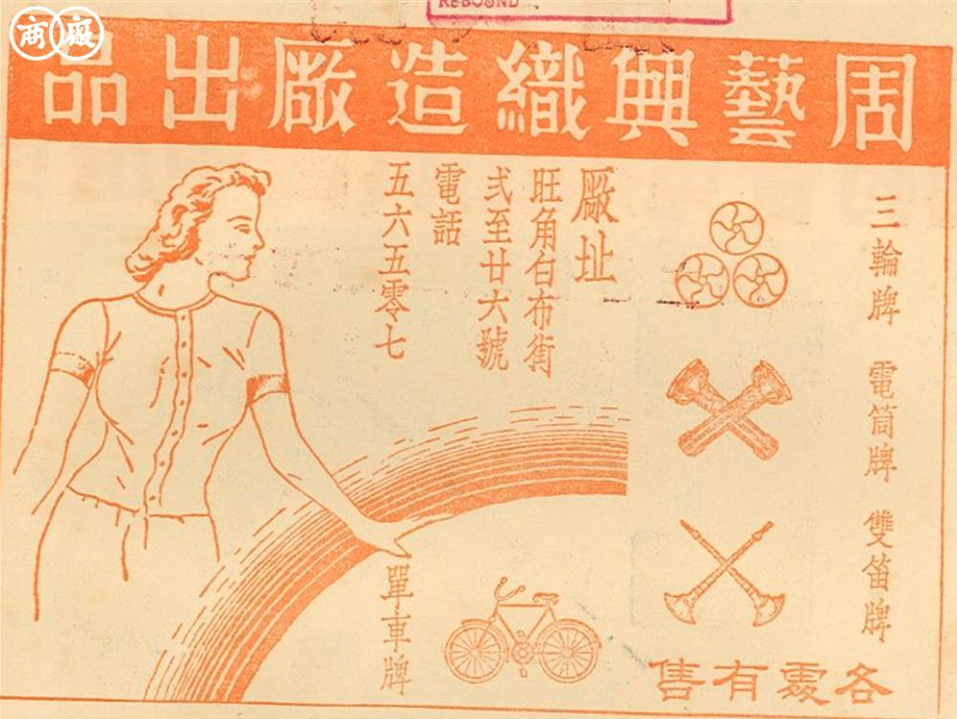
Advertisement on ‘Special Issue of the 6th Exhibition of Chinese Products’ , The Chinese Manufacturers' Association, c. 1948-1949 (source: HK Memory)
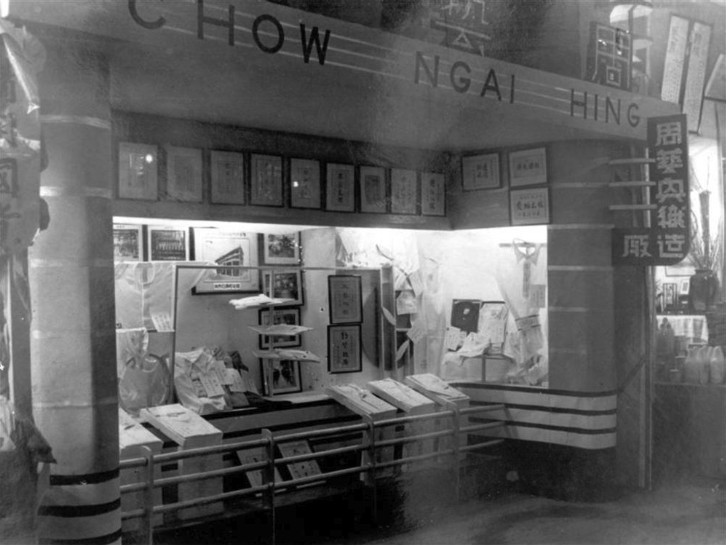
Retail section of Chow Ngai Hing Knitting Factory, c. 1941 (source: HK Memory)
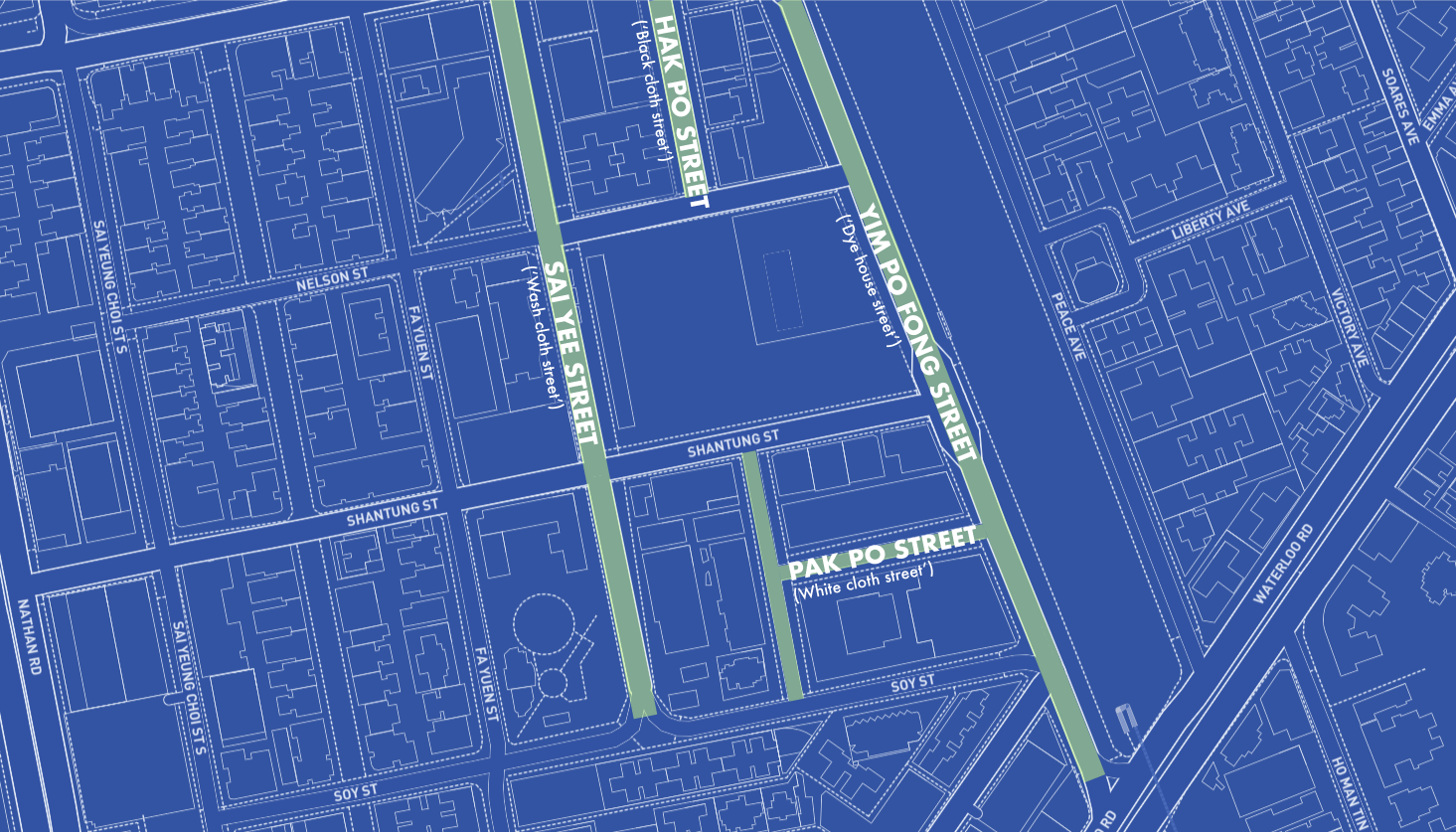
Mong Kok’s street names still trace the production line. Pak Po Street 白布街, “White Cloth Street”, evokes fabric before dyeing; Yim Po Fong Street 染布房街 recalls the dye houses; Hak Po Street 黑布街, “Black Cloth Street”, marks the finished, dyed cloth. Then comes Sai Yee Street, the laundry: the trade that began Hong Kong’s textile story, and the final stage on the map. Spinning was still to come.
The Thread Turns Back
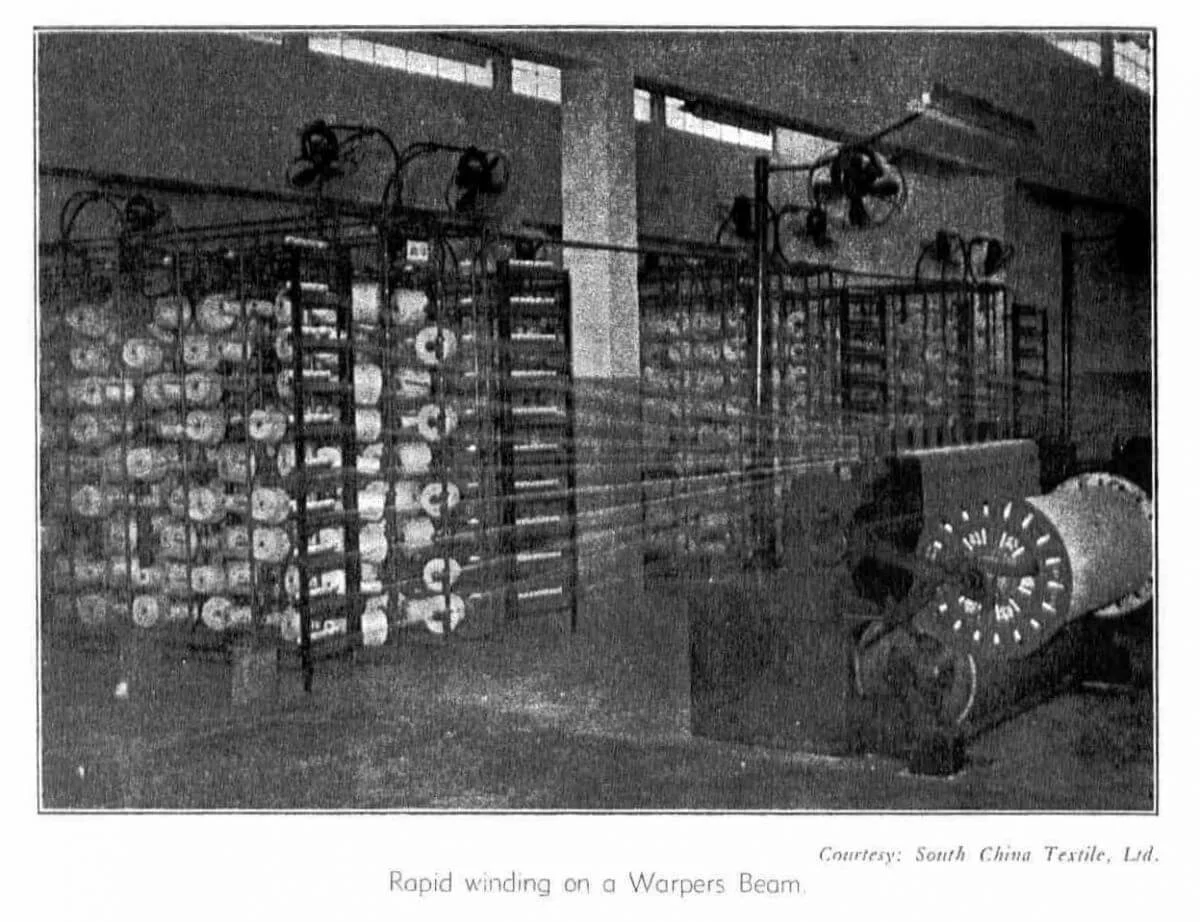
South China Textiles Ltd. in 1957 (source: Industrial History HK)
In 1946, C.C. Lee (李震之) had a problem. American spinning machinery bound for his Shanghai factories risked being stranded by post-war import restrictions, so he redirected it to Hong Kong and leased an empty building in Kowloon. Received wisdom said Hong Kong lacked the water, skilled workers and suitable climate for spinning cotton. Lee’s first trainees, women recruited from Guangdong, lacked the experience the mill required. He brought in sixty experienced operatives from Shanghai, and climate-control equipment dealt with the humidity.
In early 1948, South China Textile (大南紡織), the seed of today’s TAL Apparel, began production with 5,000 spindles, turning out twelve bales of yarn a day. Other Shanghai industrialists soon followed. By the end of 1948, six mills were running 120,000 spindles between them.
In 1913, Hong Kong’s spinning machinery had gone to Shanghai. Now Shanghai’s had arrived.
Little Manchester
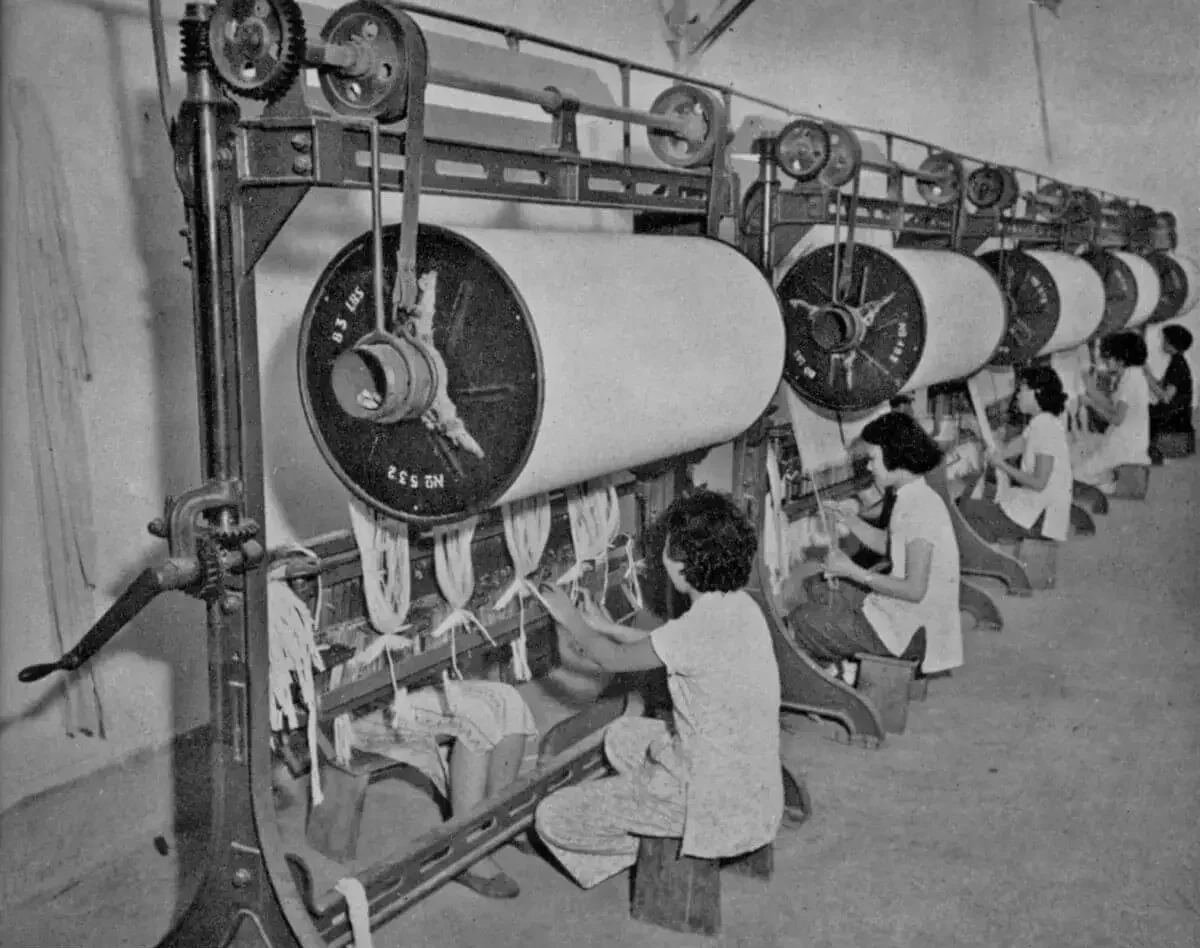
Factory floors like this helped transform Hong Kong into a global garment exporter, yet the industry's most enduring traces may be the street names it left behind, c. 1953 (source: Industrial History HK)
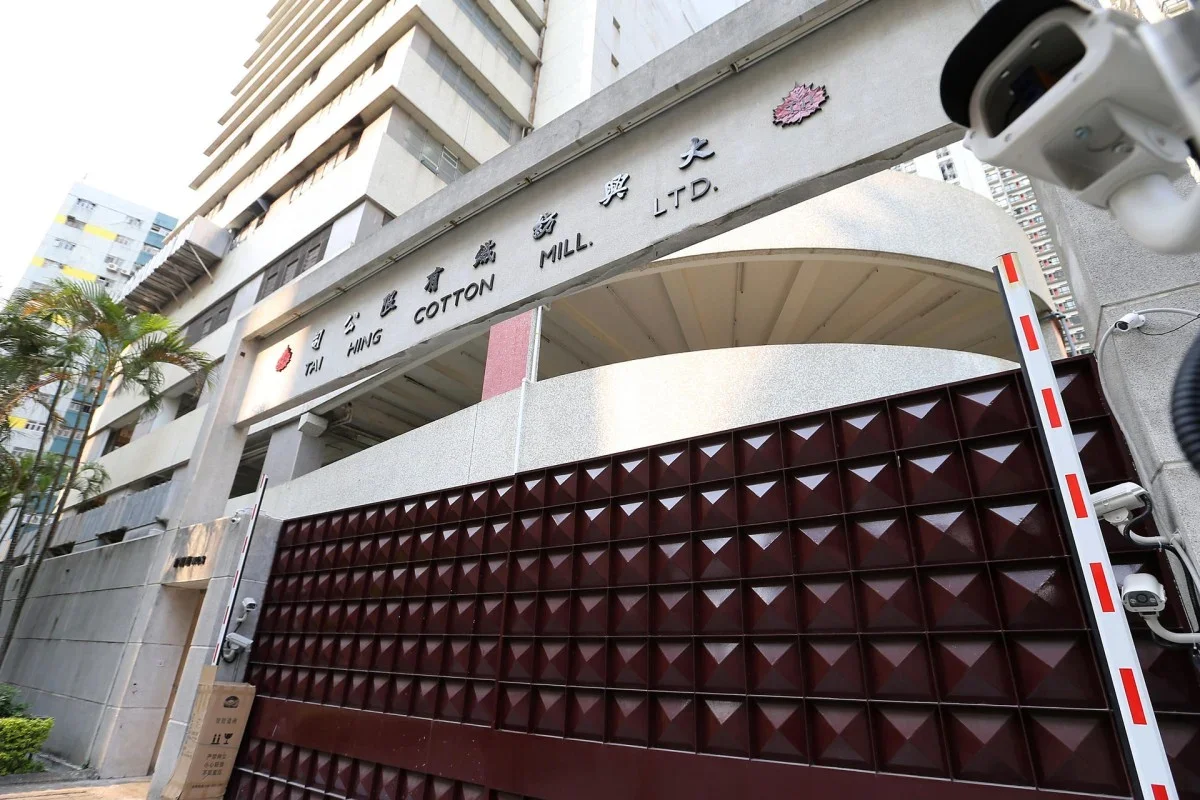
The new mills needed room to grow. Tsuen Wan had it. China Dyeing Works (中國染廠), founded by Cha Chi-ming (查濟民) in 1949, was followed by Nan Fung Textiles (南豐紗廠) in 1954 and Tai Hing Cotton Mill (大興紡織) in 1957.
At its peak in the 1960s, Tsuen Wan housed 50% of all Hong Kong's large-scale yarn spinning mills, earning the nickname “Little Manchester”. Mills needed workers, and workers needed somewhere to live. In 1962, a group of manufacturers proposed a workers’ village at Chai Wan Kok, complete with flats, kitchens, toilets and a hostel. It was never built, but the plan revealed how profoundly the mills were reshaping the district beyond the factory gates.
By 1975, Hong Kong had forty spinning mills, even as Manchester’s historic cotton industry was in long-term decline. Tsuen Wan’s success came with a costly disadvantage: spinning required large factory floors and heavy, specialised machinery. As land values rose, the mills occupied increasingly expensive real estate.
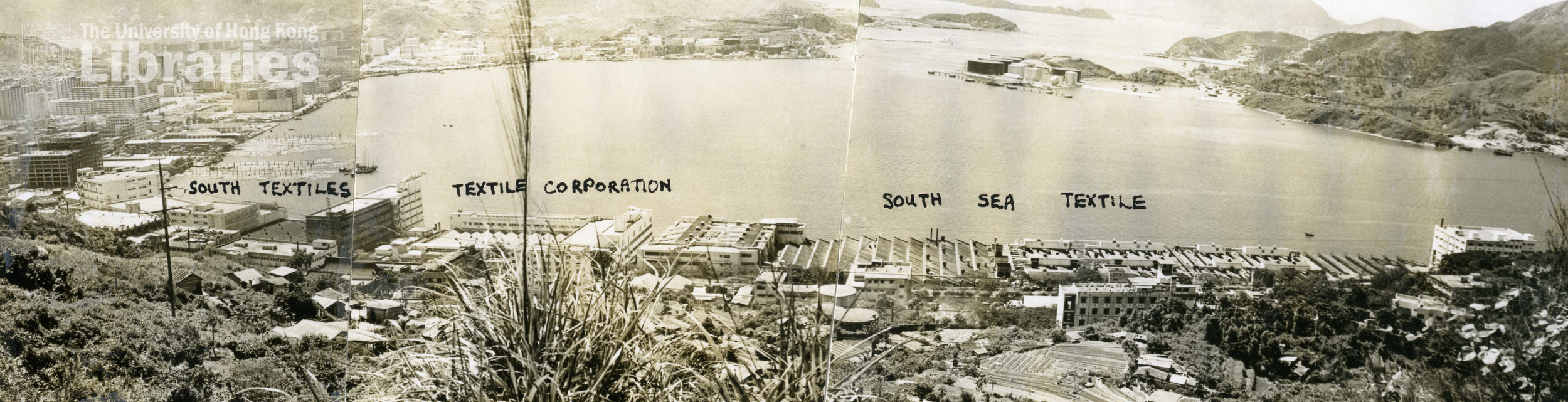
A bird's-eye view of the reclaimed area along Castle Peak Road in Tsuen Wan in 1966, where it was occupied by three textile mills (source: HKU Libraries)
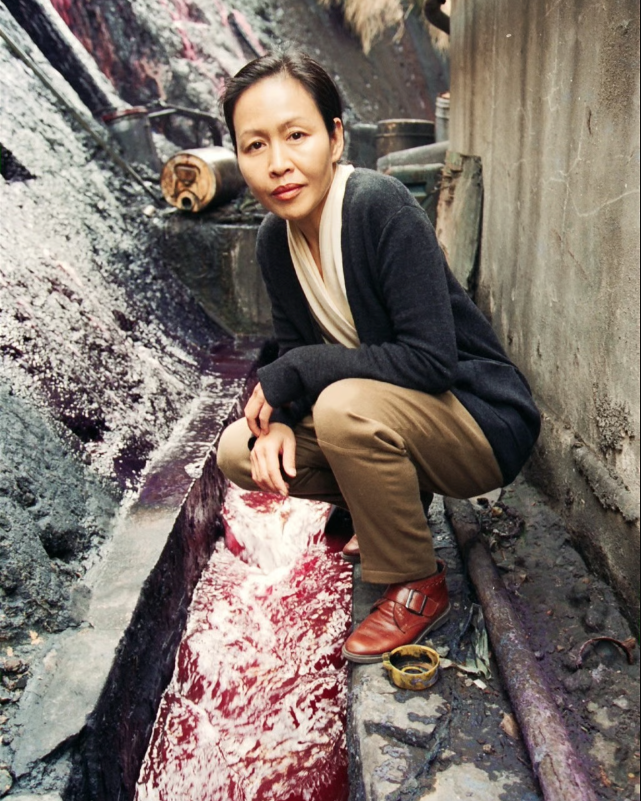
Hong Kong environmentalist Mei Ng Fong Siu-mei crouching beside an open drain carrying red dye effluent from a textile factory in Kwai Chung in 1994 (source: SCMP)
What Fits in a Lorry
The chain unwound from the easiest stage to move to the hardest. Garment production went first. From the early 1980s, as mainland China opened to foreign investment, manufacturers increasingly shifted labour-intensive production north, where land and wages were cheaper. Sewing machines, cutting tables and orders could follow.
Dyeing was harder. Hong Kong had once struggled to find enough clean water for its factories; now it had to contend with what came out the other end. Dye works consumed large quantities of fresh water and discharged heavily polluted effluent, turning streams red, green and yellow with dye run-off. As controls tightened, compliance added another burden to an industry already under pressure to cut costs.
Spinning could not follow. Its heavy machinery and vast floors could not be loaded onto a lorry, so the mills stayed, on land that grew more valuable every year.
Spindles to Square Footage
The mills had been built on land nobody wanted. By the 1970s, the land was worth more than the work taking place on it. Along Castle Peak Road, four spinning mills gave way to Belvedere Garden and Bayview Garden.
For Cha Chi-ming, founder of China Dyeing Works, the next frontier was property. He had expanded his textile empire to fourteen factories across Nigeria, Ghana and Togo, employing some 25,000 people. By 1985, however, he was committing the family’s money to Discovery Bay, a 6.5-square-kilometre private development on Lantau. The factories had made goods for export; Discovery Bay would attract a rather different imported population.
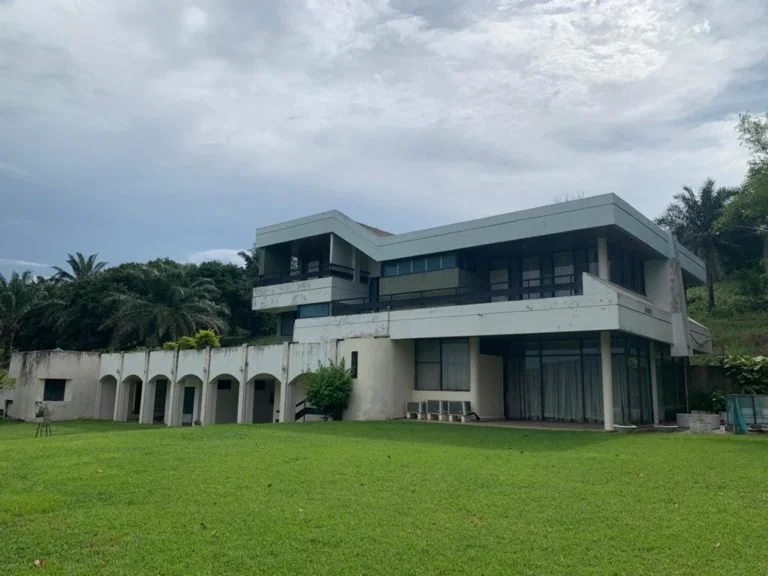
Beta Discovery Bay: Cha’s villa next to his Akosombo Textiles factory and industrial complex in Ghana (source: Mill 6 CHAT)
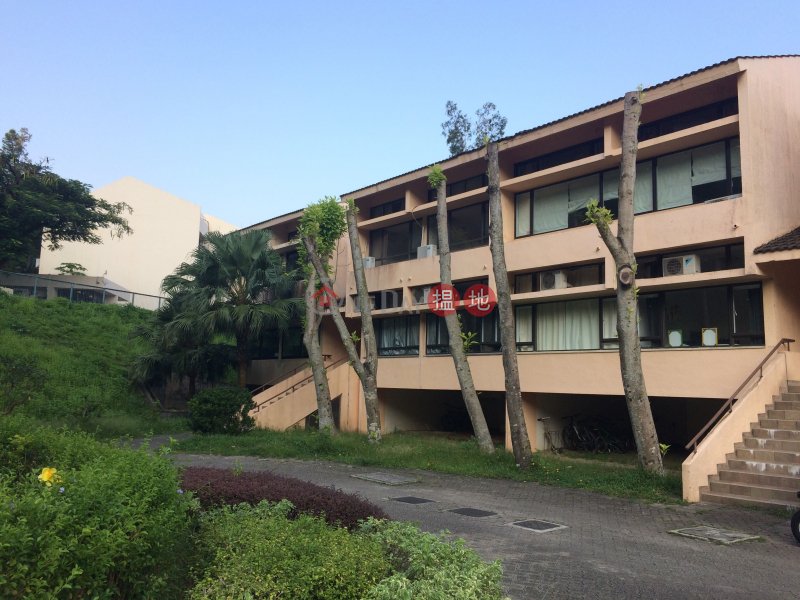
… and here is the final product in Hong Kong in Discovery Bay (source: oneday.com.hk)
Nan Fung’s mills ended up as heritage. In Johnnie To’s 1997 film Lifeline (十萬火急), a cotton mill burns in the finale. The mill was real: Mills 1 to 3 of Nan Fung’s Chai Wan Kok complex were demolished for the shoot, and the land became the private estate Summit Terrace. Mills 4 to 6 continued operating until 2008, later becoming The Mills, a heritage and retail complex that includes CHAT, the Centre for Heritage, Arts and Textile.
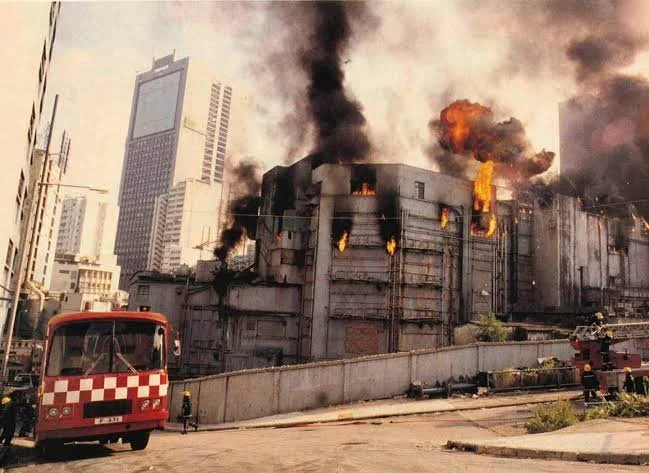
During filming, camphor powder used to create smoke effects accidentally ignited car tires, turning a staged "Level 4" simulated fire into a real "Level 1" actual fire, which the crew continued to film alongside real firefighters (source: Facebook)
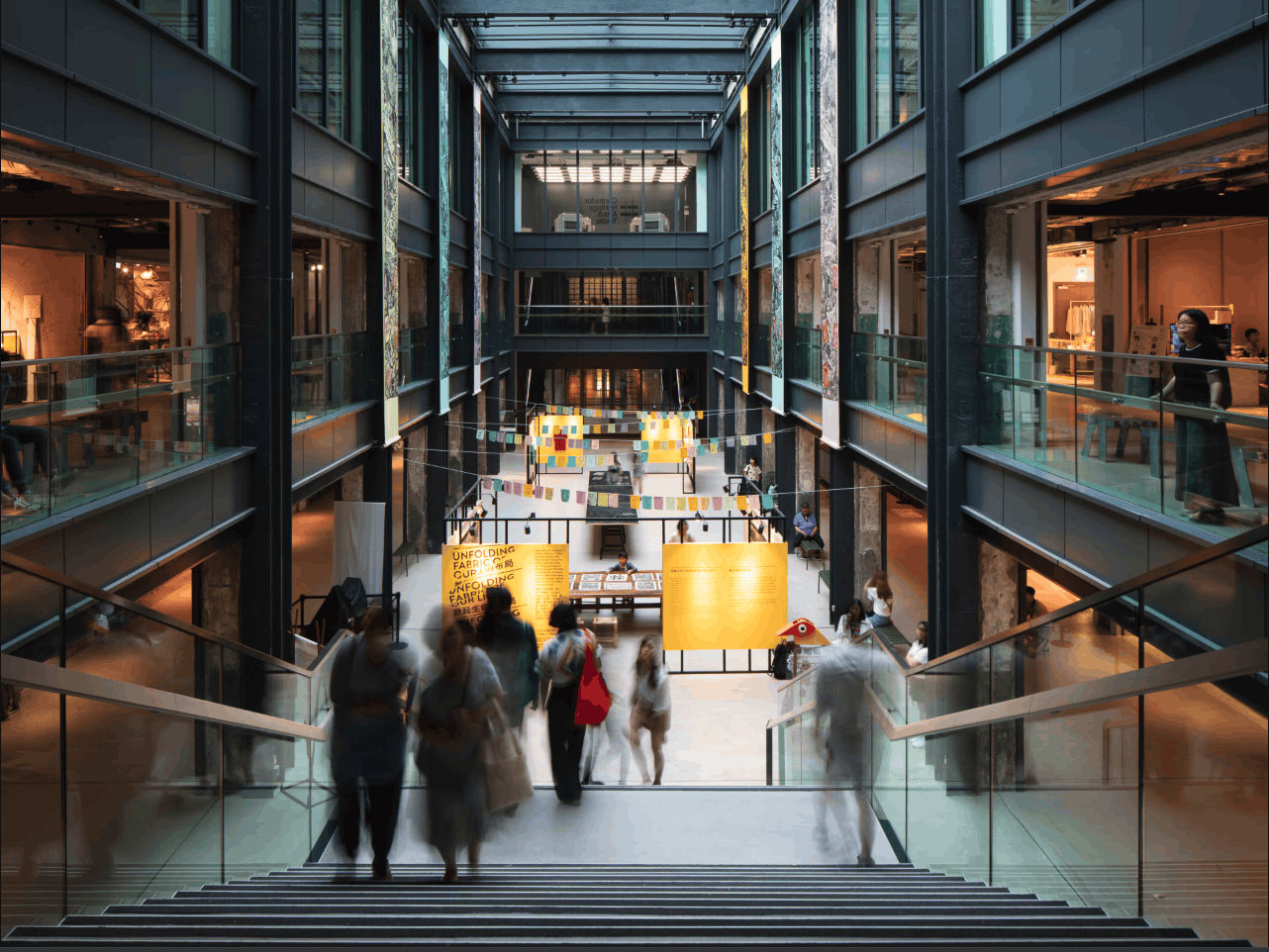
The Mills, originally built as a cotton spinning factory by Nan Fung Textiles in the 1950s and 1960s, was revitalised into a mixed-use cultural hub in 2018 (source: Make Architects)
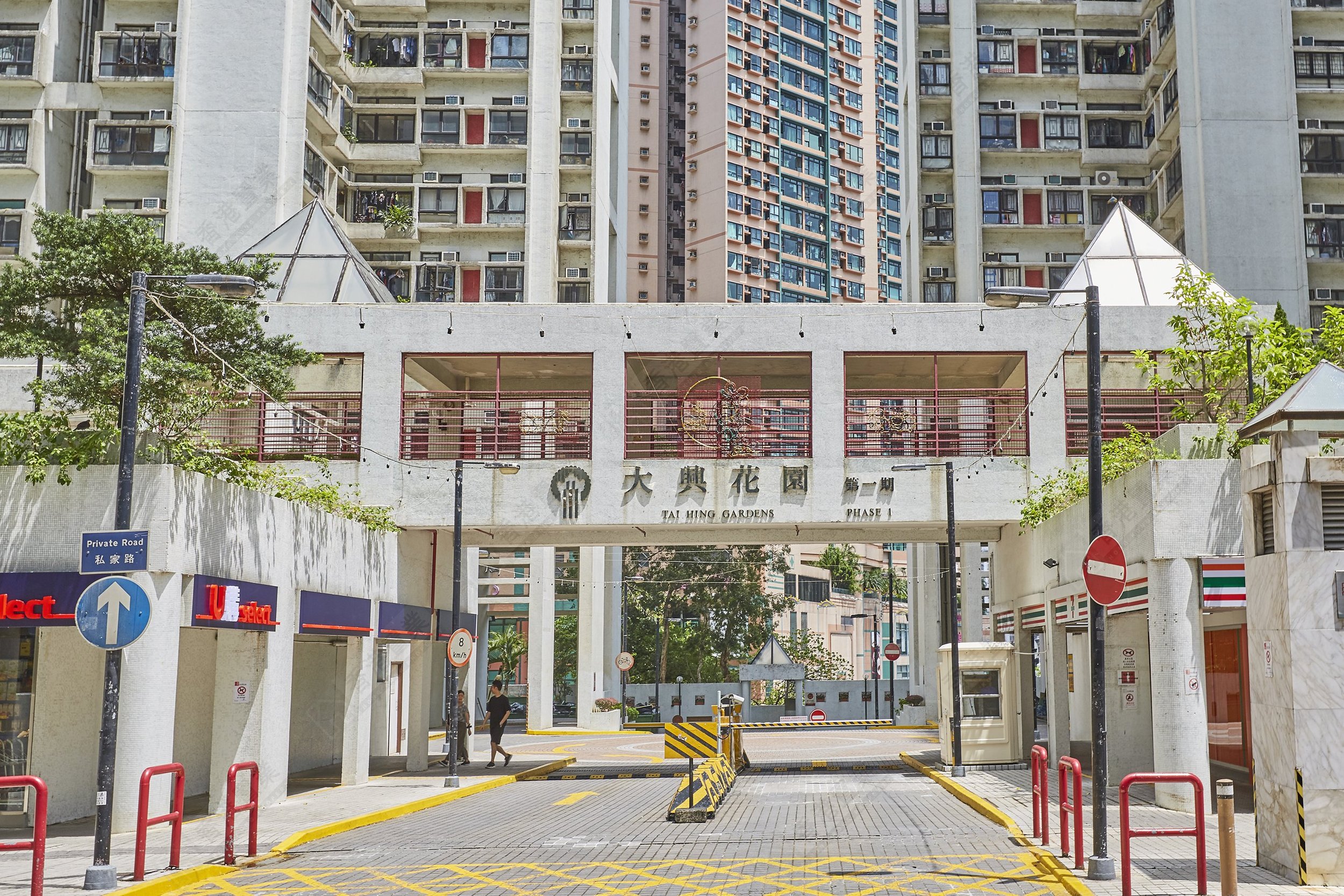
As the last operating cotton mill in the city, Tai Hing left a more everyday legacy. Tai Hing Estate (大興邨), a public housing estate in Tuen Mun, took its name from the cotton mill to the south. A later private development, Tai Hing Gardens (大興花園), lent its name to Tai Hing Street 大興街. The mill closed in 2014, but its name survives on an estate, a development and a street sign.
Cloth Street, Button Street
Not all of Hong Kong’s textile work took place in factories. By the 1950s, many households owned a sewing machine, and women stitched garments at home, paid by the piece.
Much of the cloth came from Wing On Street 永安街 in Central, nicknamed Fabric Street 花布街, where more than sixty shops sold silk, wool and printed cotton. Redevelopment cleared it in the early 1990s, and some traders won places in Western Market, a short walk from Jervois Street, where the cloth trade had begun a century earlier. In 2025 the last traders left Western Market for a two-year renovation, with no return expected. A fabric street can survive one demolition by moving house. It rarely survives a second.
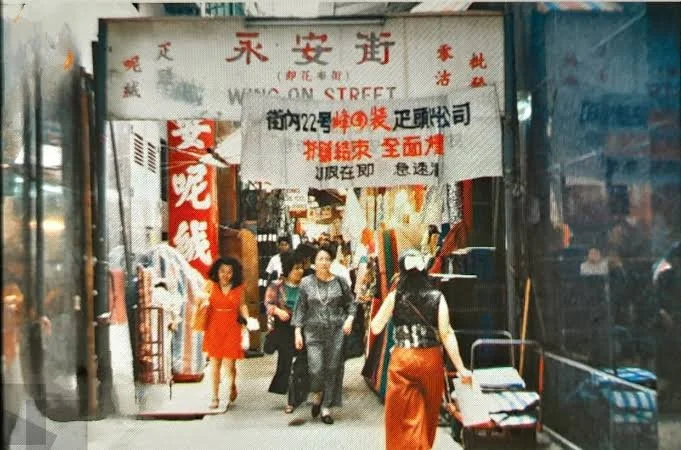
Wing On Street ("Fabric Street") in Central in the early 1990s, with traders displaying fabrics for sale before relocating to the Western Market (source: Facebook)
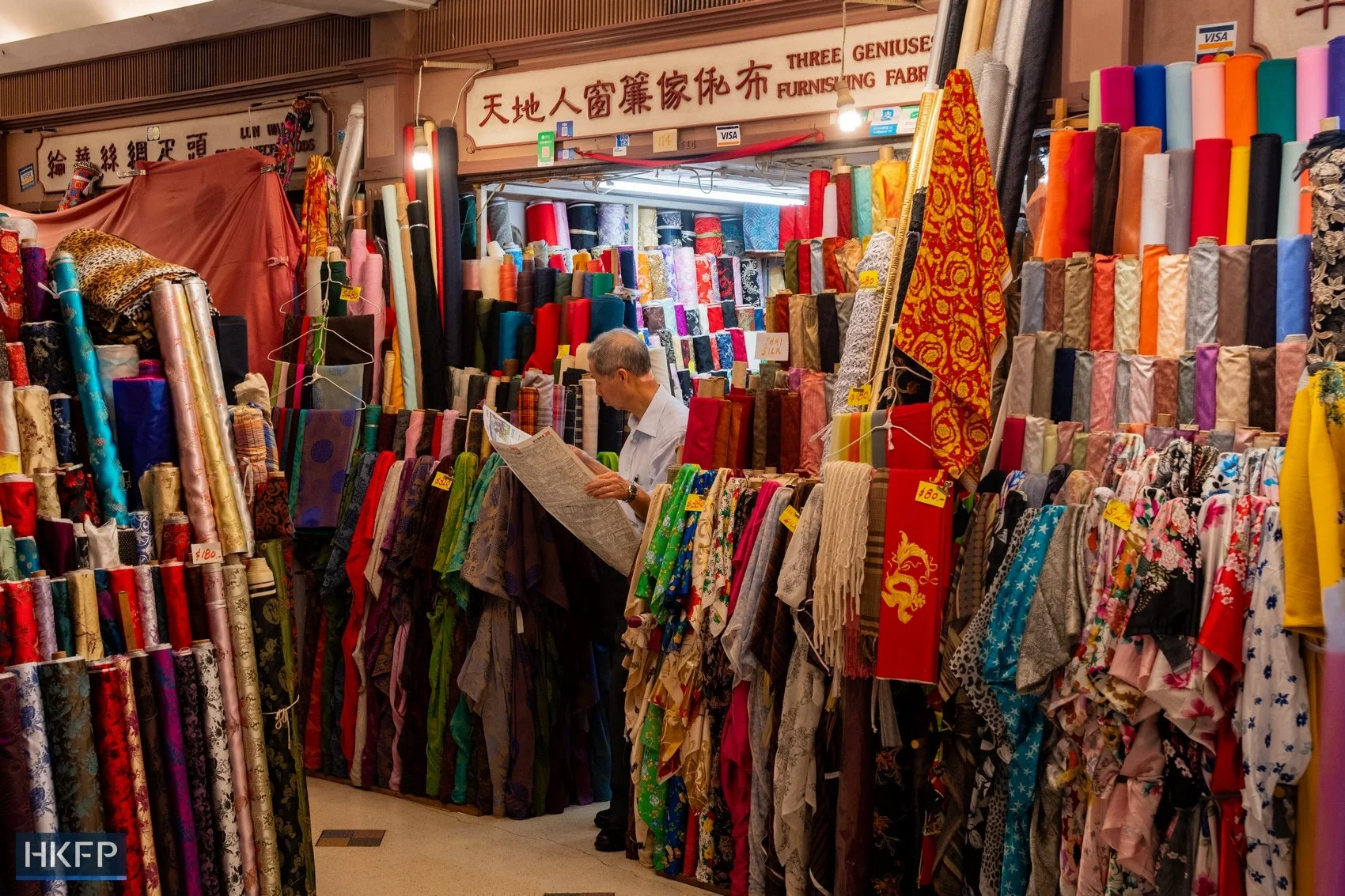
Fabric merchants inside Western Market operating shortly before its 2025 closure for a two-year revitalisation project. Having originally relocated here from Wing On Street in 1991, the eviction likely signals the final chapter for the last of these traders (source: HKFP)
Sham Shui Po carries the story further. Refugees from the Chinese Civil War brought sewing skills and small-scale manufacturing, and by the 1970s the district was a major centre for fabric and garment supplies. Its specialised trades became so concentrated that streets acquired unofficial commercial identities: Yu Chau Street 汝州街 as Bead Street (珠仔街), Tai Nan Street 大南街 as Leather Street (皮革街), Nam Cheong Street 南昌街 as Lace Street (花邊街), and Ki Lung Street 基隆街 as Button Street (鈕扣街).
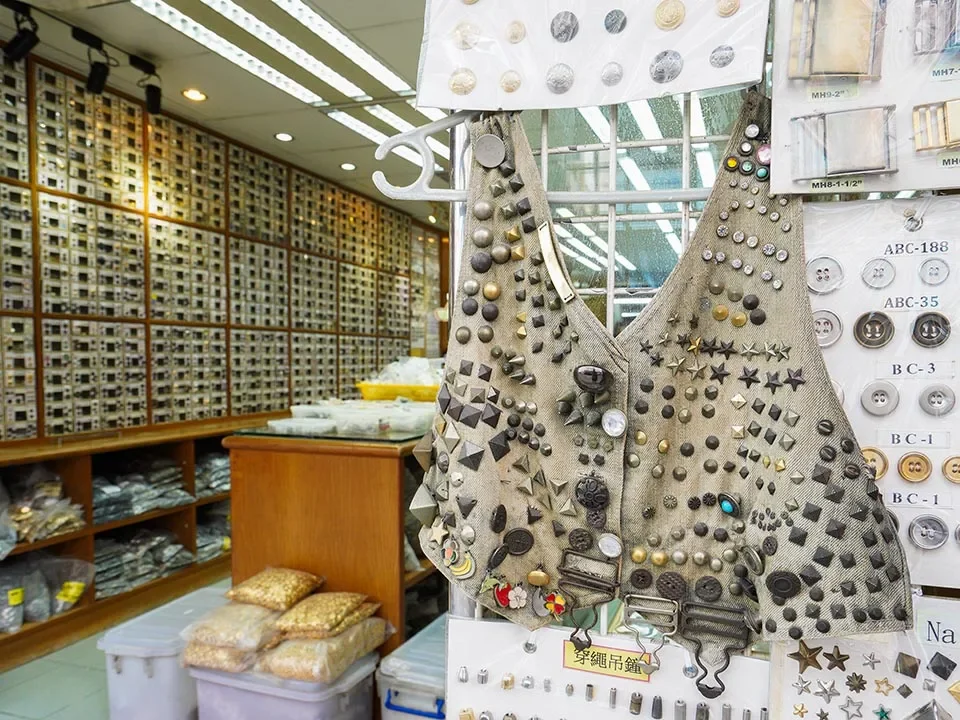
The ultimate punk vest: 90% metal hardware, 10% fabric, and 100% likely to set off every airport security scanner, Ki Lung Street (Source: HK Tourism Board)
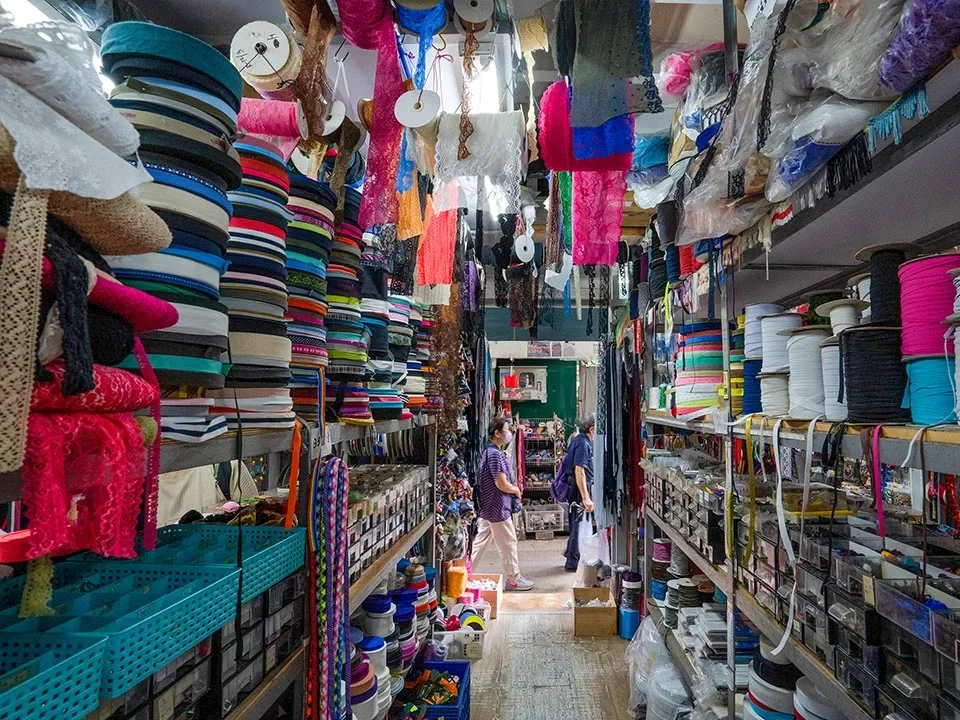
Tiny craft supply and ribbon shop stocked with spools of ribbon and lace on Nam Cheong Street (source: HK Tourism Board)
Pang Jai (棚仔), the fabric market established on Yen Chow Street in 1978, supplied designers, students, home sewers and film and theatre costumiers. It was officially a temporary hawker bazaar. The government earmarked its site for housing in 1981, yet the market endured for four more decades. In January 2023, it closed to make way for public housing, and its vendors were offered a new home some 300 to 400 metres away on Tung Chau Street 通州街. Relocation came at a cost: of 49 eligible unlicensed vendors, only 16 chose to move, and by 2025, reports described just a handful of fabric shops remaining at the new market. In Hong Kong, “temporary” can be a surprisingly durable arrangement, though not necessarily a permanent one.
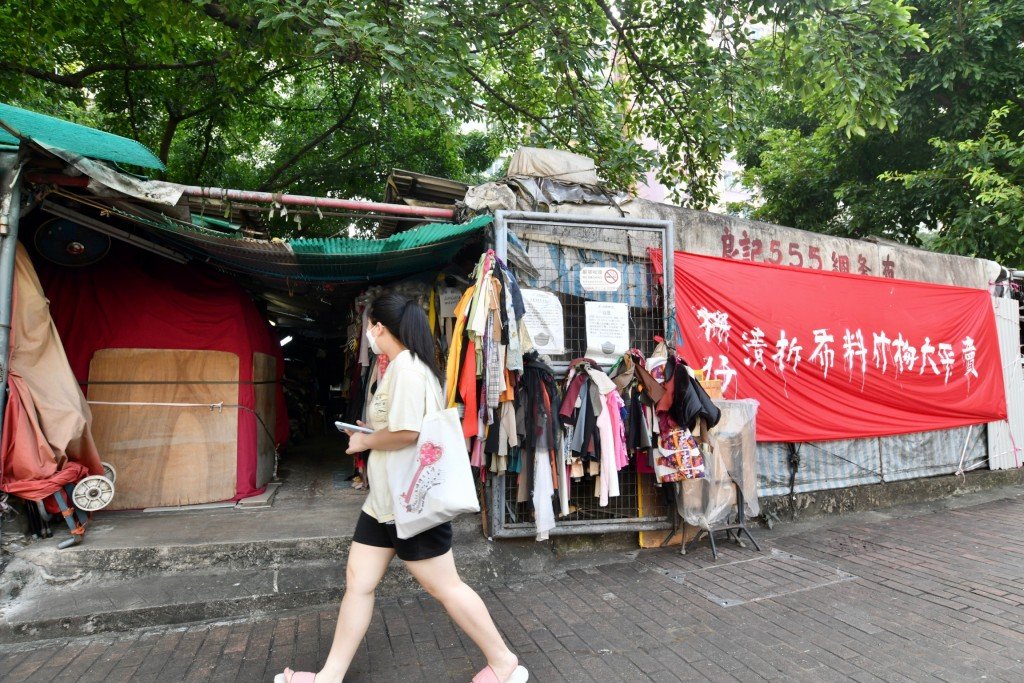
Established in 1978 and closed in 2023, ‘Pang Jai’ was Hong Kong's oldest operating outdoor fabric market, known for its maze of canvas-and-tin stalls selling an immense variety of textiles, zippers, and sewing supplies (Singtao)
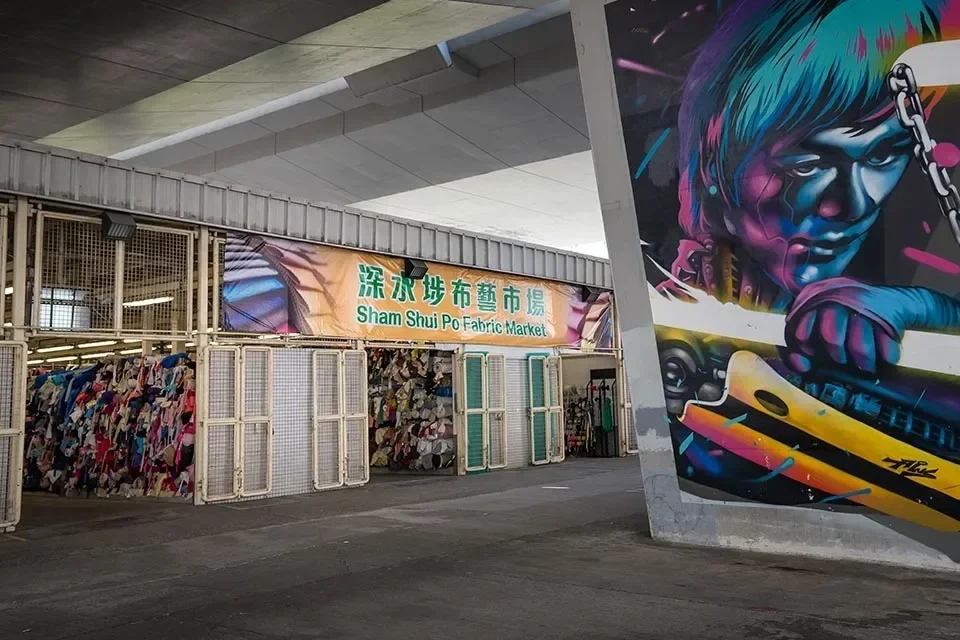
When over 40 years of heritage gets a "cyberpunk" glow-up but the government still won't commit to the relationship status, Tung Chau Street Temporary Market (source: HK Tourism Board)
The Next Thread
Hong Kong once washed the shirts, traded the silk, sewed the orders and finally spun the cotton. Rising wages and land costs sent production elsewhere, but not all the expertise went with it. The city retained a different role: deciding what should be made, where, for whom and how quickly.
TAL Apparel illustrates the shift. Born from Lee’s rerouted machinery, the company now coordinates production across Asia and Africa, supplying about one in six men’s dress shirts sold in the United States. In 2020, when orders collapsed, it switched production lines to make 50 million face masks. A different product, made through the same capacity to adapt.
The mills are gone. The names have not. On Hong Kong's streets, white cloth, dyed cloth and laundry survive as directions to an industry that has long since moved on.